Quantum Computing Industry Growth
The global technology landscape is entering a transformative phase with the emergence of quantum computing, a next-generation computing approach designed to solve complex problems that exceed the capabilities of traditional computing systems. The Quantum Computing Industry Growth is accelerating as businesses, governments, and research institutions invest in quantum hardware, software platforms, and real-world applications across multiple industries.
Unlike classical computers that process information using binary bits, quantum computers use quantum bits, or qubits, which leverage quantum mechanical principles such as superposition and entanglement. This allows quantum systems to analyze vast possibilities simultaneously and address highly complex computational challenges.
The growing demand for advanced computing power, increasing investments in quantum research, cloud-based quantum accessibility, and expanding applications in optimization, simulation, machine learning, and cybersecurity are key factors driving the evolution of the quantum computing industry. The quantum computing market is projected to reach USD 20.20 billion by 2030 from USD 3.52 billion in 2025, at a CAGR of 41.8% during the forecast period.
Understanding Quantum Computing Technology
Quantum computing represents a fundamental shift from conventional computing architectures. Traditional computers use bits that exist in one of two states: zero or one. Quantum computers use qubits that can exist in multiple states simultaneously, enabling them to process complex calculations more efficiently for specific types of problems.
Key principles behind quantum computing include:
Superposition
Superposition allows qubits to represent multiple possible states simultaneously. This capability enables quantum computers to evaluate numerous possibilities in parallel.
Entanglement
Entanglement creates connections between qubits, allowing quantum systems to process correlated information and improve computational performance.
Quantum Interference
Quantum interference helps amplify correct solutions while reducing incorrect possibilities during calculations.
These unique capabilities are driving significant interest in quantum computing as organizations seek solutions for complex optimization, simulation, and analytical challenges.
Top 10 Key Takeaways
- Quantum computing is transforming the future of advanced computational systems.
- Rising demand for high-performance computing is driving industry growth.
- Cloud-based quantum platforms are improving accessibility.
- Superconducting and trapped-ion technologies are advancing quantum hardware development.
- AI and quantum computing integration is creating new innovation opportunities.
- Healthcare, finance, manufacturing, and cybersecurity are major application areas.
- QCaaS models are accelerating enterprise experimentation and adoption.
- Quantum error correction remains a key challenge for commercialization.
- Government and private investments are expanding the global quantum ecosystem.
- Quantum computing is expected to become a critical technology for solving complex future challenges.
Key Factors Driving Quantum Computing Industry Growth
Rising Demand for Advanced Computational Power
Modern industries are generating massive amounts of data and facing increasingly complex problems that require advanced computational capabilities.
Organizations are exploring quantum computing to address challenges in areas such as:
- Drug discovery
- Financial modeling
- Supply chain optimization
- Climate simulation
- Material science
- Artificial intelligence
Traditional computing systems often require significant time and resources for highly complex calculations. Quantum computing offers the potential to accelerate problem-solving in specialized applications.
This growing demand for powerful computational solutions is one of the primary drivers supporting Quantum Computing Industry Growth.
Increasing Investments from Governments and Technology Companies
Government initiatives and private-sector investments are accelerating the development of quantum technologies worldwide.
Countries are funding quantum research programs to strengthen technological capabilities and create competitive advantages in areas such as:
- National security
- Advanced manufacturing
- Scientific research
- Digital infrastructure
Technology companies are also investing heavily in quantum hardware development, quantum software platforms, and cloud-based quantum services.
These investments are helping expand the quantum ecosystem by supporting:
- Hardware innovation
- Algorithm development
- Talent development
- Commercial applications
Cloud-Based Quantum Computing Expanding Accessibility
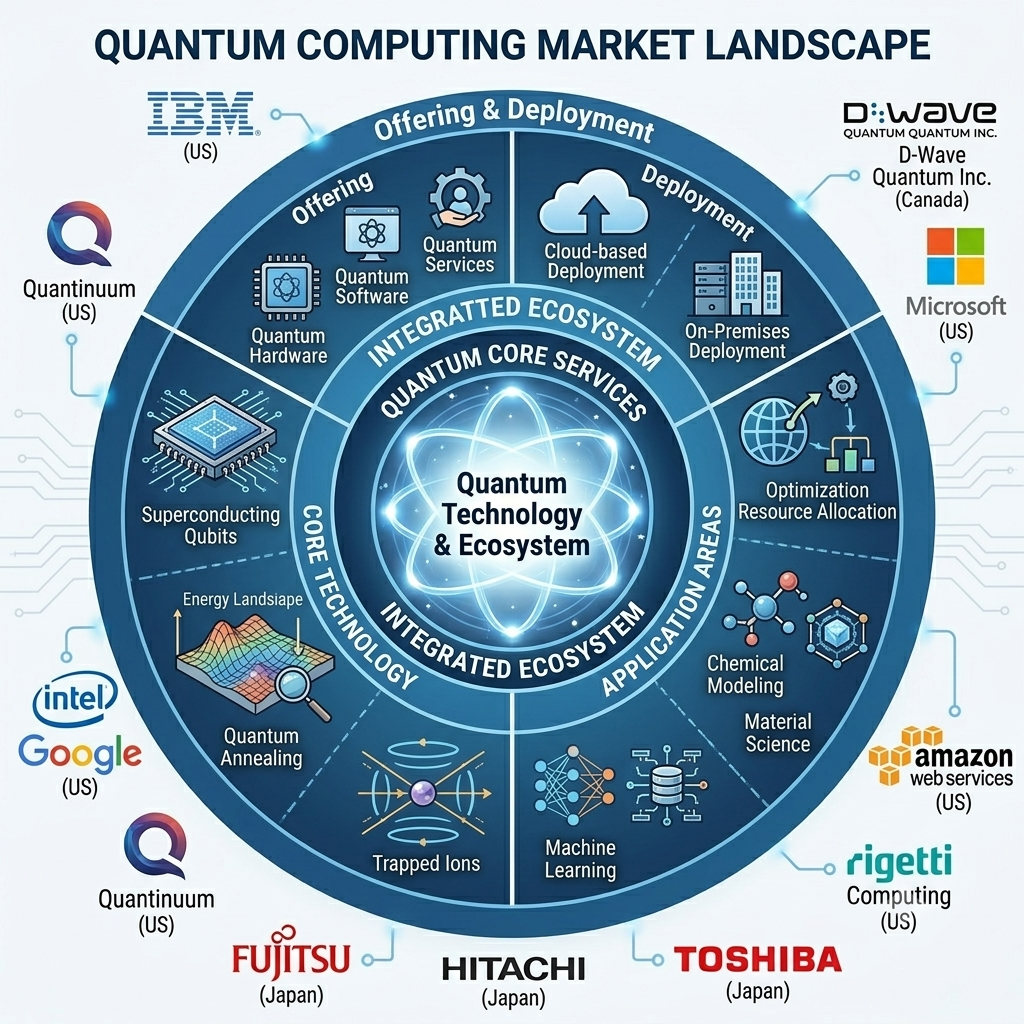
One of the most significant trends influencing Quantum Computing Industry Growth is the rise of Quantum Computing as a Service (QCaaS).
Cloud-based quantum platforms allow organizations to access quantum computing resources without purchasing expensive quantum hardware.
Benefits include:
- Lower entry barriers
- Flexible access to quantum systems
- Faster experimentation
- Broader developer participation
According to MarketsandMarkets, cloud-based deployment is expected to hold a significant position as organizations increasingly use remote quantum resources for research and application development.
Cloud accessibility is enabling enterprises, universities, and startups to explore quantum applications without requiring specialized infrastructure.
Download PDF Brochure @ https://www.marketsandmarkets.com/pdfdownloadNew.asp?id=144888301
Innovations Driving Quantum Computing Advancement
Development of Advanced Qubit Technologies
The performance of quantum computers depends heavily on qubit technology. Researchers and companies are exploring multiple approaches, including:
- Superconducting qubits
- Trapped-ion qubits
- Quantum annealing
- Photonic quantum systems
- Neutral atom technologies
Superconducting qubits continue to receive significant attention due to their speed and scalability potential, while trapped-ion technologies are recognized for their accuracy and long coherence times.
Continuous improvements in qubit design are helping overcome challenges related to scalability and reliability.
Quantum Computing and Artificial Intelligence Integration
The combination of quantum computing and artificial intelligence is creating new opportunities for advanced data processing and machine learning.
Quantum computing can potentially improve AI by supporting:
- Faster optimization algorithms
- Complex pattern recognition
- Advanced machine learning models
- Large-scale data analysis
Quantum-enhanced AI could benefit industries that depend on large datasets and complex decision-making processes.
As AI adoption continues expanding globally, the integration between AI and quantum computing is expected to become an important growth opportunity.
Quantum Computing Applications Transforming Industries
Healthcare and Pharmaceutical Research
Healthcare is one of the most promising application areas for quantum computing.
Quantum systems can support:
- Drug discovery
- Molecular simulation
- Protein analysis
- Personalized medicine research
Traditional drug development requires extensive testing and simulation. Quantum computing may help researchers analyze molecular interactions more efficiently, potentially reducing development timelines.
MarketsandMarkets highlights healthcare and pharmaceutical applications as important growth areas due to increasing interest in quantum-powered research capabilities.
Banking and Financial Services
The financial sector is actively exploring quantum computing for complex analytical challenges.
Potential applications include:
- Portfolio optimization
- Risk analysis
- Fraud detection
- Market simulation
- Algorithmic trading
Financial institutions handle large volumes of complex data, making them early adopters of advanced computing technologies.
Quantum computing could provide new approaches to solving optimization problems that influence investment strategies and financial decision-making.
Manufacturing and Supply Chain Optimization
Manufacturing companies are exploring quantum computing to improve operational efficiency.
Applications include:
- Production planning
- Logistics optimization
- Inventory management
- Material design
Quantum algorithms can analyze multiple variables simultaneously, helping organizations identify improved solutions for complex operational challenges.
Cybersecurity and Encryption
Quantum computing is creating both opportunities and challenges in cybersecurity.
Advanced quantum systems may impact traditional encryption methods, increasing demand for:
- Quantum-resistant encryption
- Post-quantum cryptography
- Secure communication technologies
At the same time, quantum technologies may enable new approaches to secure data transmission and cybersecurity management.
Quantum Computing Market Trends Shaping the Future
Growth of Quantum Computing as a Service
QCaaS is becoming a major trend as businesses seek affordable access to quantum resources.
Service-based models allow organizations to:
- Experiment with quantum applications
- Develop algorithms
- Access multiple quantum platforms
- Reduce infrastructure investments
This approach is expected to accelerate enterprise adoption.
Expansion of Hybrid Quantum-Classical Computing
The near-term future of quantum computing is expected to involve hybrid systems combining classical and quantum processors.
Hybrid computing enables organizations to use:
- Classical computers for general workloads
- Quantum systems for specialized calculations
This approach helps businesses gradually integrate quantum capabilities into existing technology environments.
Increasing Focus on Quantum Software Development
While hardware advancement is essential, software development is equally important for commercialization.
Quantum software innovations include:
- Quantum programming languages
- Algorithm libraries
- Simulation platforms
- Developer tools
A strong software ecosystem will be critical for enabling practical quantum applications.
Challenges Affecting Quantum Computing Industry Growth
Quantum Error Correction
Quantum systems are highly sensitive to environmental disturbances, which can introduce errors into calculations.
Improving:
- Qubit stability
- Error correction methods
- System reliability
remains a major research priority.
High Development Costs
Building and maintaining quantum computing systems requires significant investment in:
- Specialized hardware
- Cooling systems
- Research infrastructure
- Skilled professionals
High costs remain a challenge for widespread adoption.
Shortage of Quantum Skills
Quantum computing requires expertise across multiple disciplines, including:
- Physics
- Computer science
- Mathematics
- Engineering
The shortage of trained professionals is a challenge that organizations and educational institutions are working to address.
Regional Outlook for Quantum Computing Industry Growth
North America
North America remains a leading region due to strong technology investments, research capabilities, and the presence of major quantum technology companies.
The region benefits from:
- Government funding
- Enterprise adoption
- Advanced research institutions
- Cloud quantum platforms
Europe
Europe is investing significantly in quantum research and innovation through government-backed initiatives and collaborations.
The region focuses on:
- Quantum research infrastructure
- Secure communication
- Scientific applications
- Industrial adoption
Asia Pacific
Asia Pacific is expected to experience strong growth due to increasing investments in quantum research and development.
Countries including China, Japan, South Korea, India, and Australia are expanding quantum initiatives to strengthen technological capabilities.
Future Outlook of the Quantum Computing Industry
The future of the quantum computing industry will be shaped by continued advancements in hardware, software, cloud accessibility, and industry-specific applications.
Although quantum computing remains an emerging technology, ongoing innovation is moving the industry closer to commercial adoption.
Future developments are expected to focus on:
- More scalable quantum processors
- Improved error correction
- Advanced quantum algorithms
- Enterprise-ready applications
- Integration with artificial intelligence
- Wider cloud accessibility
As organizations continue searching for solutions to increasingly complex problems, quantum computing is positioned to become a transformative technology supporting the next digital revolution.
Frequently Asked Questions (FAQs)
1. What is driving Quantum Computing Industry Growth?
Quantum Computing Industry Growth is driven by increasing demand for advanced computing power, rising investments, cloud-based quantum access, and expanding applications across industries.
2. What industries will benefit most from quantum computing?
Healthcare, finance, manufacturing, logistics, cybersecurity, and materials science are among the industries expected to benefit significantly from quantum computing.
3. What are the major quantum computing technologies?
Major technologies include superconducting qubits, trapped-ion systems, quantum annealing, and emerging photonic quantum approaches.
4. How does cloud computing support quantum adoption?
Cloud-based quantum platforms allow organizations to access quantum processors remotely, reducing infrastructure costs and enabling broader experimentation.
5. What is the future outlook for the quantum computing industry?
The quantum computing industry is expected to grow rapidly as hardware improves, software ecosystems expand, and more commercial applications emerge.
