Agriculture is undergoing a major technological transformation as farmers, governments, and agribusinesses increasingly turn to digital solutions to improve productivity, optimize resources, and build more sustainable farming systems. From artificial intelligence and IoT to automation, robotics, connectivity, and data analytics, digital technologies are reshaping how agricultural operations are managed.
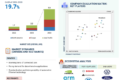
According to a research report published by MarketsandMarkets, the global digital agriculture market size was valued at USD 24.2 billion in 2024 and is projected to reach USD 39.8 billion by 2029, registering a CAGR of 10.4% during the forecast period.
This growth reflects the increasing adoption of connected technologies and data-driven solutions designed to address some of agriculture’s biggest challenges, including resource efficiency, labor shortages, productivity improvement, climate variability, and the need for more precise farm management.
Digitalization Is Reshaping Agricultural Development
Digital technology is becoming an increasingly important component of modern agricultural development, particularly in developing economies.
According to an article published by MDPI in December 2023 titled “How Does Digital Economy Promote Agricultural Development?”, the digital economy can play a significant role in improving agricultural production and addressing challenges associated with food security.
Technologies such as precision farming, data analytics, and digital monitoring systems enable farmers to collect and analyze information about crops, soil, weather, and farm operations. These insights can support better decision-making while helping farmers optimize inputs and improve resource utilization.
Discover more—download your PDF copy now!
Digitalization is also influencing agricultural governance. Digital tools can improve transparency, monitoring, and efficiency, helping governments and agricultural organizations make more informed decisions about resource allocation and agricultural programs.
India Accelerates Digital Agriculture Adoption
India is emerging as an important market for digital agricultural technologies as the government promotes the adoption of innovative and technology-driven farming practices.
One of the initiatives supporting this transformation is the National e-Governance Plan in Agriculture (NeGPA). The initiative supports states in implementing digital agriculture projects that leverage technologies such as artificial intelligence, machine learning, the Internet of Things, and blockchain.
These technologies can help create data-driven agricultural systems in which information is used to improve decision-making, optimize farm operations, and enhance productivity.
The increasing integration of digital tools into Indian agriculture also reflects the broader need to bridge the technology gap across farming communities. As connectivity, digital platforms, and smart agricultural solutions become more accessible, opportunities for technology-enabled farming are expected to expand.
Automation and Control Systems Become a Key Growth Engine
Within the hardware segment, automation and control systems are poised to register the highest CAGR during the forecast period.
The growing emphasis on automation reflects the industry’s transition from conventional farming practices toward more precise and technology-driven operations.
Modern agricultural hardware can include sensor-enabled equipment, automated machinery, guidance systems, and other connected devices designed to improve farming efficiency.
These technologies can help farmers optimize resource utilization, reduce operational inefficiencies, and improve the precision of agricultural activities.
As precision agriculture becomes more widely adopted, automation and control systems are becoming increasingly important for enabling farmers to make better use of data and technology.
The integration of automated machinery with sensors, connectivity, artificial intelligence, and data analytics is creating increasingly sophisticated farming environments.
Connectivity Infrastructure Forms the Backbone of Digital Farming
Digital agriculture depends on more than individual devices and software platforms. Reliable connectivity infrastructure is essential for enabling agricultural technologies to communicate, process information, and deliver insights.
Precision agriculture connectivity infrastructure can support:
- Cloud connectivity
- Farm-centric computing platforms
- Private 5G wireless systems
- Public wireless field coverage
- Terrestrial networks
- Non-terrestrial networks
- Connected agricultural equipment
- Real-time data transmission
This infrastructure provides the foundation for deploying advanced technologies such as artificial intelligence, machine vision, automation, and emerging computing technologies.
As agricultural operations become increasingly connected, reliable communication networks will become essential for ensuring that data generated in the field can be transferred, analyzed, and converted into actionable insights.
Agricultural Robotics Expand the Scope of Automation
Robotics is another technology area gaining momentum across agriculture.
According to a European Parliament report published in March 2023, interest in agricultural robots has increased significantly over the past decade, although adoption remains uneven across regions.
Agricultural robotics is being applied across several areas, including:
- Field farming
- Dairy management
- Indoor farming
- Horticulture
- Other specialized agricultural operations
The development of autonomous agricultural systems is creating new opportunities to automate repetitive and labor-intensive activities.
Intelligent machines equipped with sensors, computer vision, artificial intelligence, and automation capabilities can potentially improve operational efficiency while reducing dependence on manual intervention.
As robotics technology becomes more sophisticated, its role in smart farming is expected to expand further.
Market Share and Regional Growth
Regional adoption is playing an important role in shaping the competitive landscape of digital agriculture. North America remains a major market because of its advanced agricultural infrastructure, high level of technology adoption, and strong presence of technology and agricultural equipment providers.
The digital agriculture market share is also influenced by the pace of technology adoption across Europe, Asia Pacific, South America, and other agricultural regions.
Asia Pacific presents significant opportunities as governments and agricultural organizations increasingly invest in digital infrastructure and technology-enabled farming. Meanwhile, Europe continues to focus on sustainable agriculture, precision farming, and efficient resource management.
The varying levels of digital maturity across regions create opportunities for technology providers to develop solutions suited to local farming conditions, connectivity availability, crop types, and farm sizes.
The US Maintains a Strong Position in North America
The US is expected to maintain its dominant position in the North American digital agriculture market throughout the forecast period.
The country’s established agricultural infrastructure, strong technology ecosystem, investments in research and development, and widespread adoption of advanced farming technologies provide a favorable environment for digital agriculture growth.
According to a USDA report published in February 2023, technologies such as yield maps, soil maps, variable rate technologies (VRT), and automated guidance systems have been increasingly adopted across major crops in the US.
The adoption of yield maps, soil maps, and VRT varies significantly by crop. These technologies have been used on between 5% and 25% of total US planted acreage for crops including winter wheat, cotton, sorghum, and rice.
Automated guidance systems, however, have experienced much stronger adoption. Their use has increased sharply over the past two decades, with automated guidance applied to more than 50% of acreage planted to corn, cotton, rice, sorghum, soybeans, and winter wheat.
This growing adoption highlights the increasing importance of precision and data-driven farming in US agriculture.
Why Are Farmers Adopting Digital Technologies?
The increasing adoption of digital agriculture is being driven by several interconnected factors.
- Improving Resource Efficiency
Digital technologies enable farmers to monitor and manage the use of water, fertilizers, pesticides, fuel, and other inputs more precisely.
- Enhancing Farm Productivity
Data-driven decision-making can help farmers identify crop conditions, monitor field performance, and optimize agricultural practices.
- Addressing Labor Challenges
Automation and robotics can reduce the need for manual intervention in repetitive and labor-intensive activities.
- Supporting Precision Farming
Sensors, satellite data, connected equipment, and analytics can help farmers make field-level decisions instead of relying solely on generalized farming practices.
- Enabling Sustainable Agriculture
Better resource management can support more efficient farming systems while helping reduce unnecessary input use and operational waste.
Digital Agriculture Is Moving Toward Data-Driven Farming
The evolution of digital agriculture is increasingly centered on the ability to collect, connect, and analyze large volumes of agricultural data.
Sensors can collect information from fields and equipment, connectivity infrastructure can transmit that information, cloud platforms can store and process it, and artificial intelligence can help transform data into actionable insights.
This creates an interconnected agricultural ecosystem in which multiple technologies work together rather than operating as isolated solutions.
The combination of IoT, AI, machine learning, robotics, cloud computing, computer vision, and automation is therefore expected to play an increasingly important role in the future of farming.
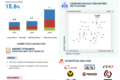
Key Market Players
The competitive landscape includes technology companies, agricultural equipment manufacturers, software providers, and diversified industrial and technology organizations.
Prominent digital agriculture companies operating in the market include:
- Cisco Systems, Inc. (US)
- IBM Corporation (US)
- Accenture (Ireland)
- Trimble Inc. (US)
- Deere & Company (US)
- Epicor Software Corporation (US)
- Hexagon AB (Sweden)
- Bayer AG (Germany)
- AGCO Corporation (US)
- Vodafone Group PLC (UK)
These companies have established manufacturing capabilities, technology expertise, and distribution networks across major markets, including North America, Europe, South America, and Asia Pacific.
Their strategies increasingly focus on developing connected solutions, expanding digital capabilities, strengthening partnerships, and integrating advanced technologies into agricultural operations.
Make an Inquiry to Address your Specific Business Needs
What Does the Future Hold for Digital Agriculture?
The growth of digital agriculture reflects a fundamental shift in the way farming is managed.
Agriculture is moving from traditional, experience-driven decision-making toward systems increasingly supported by real-time data, automation, connectivity, and artificial intelligence.
The future of agriculture will not depend on a single technology. Instead, the integration of multiple digital technologies will determine how effectively farmers can improve productivity, manage resources, respond to changing environmental conditions, and build more resilient agricultural systems.
As connectivity expands and advanced technologies become increasingly accessible, digital agriculture is positioned to become an essential component of modern farming.
Explore the Digital Agriculture Market
The Digital Agriculture Market report provides an in-depth analysis based on offering, technology, operation, type, and region. The study evaluates key market segments, growth opportunities, technological developments, and regional trends shaping the industry.