The Smart Home Technology Market Trends are evolving rapidly as consumers increasingly adopt connected devices that deliver convenience, automation, security, and energy efficiency. Smart speakers, connected appliances, intelligent lighting, smart HVAC systems, security devices, and voice-enabled interfaces are becoming increasingly integrated into residential environments.
According to MarketsandMarkets, the global smart home market is projected to reach USD 230.76 billion in 2026 and USD 450.20 billion by 2032, exhibiting a CAGR of 11.8%. Rising internet penetration, growing adoption of connected devices, demand for remote monitoring, AI-powered automation, and increasing focus on energy efficiency are among the key factors supporting market expansion.
Connected Appliances Reshape Modern Homes
One of the most visible Smart Home Technology Market Trends is the increasing integration of connected appliances into everyday household activities. Refrigerators, washing machines, ovens, thermostats, lighting systems, and other appliances can now connect to home networks and mobile applications.
Connected appliances allow users to monitor and control devices remotely. Consumers can adjust settings, receive notifications, schedule operations, and monitor energy consumption through smartphones or other control interfaces.
This growing connectivity is helping transform individual appliances into components of integrated smart home ecosystems.
Smart Speakers Become Central Control Interfaces
Smart speakers are playing an important role in the development of connected homes. Voice assistants provide users with a simple way to control compatible lighting, appliances, entertainment systems, security devices, and other connected products.
The growing availability of voice-enabled technologies is also supporting more natural interactions between consumers and their homes. Rather than manually operating individual devices, users can increasingly manage multiple functions through voice commands.
MarketsandMarkets identifies ongoing advancements in AI- and voice-enabled smart home solutions as an important driver of market development
AI-Powered Automation Strengthens Smart Home Technology Market Trends
Artificial intelligence is becoming a major force shaping Smart Home Technology Market Trends. AI enables smart home systems to move beyond basic remote control toward more personalized and automated experiences.
AI-powered systems can learn patterns, recognize preferences, and automate certain household functions. For example, intelligent systems can adjust lighting, temperature, or other settings based on user behavior and environmental conditions.
The integration of AI can also enhance home security through intelligent monitoring and automated alerts. As AI capabilities improve, smart homes are expected to become increasingly proactive rather than simply responsive.
Download PDF Brochure @ https://www.marketsandmarkets.com/pdfdownloadNew.asp?id=121
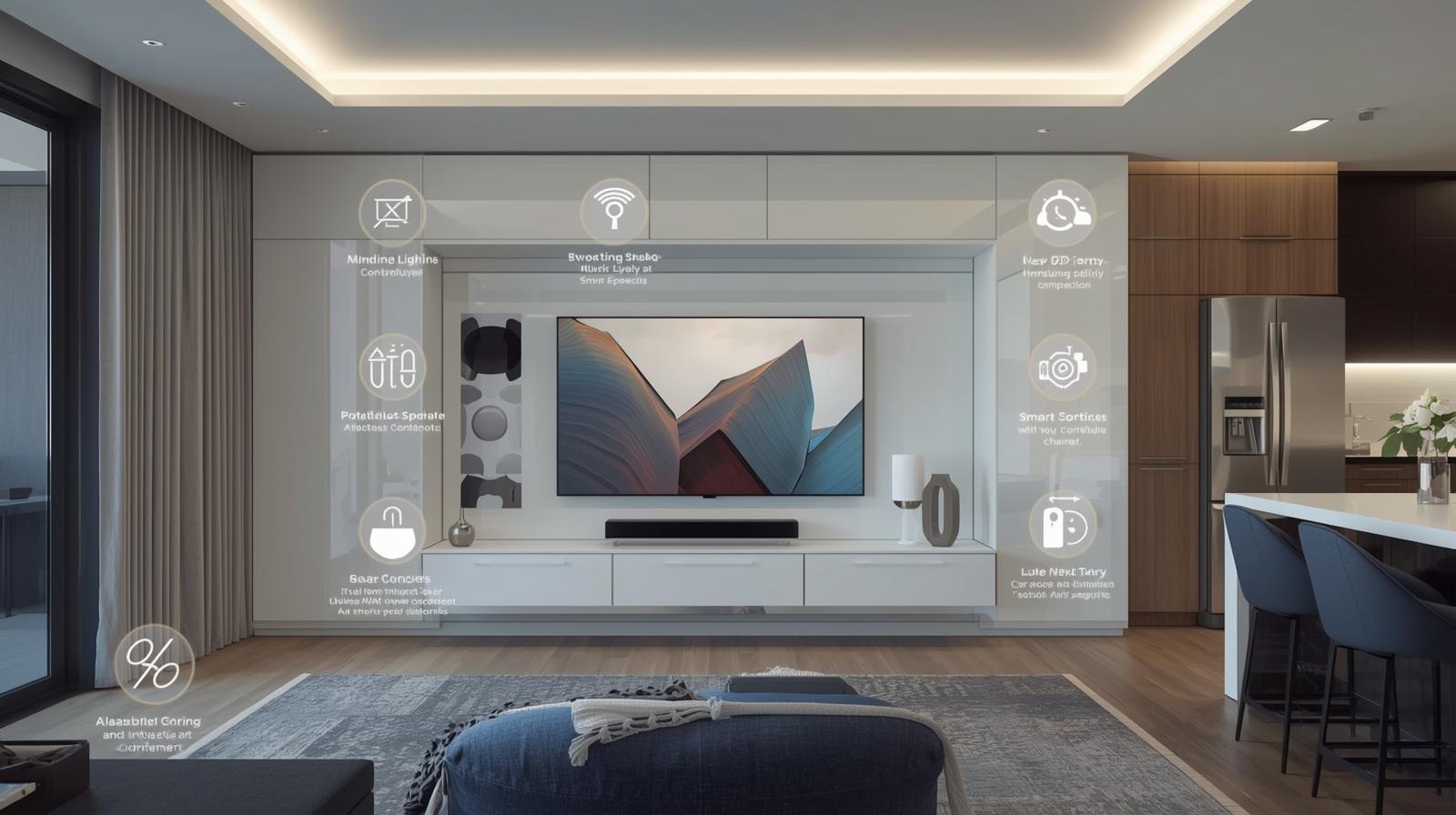
IoT Expands Connected Home Ecosystems
The Internet of Things remains fundamental to smart home development. Increasing internet penetration and the proliferation of IoT-enabled devices allow different household systems to communicate and exchange information.
According to MarketsandMarkets, growing internet connectivity and smartphone adoption are significantly supporting smart home adoption. Connected devices such as smart speakers, lighting systems, and security solutions can communicate through connected networks, enabling automation and remote monitoring
This transition from standalone smart products toward integrated ecosystems is one of the most significant Smart Home Technology Market Trends.
Demand for Remote Monitoring Continues to Rise
Consumers increasingly want to monitor and manage their homes while away. Smartphone applications and cloud-connected platforms allow users to check security cameras, control appliances, adjust thermostats, and manage lighting remotely.
Remote monitoring is particularly important for smart security applications. Connected cameras, locks, sensors, and alarm systems can provide real-time information and alerts.
The increasing demand for remote access and home monitoring is therefore expected to remain a major contributor to smart home adoption.
Smart Security Remains a Major Application
Safety and security continue to be among the most important reasons consumers adopt smart home technologies. Connected video doorbells, surveillance cameras, smart locks, motion sensors, and alarm systems can provide homeowners with greater visibility and control.
AI-based monitoring is further enhancing these solutions by enabling intelligent alerts and threat detection. Users can receive notifications when unusual activity is detected and remotely access security systems.
MarketsandMarkets reports that the safety and security segment accounted for a substantial market share in 2025, supported by increasing adoption of connected surveillance and access-control solutions.
Energy Efficiency Becomes a Key Priority
Energy management is another major theme shaping Smart Home Technology Market Trends. Consumers and businesses are increasingly interested in reducing energy consumption while maintaining comfort.
Smart thermostats, connected lighting, energy monitoring systems, smart meters, and automated HVAC controls can help households monitor and optimize energy usage.
The growing emphasis on energy efficiency and low-carbon solutions is supporting investment in smart home technologies. Government initiatives promoting green buildings and energy-efficient infrastructure are also creating additional opportunities.
Smart HVAC Shows Strong Growth Potential
HVAC is emerging as an important growth area within the smart home ecosystem. Intelligent heating, ventilation, and air-conditioning systems can provide automated temperature control, remote management, and energy optimization.
MarketsandMarkets expects the smart home HVAC segment to register the highest CAGR of approximately 20% during the forecast period.
The growing focus on indoor comfort and energy savings is likely to encourage homeowners and property developers to adopt connected climate-control systems.
Wireless Connectivity Supports Adoption
Wireless communication is becoming increasingly important because it simplifies installation and enables smart devices to communicate without extensive physical infrastructure.
The wireless segment accounted for approximately 64% of the market in 2025, according to MarketsandMarkets. Wireless solutions can be particularly attractive for retrofit installations because homeowners can upgrade existing properties without significant structural modifications.
As connected devices become easier to install and configure, wireless technologies are expected to remain central to Smart Home Technology Market Trends.
Retrofit Installations Create New Opportunities
Smart home adoption is not limited to newly constructed properties. Retrofit installations are gaining momentum as homeowners seek to modernize existing residences.
Wireless and plug-and-play technologies make it easier to integrate smart lighting, security, HVAC, and appliance solutions into existing homes.
MarketsandMarkets identifies retrofit installations as a fast-growing segment, supported by consumer interest in modernization, energy efficiency, and home automation.
Interoperability Remains a Challenge
Despite rapid technological progress, fragmented ecosystems and interoperability issues remain challenges for the market. Devices from different manufacturers may not always communicate seamlessly, creating complexity for consumers.
The lack of unified standards can make it more difficult to build scalable connected-home environments. MarketsandMarkets identifies interoperability gaps and the lack of unified standards as important challenges facing the industry.
Greater compatibility between platforms and devices could help simplify installation and improve the overall user experience.
Security and Privacy Require Greater Attention
As more household devices connect to the internet, cybersecurity and data privacy are becoming increasingly important. Smart speakers, cameras, appliances, sensors, and other devices can collect and transmit information.
MarketsandMarkets highlights data security risks, privacy concerns, and dependence on stable connectivity as restraints on smart home adoption.
Manufacturers and service providers therefore need to prioritize secure device design, software updates, authentication, encryption, and responsible data management.
Asia Pacific Offers Strong Growth Opportunities
Asia Pacific is expected to be the fastest-growing regional market, with MarketsandMarkets projecting a CAGR of approximately 17%. Increasing urbanization, digital adoption, smart city initiatives, and improvements in connectivity are supporting regional demand.
China, Japan, India, and other countries across the region are investing in connected infrastructure and intelligent residential technologies.
Growing middle-class populations and increasing awareness of convenience, security, and energy management are expected to create additional opportunities.
Key Smart Home Technology Market Trends
The major Smart Home Technology Market Trends shaping the industry include:
- Increasing adoption of smart speakers and voice assistants
- Growth of AI-powered home automation
- Expansion of connected household appliances
- Rising demand for smart security and access control
- Increasing adoption of smart HVAC systems
- Growing focus on energy management and efficiency
- Expansion of wireless and retrofit installations
- Increasing use of smartphone and tablet control interfaces
- Growth of integrated IoT ecosystems
- Rising demand for remote monitoring and control
- Greater integration of AI with connected home devices
- Increasing emphasis on interoperability and cybersecurity
Future Outlook
The outlook for Smart Home Technology Market Trends remains positive as connected devices increasingly become integrated into everyday residential environments.
Smart speakers and connected appliances will remain important components of this transformation, but the next phase of market development will increasingly focus on integrated ecosystems. AI, IoT, voice control, smart security, energy management, and connected HVAC technologies are expected to work together to create more intelligent and personalized homes.
The transition from individual connected devices toward coordinated, automated systems represents one of the defining Smart Home Technology Market Trends. As interoperability improves and technologies become more accessible, smart homes are expected to become increasingly capable of anticipating user needs, optimizing energy consumption, enhancing security, and improving everyday convenience.
