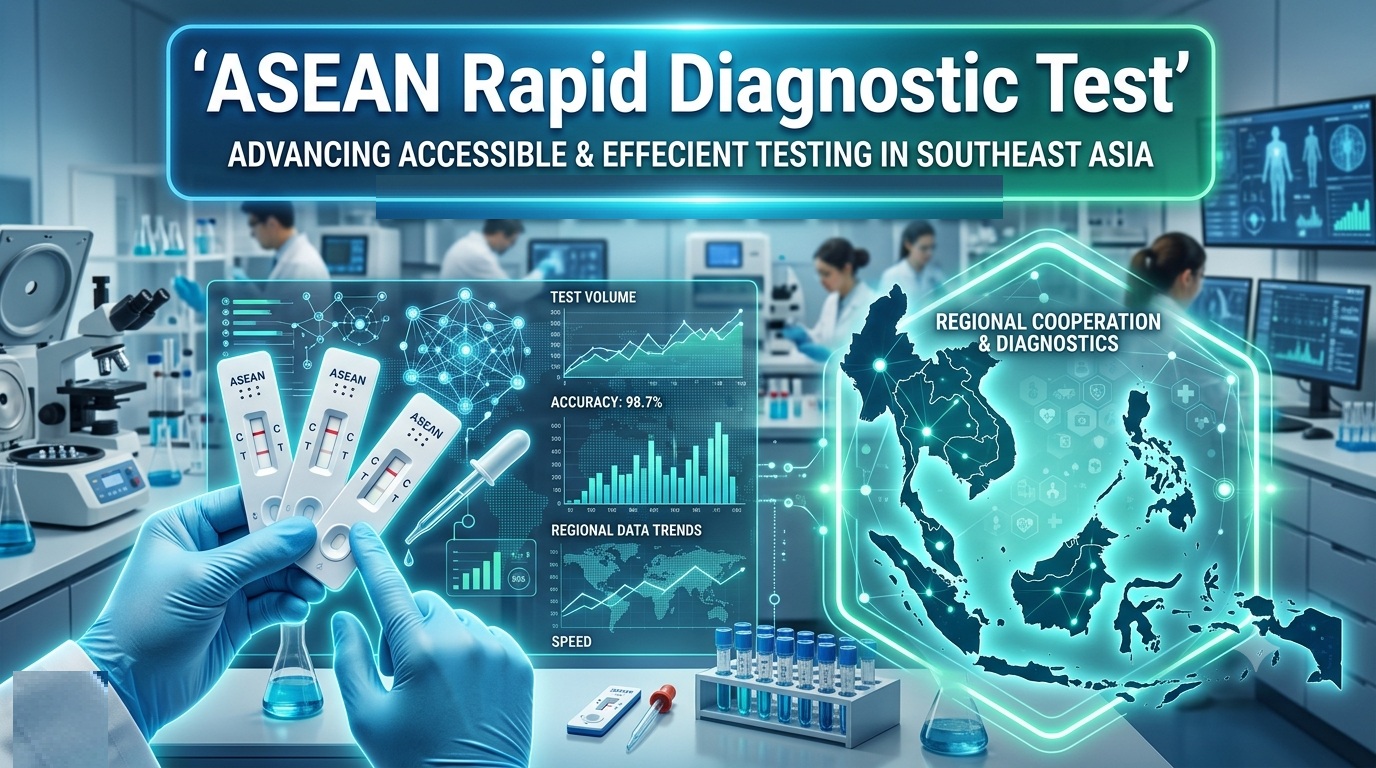
The ASEAN Rapid Diagnostic Test Market is valued at an estimated USD 1.08 billion in 2025 and is projected to reach USD 1.36 billion by 2030, registering a CAGR of 4.7% during the forecast period. Market growth is being driven by the rising prevalence of chronic and infectious diseases, increasing adoption of Point of Care Testing, growing demand for Rapid Diagnostic Tests, government-led screening programs, healthcare infrastructure investments, and the expansion of home-based diagnostics across ASEAN countries.
Download PDF Brochure:- https://www.marketsandmarkets.com/pdfdownloadNew.asp?id=219733165
Rising Demand for Point of Care Testing and Rapid Diagnostic Tests
The growing burden of diabetes, cardiovascular diseases, infectious diseases, and other chronic conditions is increasing the need for accessible diagnostic technologies across ASEAN countries.
Point of Care Testing enables diagnostic procedures to be performed at or near the location of patient care, reducing dependence on centralized laboratories. The ability to obtain results rapidly can support disease screening, diagnosis, treatment decisions, and ongoing patient monitoring.
The growing use of Rapid Diagnostic Tests is particularly relevant in healthcare environments where timely diagnosis is critical. These solutions can support infectious disease screening and chronic disease management in hospitals, clinics, outpatient facilities, community healthcare centers, and home-care settings.
Government initiatives, healthcare modernization programs, public-private partnerships, and expanding screening programs are further supporting the adoption of decentralized diagnostics throughout the region.
Glucose Monitoring Products Held the Largest Market Share in 2024
Based on product, the ASEAN Rapid Diagnostic Test market includes infectious disease testing, glucose, cardiometabolic, pregnancy and fertility, coagulation, urinalysis, cancer markers, cholesterol, hematology, fecal occult blood, drugs-of-abuse testing, and other point-of-care diagnostic products.
Among these segments, glucose monitoring products accounted for the largest market share in 2024.
The leading position of the segment can be attributed to the increasing prevalence of diabetes and the growing need for frequent Glucose Monitoring. Patients and healthcare professionals increasingly require convenient testing solutions that can provide glucose readings without relying on centralized laboratory infrastructure.
The widespread availability of the glucometer has also contributed to the adoption of glucose testing. Modern glucometers are increasingly designed to be portable, user-friendly, and suitable for self-monitoring, making them particularly valuable for patients managing diabetes at home.
Technological advancements in glucose testing devices, improved usability, connectivity features, and increasing awareness of diabetes management are expected to support continued demand for glucose monitoring solutions across ASEAN markets.
Home Care Settings Dominated the Market in 2024
By end user, the ASEAN Rapid Diagnostic Test market is segmented into clinical laboratories, hospitals and critical care centers, outpatient and ambulatory care centers, home care settings, and other end users.
The home care settings segment accounted for the largest market share in 2024.
The increasing adoption of home-based diagnostic testing is being driven by demand for convenience, rapid results, lower healthcare facility dependence, and greater patient involvement in disease management.
Home-based Point of Care Testing is particularly important for chronic conditions requiring regular monitoring. A glucometer, for example, enables patients with diabetes to perform routine glucose testing at home and use the results to support ongoing disease-management decisions.
The increasing availability of portable diagnostic devices and improvements in accuracy, affordability, connectivity, and ease of operation are expected to strengthen the role of home care in the ASEAN POC diagnostics market.
Indonesia Accounted for the Largest Market Share in 2024
The ASEAN Rapid Diagnostic Test market covers Vietnam, Laos, Cambodia, Malaysia, Myanmar, the Philippines, Singapore, Thailand, Indonesia, and Brunei.
Indonesia accounted for the largest share of the ASEAN Rapid Diagnostic Test market in 2024.
Indonesia’s large population, expanding healthcare requirements, and increasing burden of chronic and infectious diseases are creating significant demand for rapid and decentralized diagnostic solutions.
The country’s geographic diversity also increases the importance of accessible Point of Care Testing solutions. Portable diagnostic devices and Rapid Diagnostic Tests can help extend testing capabilities beyond major hospitals and centralized laboratories to underserved and remote areas.
Government healthcare initiatives, including the Jaminan Kesehatan Nasional (JKN) program, have expanded healthcare coverage and supported access to diagnosis and preventive care. Increasing healthcare investments, public-private partnerships, and greater health awareness are expected to create additional opportunities for POC diagnostics providers in Indonesia.
Molecular Diagnostics Expand the Capabilities of Point of Care Testing
Technological advancements in lateral flow assays, biochemistry, and Molecular Diagnostics (MDx) are expanding the capabilities of point-of-care platforms.
Lateral flow technologies provide advantages such as portability, relatively simple operation, rapid results, and suitability for decentralized environments. These characteristics make lateral flow-based Rapid Diagnostic Tests valuable for infectious disease screening and other applications requiring quick results.
Meanwhile, advances in Molecular Diagnostics are enabling more sophisticated near-patient testing. Molecular diagnostic technologies can provide highly specific detection of pathogens and other disease-related targets, creating opportunities to bring advanced testing capabilities closer to patients.
Miniaturization, automation, assay development, digital connectivity, and improvements in instrument performance are expected to support the integration of Molecular Diagnostics into decentralized and near-patient testing workflows.
Speak To Analyst:- https://www.marketsandmarkets.com/requestsampleNew.asp?id=219733165
Glucometer Adoption Supports Diabetes Testing
The growing prevalence of diabetes across ASEAN countries is creating sustained demand for glucometers and glucose monitoring solutions.
A glucometer provides a practical approach to measuring blood glucose levels and is widely used in home-care environments. The increasing emphasis on self-management and preventive healthcare is encouraging patients to monitor glucose levels more regularly.
Manufacturers are increasingly focusing on compact devices, simplified testing procedures, improved data management, connectivity, and integration with digital health platforms. These developments can enhance the value of glucose monitoring beyond standalone measurement by supporting more connected approaches to chronic disease management.
The continued expansion of home healthcare and decentralized diagnostics is therefore expected to create opportunities for companies providing glucometers, glucose testing products, and connected monitoring technologies.
Competitive Landscape
The ASEAN Rapid Diagnostic Test market includes established multinational diagnostics companies, regional manufacturers, and specialized providers of POC testing technologies.
Key players operating in the market include Abbott, F. Hoffmann-La Roche Ltd., Siemens Healthineers AG, Sysmex Corporation, Danaher Corporation, BD, QuidelOrtho Corporation, Cardinal Health, AccuBioTech Co., Ltd., EKF Diagnostics Holdings plc, bioMérieux, Thermo Fisher Scientific Inc., BIOSYNEX SA, PTS Diagnostics, LifeScan IP Holdings, LLC, SD Biosensor, Inc., CTK Biotech, Inc., Wondfo, Trinity Biotech, SEKISUI Diagnostics, Werfen, ARKRAY, Inc., Xiamen Boson Biotech Co., Ltd., Credo Diagnostics Biomedical Pte. Ltd., Anbio Biotechnology Inc., and SG Diagnostics.
Competition is increasingly centered on rapid turnaround times, portable diagnostic platforms, affordability, analytical performance, decentralized testing, Molecular Diagnostics, and solutions designed for home and resource-variable healthcare environments.