The global IoT Technology Market is becoming a fundamental pillar of digital transformation as businesses, governments, and consumers increasingly connect physical devices to digital networks. From smart homes and connected vehicles to industrial automation, healthcare monitoring, smart cities, and energy management, the Internet of Things (IoT) is creating a connected ecosystem in which devices can collect, exchange, analyze, and act on data in real time.
According to MarketsandMarkets, the global IoT Technology Market was valued at USD 959.30 billion in 2025 and is projected to reach USD 1,148.62 billion by 2030, registering a 3.7% CAGR from 2025 to 2030. The market encompasses IoT node components, software solutions, platforms, services, and end-use applications across industrial and consumer environments.
The expansion of internet connectivity, growing adoption of smart devices, Industry 4.0 initiatives, cloud computing, artificial intelligence (AI), edge computing, and 5G networks are among the major factors supporting IoT market growth. At the same time, cybersecurity concerns, interoperability issues, and shortages of skilled professionals remain important challenges for market participants
IoT Technology Market Revenue Growth Outlook
The IoT Technology Market is expected to add approximately USD 189.32 billion in revenue between 2025 and 2030, based on the MarketsandMarkets forecast.
This growth reflects the increasing integration of connected technologies into both industrial and consumer environments. Organizations are investing in IoT to improve operational efficiency, automate processes, monitor assets remotely, optimize resources, and generate actionable insights from real-time data.
IoT is also evolving beyond basic connectivity. Modern IoT ecosystems increasingly combine sensors, processors, connectivity technologies, cloud platforms, edge computing, AI, analytics, and cybersecurity solutions.
As a result, the commercial value of IoT is increasingly being created not just by connected devices but by the software and services that transform device-generated data into business intelligence.
What Is Driving the IoT Technology Market?
Rising Internet Penetration
The global expansion of internet access is one of the fundamental drivers of IoT adoption. Greater availability of high-speed connectivity enables connected devices to exchange information and communicate with cloud and edge platforms.
According to MarketsandMarkets, the global rise in internet penetration supports real-time monitoring, automation, and data-driven decision-making across healthcare, manufacturing, smart homes, transportation, and other industries.
As connectivity becomes more accessible, businesses can deploy larger numbers of connected devices across geographically distributed operations.
Growing Adoption of Smart Home Devices
Consumer adoption is another important growth factor.
Connected appliances, smart security systems, home assistants, lighting controls, thermostats, and other smart-home technologies are expanding the number of IoT endpoints deployed in residential environments.
The growing smart-home ecosystem is creating demand for sensors, processors, connectivity ICs, cloud platforms, device-management software, and cybersecurity solutions.
Expansion of Industry 4.0
Industrial IoT is transforming manufacturing by connecting machines, production lines, sensors, robots, and enterprise systems.
Manufacturers are using IoT-enabled systems for predictive maintenance, production optimization, remote monitoring, asset tracking, quality control, and energy management.
MarketsandMarkets identifies the expansion of Industry 4.0 and smart manufacturing as an important driver of IoT technology adoption.
The industrial opportunity is particularly significant because IoT can generate measurable benefits through reduced downtime, improved equipment utilization, and greater operational visibility.
5G Accelerates Connected Ecosystems
The deployment of 5G networks is another major factor supporting the IoT Technology Market.
5G can provide higher bandwidth, lower latency, and support for large numbers of connected devices. These capabilities are relevant to applications such as smart cities, connected vehicles, healthcare, industrial automation, and logistics.
MarketsandMarkets identifies the growing deployment of 5G networks as a key market driver.
The combination of 5G and IoT can enable new applications requiring rapid communication between devices and systems. Examples include intelligent transportation, remote monitoring, industrial robotics, and connected infrastructure.
AI, Edge Computing, and IoT Converge
The integration of AI and edge computing is changing the capabilities of IoT systems.
Traditional IoT architectures often transmit large volumes of device data to centralized cloud platforms for processing. Edge computing allows some data processing to occur closer to the source, potentially reducing latency and bandwidth requirements.
When AI is integrated at the edge, connected devices can perform more sophisticated analysis locally.
Potential applications include:
- Predictive maintenance
- Real-time anomaly detection
- Intelligent video analytics
- Autonomous systems
- Industrial quality inspection
- Smart healthcare monitoring
- Connected vehicle systems
- Energy optimization
MarketsandMarkets highlights AI, edge computing, and 5G as technologies that are accelerating the development of IoT ecosystems.
Download PDF Brochure @ https://www.marketsandmarkets.com/pdfdownloadNew.asp?id=258239167
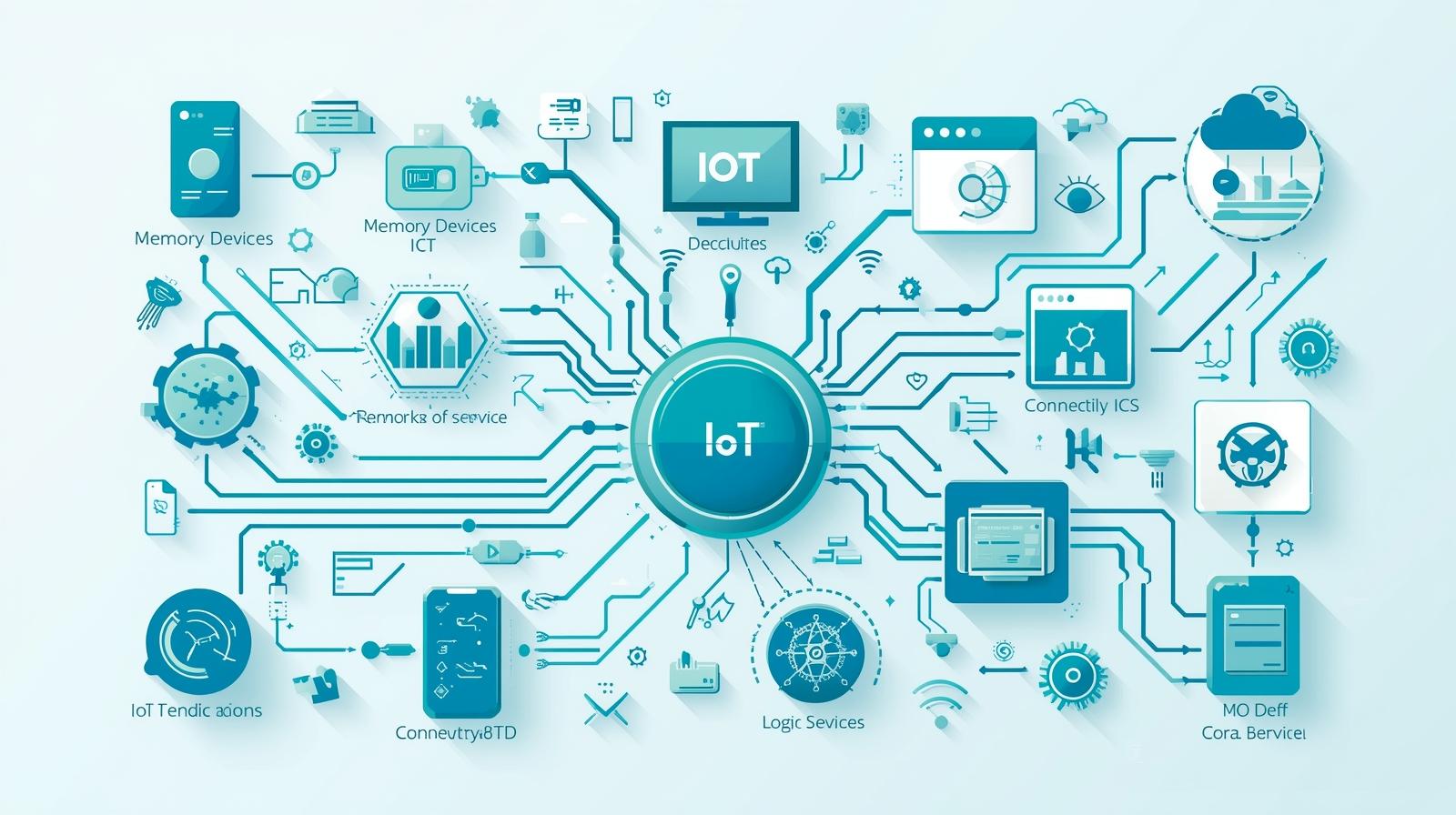
IoT Node Components: Processors Lead
The IoT Technology Market is segmented by node components into processors, connectivity ICs, sensors, memory devices, and logic devices.
According to MarketsandMarkets, the processor segment is expected to hold the largest market share during the forecast period. IoT devices require processors to manage data processing, connectivity, and device functionality.
As IoT applications become more sophisticated, devices increasingly require processors capable of handling greater computational workloads.
This creates opportunities for semiconductor companies developing low-power processors, edge-AI chips, microcontrollers, system-on-chip architectures, and specialized IoT processors.
The growing demand for intelligent endpoints is also encouraging semiconductor innovation around power efficiency, miniaturization, security, and on-device AI.
Software Solutions Represent a High-Growth Opportunity
While hardware remains essential to IoT deployment, software is becoming increasingly important to the market’s value proposition.
MarketsandMarkets identifies the software solution segment as the highest-growth segment. It includes data management, real-time streaming analytics, network bandwidth management, remote monitoring, and security solutions.
Among software solutions, data management plays an important role because IoT networks can generate enormous volumes of structured and unstructured information.
Organizations need systems capable of collecting, organizing, securing, analyzing, and distributing this data.
This creates business opportunities for companies providing:
- IoT data platforms
- Real-time analytics
- Device-management software
- Remote monitoring
- IoT cybersecurity
- Network-management solutions
- Cloud integration
- AI-powered analytics
The shift toward software also creates opportunities for recurring revenue models based on subscriptions and managed services.
IoT Platforms Enable Device and Application Management
IoT platforms provide centralized capabilities for managing connected devices, applications, and networks.
MarketsandMarkets categorizes IoT platforms into device management, application management, and network management. These platforms can enable centralized monitoring and control across organizational environments.
Highly customizable platforms can also allow developers to build specialized applications using APIs and platform capabilities.
This makes platform interoperability increasingly important. Enterprises often operate heterogeneous environments containing equipment from multiple vendors.
IoT platform providers that can simplify integration across devices, networks, cloud environments, and enterprise software can therefore capture significant value.
Industrial IoT Creates Major Business Opportunities
The industrial end-use application segment is expected to register the highest CAGR during the forecast period, according to MarketsandMarkets.
Industrial IoT is being adopted across manufacturing, healthcare, automotive and transportation, building automation, retail, banking and financial services, oil and gas, agriculture, and aerospace and defense.
Manufacturers can use IoT systems to monitor equipment performance, optimize production, detect anomalies, reduce energy consumption, and implement predictive maintenance.
In logistics and transportation, connected sensors can track vehicles, shipments, and assets.
In agriculture, IoT devices can monitor soil conditions, irrigation, weather, and crop health.
The breadth of industrial applications makes Industrial IoT one of the most important sources of long-term opportunity for technology vendors and solution providers.
Consumer IoT Continues to Expand
Consumer applications remain an important part of the IoT ecosystem.
The MarketsandMarkets report includes wearable devices and consumer electronics within the consumer end-use segment. M
Wearables can collect health, fitness, activity, and environmental information, while connected consumer electronics are increasingly integrated with cloud platforms and mobile applications.
The growing consumer IoT ecosystem creates opportunities for semiconductor suppliers, device manufacturers, software developers, connectivity providers, cloud companies, and cybersecurity vendors.
Asia Pacific Leads IoT Market Growth
Asia Pacific is expected to be the fastest-growing regional market for IoT technology during 2025–2030.
MarketsandMarkets projects the Asia Pacific IoT Technology Market to increase from USD 260.76 billion in 2025 to USD 351.03 billion by 2030, representing a 6.1% CAGR.
Growth is being supported by digital transformation, government initiatives, 5G investment, smart-city projects, Industry 4.0 programs, and a large technology-oriented consumer base.
China, India, Japan, and South Korea are among the key countries contributing to the region’s IoT ecosystem.
The region’s large manufacturing base also provides a strong foundation for Industrial IoT deployment.
For IoT companies, Asia Pacific therefore represents an important market for connected devices, semiconductor components, software platforms, industrial solutions, and managed services.
North America Remains a Major IoT Market
North America represents another important market, supported by mature digital infrastructure and early adoption of advanced technologies.
According to MarketsandMarkets, the North American IoT Technology Market is projected to reach USD 314.75 billion by 2030 from USD 279.90 billion in 2025, representing a 2.4% CAGR.
Strong cloud and AI ecosystems, investments in smart manufacturing, healthcare IoT, connected vehicles, and smart cities are supporting continued market development.
North America’s mature technology ecosystem also provides opportunities for startups and established companies developing specialized IoT software, edge computing, cybersecurity, and industrial applications.
Europe Focuses on Connected and Sustainable Infrastructure
The European IoT Technology Market is projected to reach USD 272.11 billion by 2030 from USD 246.63 billion in 2025, representing a 2.0% CAGR, according to MarketsandMarkets.
IoT adoption across Europe is supported by connected devices, 5G deployment, smart-city initiatives, and industrial digitalization.
The region also presents opportunities for IoT solutions focused on energy efficiency, smart buildings, transportation, manufacturing, and infrastructure monitoring.
Key Business Opportunities Through 2030
The expansion of IoT creates opportunities across the technology value chain.
IoT Hardware and Semiconductor Components
Semiconductor manufacturers can benefit from increasing demand for processors, sensors, memory devices, connectivity ICs, and logic devices.
Low-power components, edge-AI processors, secure chips, and integrated connectivity solutions are particularly relevant as connected devices become smaller and more intelligent.
IoT Software
Software represents one of the most attractive growth areas.
Data management, remote monitoring, analytics, security, and network-management solutions can help enterprises address the complexity created by rapidly expanding IoT deployments.
Industrial Automation
Manufacturers are increasingly investing in connected machinery, robotics, predictive maintenance, digital production monitoring, and intelligent process optimization.
This creates opportunities for IoT solution providers that can demonstrate measurable improvements in productivity and operating efficiency.
Smart Cities
Smart-city projects represent another significant opportunity.
Connected infrastructure can support intelligent transportation, energy management, public safety, environmental monitoring, and efficient resource utilization.
MarketsandMarkets identifies smart cities as an area where IoT, AI, 5G, and edge computing can unlock advanced use cases. M
Connected Healthcare
Healthcare IoT is expanding through remote monitoring, connected medical devices, wearable technologies, and data-driven healthcare services.
The ability to collect patient and equipment data in real time can support remote care and operational efficiency.
IoT Cybersecurity
As the number of connected endpoints increases, security becomes a critical requirement.
IoT cybersecurity providers can address device authentication, data protection, network security, access control, vulnerability management, and threat detection.
MarketsandMarkets identifies data security and privacy concerns as a major restraint on IoT market growth, making security technology both a challenge and a significant business opportunity.
Major Market Challenges
Despite strong growth prospects, the IoT ecosystem faces several challenges.
Data Security and Privacy
The enormous volume of information generated by connected devices creates security and privacy risks.
Unauthorized access, cyberattacks, data breaches, and insecure endpoints can reduce customer confidence and delay IoT deployments.
Security must therefore be integrated into IoT architectures from the device level through networks, platforms, cloud infrastructure, and applications.
Interoperability
IoT ecosystems often involve devices and software from different vendors.
MarketsandMarkets identifies interoperability challenges and a lack of common standards as important challenges facing the market.
Common protocols, APIs, standards, and integration frameworks will be increasingly important as organizations scale multi-vendor deployments.
Skilled Workforce Shortage
IoT requires expertise across hardware engineering, software development, networking, cloud computing, AI, analytics, and cybersecurity.
The shortage of professionals with cross-disciplinary IoT expertise can make implementation and maintenance more difficult.
Companies that invest in training, partnerships, and specialized IoT talent will be better positioned to capture emerging opportunities.
Competitive Landscape
The IoT Technology Market includes major semiconductor companies, cloud providers, software companies, networking companies, and IoT platform providers.
MarketsandMarkets identifies Intel Corporation, Qualcomm Technologies, Texas Instruments, STMicroelectronics, IBM, Hewlett Packard Enterprise, Cisco Systems, Microsoft, PTC, and Amazon Web Services among key companies in the market.
Competition is increasingly based on ecosystem capabilities rather than individual products.
Companies are using new product launches, partnerships, and acquisitions to expand their portfolios and strengthen market positions.
Strategic partnerships between semiconductor manufacturers, cloud providers, telecom operators, software developers, and industrial companies are likely to remain important as IoT deployments become more complex.
Future Outlook for the IoT Technology Market
The IoT Technology Market is transitioning from a connectivity-focused industry toward a broader intelligent-technology ecosystem.
The combination of IoT + AI + edge computing + cloud + 5G is enabling organizations to move from simple monitoring toward automated decision-making and predictive intelligence.
Industrial companies can use connected systems to anticipate equipment failures. Cities can use IoT networks to optimize transportation and energy. Healthcare organizations can remotely monitor patients. Retailers can use connected technologies to improve inventory and customer experiences.
The result is a growing ecosystem in which the commercial value of IoT increasingly depends on what organizations can do with connected-device data.
The global IoT Technology Market is positioned for continued expansion as connected devices and intelligent systems become increasingly embedded across industrial, commercial, and consumer environments.
MarketsandMarkets estimates that the market will grow from USD 959.30 billion in 2025 to USD 1,148.62 billion by 2030, representing a 3.7% CAGR.
The strongest opportunities are emerging in IoT software, industrial automation, AI-enabled devices, edge computing, smart cities, connected healthcare, cybersecurity, and 5G-enabled applications.
Asia Pacific is expected to remain the fastest-growing region, while industrial applications are positioned for strong growth as manufacturers accelerate Industry 4.0 and digital transformation initiatives.
For technology companies and investors, the IoT opportunity extends well beyond connected devices. The most valuable solutions will increasingly be those that combine hardware, software, connectivity, AI, analytics, security, and managed services to deliver measurable business outcomes.
As enterprises move toward increasingly intelligent and automated operations, IoT is likely to remain a foundational technology for the next generation of digital transformation through 2030.