The smart irrigation market is gaining momentum as agriculture, landscaping, and municipal water management increasingly adopt connected technologies to improve irrigation efficiency and reduce water consumption. Conventional irrigation systems often operate according to fixed schedules, which can result in overwatering, water losses, and inefficient resource utilization. Smart irrigation solutions address these challenges through sensors, weather data, automation, wireless connectivity, and intelligent control systems that enable irrigation based on real-time field and environmental conditions.
According to MarketsandMarkets, the smart irrigation market size is projected to grow from USD 1.59 billion in 2025 to USD 2.65 billion by 2030, expanding at a CAGR of 10.8% during the forecast period. Increasing water scarcity, climate variability, government initiatives focused on water conservation, and the growing adoption of precision agriculture technologies are among the key factors supporting market growth.
Smart Irrigation Market Growth Driven by Water Conservation
Water scarcity is one of the strongest growth drivers for the smart irrigation market. Agriculture accounts for a significant share of global freshwater withdrawals, increasing pressure on farmers, governments, and agricultural organizations to improve water-use efficiency. Smart irrigation technologies allow irrigation to be adjusted according to soil moisture, crop requirements, weather conditions, and evapotranspiration levels.
Unlike conventional timer-based systems, smart irrigation controllers can modify irrigation schedules dynamically. Soil moisture sensors can determine whether additional water is required, while weather-based controllers can incorporate rainfall forecasts and temperature data into irrigation decisions. This helps minimize unnecessary irrigation while supporting healthier crop and landscape conditions.
The increasing frequency of droughts and changing precipitation patterns are further encouraging investments in intelligent water management. Municipalities, commercial properties, golf courses, and residential users are also adopting smart irrigation technologies to reduce water consumption and operating costs.
Download PDF Brochure @ https://www.marketsandmarkets.com/pdfdownloadNew.asp?id=199758913
Leading Smart Irrigation Companies Expand Technology Portfolios
The competitive landscape of the smart irrigation market includes irrigation equipment manufacturers, agricultural technology companies, sensor providers, automation specialists, and technology companies developing connected water-management platforms.
Key players include The Toro Company, Rain Bird Corporation, Hunter Industries, Netafim, Valmont Industries, Lindsay Corporation, Jain Irrigation Systems, Nelson Irrigation, HydroPoint Data Systems, and Weathermatic, among others. These companies are focusing on connected controllers, smart sensors, automated valves, cloud-based irrigation management, and data-driven decision-making.
Established irrigation companies are increasingly combining their traditional hardware portfolios with digital capabilities. Smart controllers, wireless sensors, flow meters, pressure monitoring systems, and mobile applications are becoming important components of integrated irrigation platforms.
Competition is also shifting toward software and analytics. Companies capable of collecting field data and converting it into actionable irrigation recommendations can provide greater value to commercial farms and other large-scale users. Integration with farm-management platforms, weather services, and precision agriculture systems is expected to become increasingly important.
Smart Irrigation Market Mergers and Acquisitions Strengthen Competition
Mergers and acquisitions are influencing the competitive structure of the smart irrigation market by enabling companies to broaden their technological capabilities and geographic reach. Established irrigation and agricultural technology companies can use acquisitions to gain access to specialized expertise in sensors, automation, connectivity, analytics, and water-management software.
Strategic consolidation can also help companies create integrated solutions covering irrigation equipment, sensing technologies, control systems, and digital platforms. This is particularly important as customers increasingly prefer unified solutions rather than managing multiple disconnected technologies.
Partnerships and collaborations are also becoming important. Irrigation technology providers are working with agricultural equipment manufacturers, IoT companies, weather-data providers, connectivity companies, and agricultural software developers to create connected ecosystems.
Future M&A activity is likely to focus on technologies such as IoT-enabled sensing, AI-based irrigation analytics, remote monitoring, cloud platforms, autonomous irrigation control, and water-management optimization.
IoT and Sensor Technologies Transform Smart Irrigation
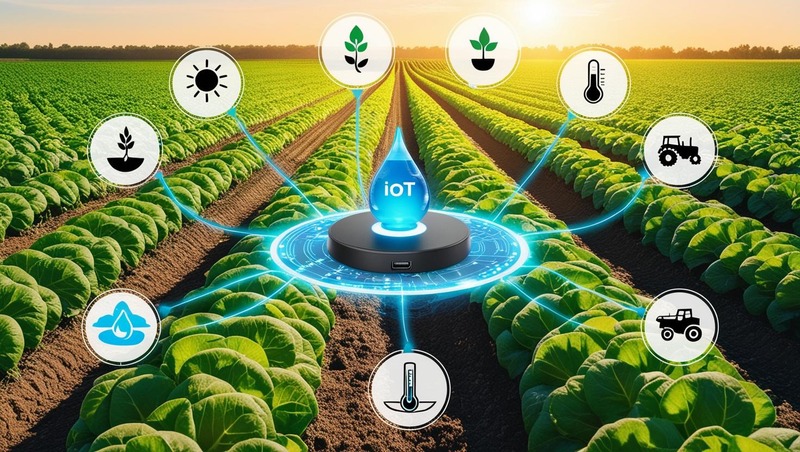
IoT connectivity is a major technology enabler for the smart irrigation market. Connected sensors can continuously collect information related to soil moisture, temperature, humidity, rainfall, water flow, and other environmental parameters. This data can be transmitted to centralized platforms where it can be analyzed to determine irrigation requirements.
Wireless communication technologies are making sensor deployment more practical across large agricultural fields and remote locations. Cloud-based platforms allow users to monitor irrigation infrastructure through smartphones, tablets, or computers, reducing the need for physical inspections.
Advanced systems can also detect abnormal water flow, leaks, clogged irrigation lines, and equipment failures. These capabilities can help farmers and facility managers reduce water losses and improve maintenance efficiency.
AI and Data Analytics Create New Growth Opportunities
Artificial intelligence and data analytics are expected to play an increasingly important role in the evolution of smart irrigation systems. AI-based platforms can analyze historical irrigation patterns, crop information, weather conditions, and sensor readings to generate more precise irrigation recommendations.
Predictive analytics can help anticipate changes in water requirements based on weather forecasts and crop growth stages. In precision agriculture applications, smart irrigation systems can also be integrated with satellite imagery, drones, soil maps, and farm-management software.
This convergence of technologies is supporting a shift from automated irrigation toward more intelligent and predictive water management. As data availability improves, irrigation systems can increasingly make decisions based on changing environmental conditions rather than predefined schedules.
Agriculture and Commercial Landscaping Drive Market Adoption
Agriculture is expected to remain a major application area for smart irrigation technologies because of the need to increase productivity while managing water resources efficiently. High-value crops, orchards, vineyards, greenhouse operations, and specialty agriculture can particularly benefit from precise irrigation management.
Commercial landscaping is another important opportunity. Hotels, resorts, corporate campuses, sports facilities, golf courses, and public parks require substantial irrigation while facing increasing pressure to reduce water usage. Smart controllers and weather-based irrigation systems can automatically adjust watering schedules to avoid unnecessary consumption.
Residential smart irrigation is also expanding as consumers become more familiar with connected-home technologies. Smartphone-controlled irrigation systems can provide homeowners with remote monitoring, automated scheduling, and alerts related to water use or system performance.
Regional Outlook for the Smart Irrigation Market
North America represents an important market for smart irrigation solutions because of established irrigation infrastructure, increasing water conservation requirements, and the adoption of connected agricultural technologies. The US, in particular, presents opportunities across agriculture, landscaping, and residential applications.
Europe is also emphasizing efficient water management as climate change, drought conditions, and sustainability objectives influence agricultural and municipal policies. Smart irrigation technologies can support broader initiatives focused on resource efficiency and sustainable agriculture.
Asia Pacific is expected to provide significant growth opportunities due to its large agricultural base, increasing population, water-stress concerns, and growing adoption of precision agriculture. Countries such as China, India, Australia, and Japan are investing in agricultural modernization and technologies that can improve resource utilization.
Future Outlook for the Smart Irrigation Market
The future of the smart irrigation market will be shaped by the convergence of IoT, AI, cloud computing, wireless connectivity, sensor technologies, weather intelligence, and precision agriculture. As water conservation becomes a more pressing priority, demand for systems capable of delivering the right amount of water at the right time is expected to increase.
Competitive differentiation will increasingly depend on the ability to combine reliable irrigation hardware with intelligent software, real-time monitoring, predictive analytics, and easy-to-use digital interfaces. Companies that can provide scalable solutions for farms, municipalities, commercial properties, and residential users are likely to capture emerging opportunities.
With the smart irrigation market projected to increase from USD 1.59 billion in 2025 to USD 2.65 billion by 2030 at a CAGR of 10.8%, the market presents opportunities across connected controllers, sensors, irrigation equipment, cloud platforms, agricultural analytics, and automated water-management solutions. Continued investment in water conservation and precision agriculture is expected to reinforce the long-term growth trajectory of the market.
Find More Information on Smart Irrigation Market Innovation @ https://www.marketsandmarkets.com/Market-Reports/smart-irrigation-market-199758913.html
