The Humanoid Robot Market is entering a new phase as artificial intelligence, physical AI, advanced sensing, motion control, and intelligent automation converge to create robots capable of operating in environments designed for humans. Unlike traditional industrial robots that typically perform highly structured and repetitive tasks, humanoid robots are being developed to navigate dynamic environments, interact with people, manipulate objects, and perform multiple tasks using human-like movement and perception.
According to MarketsandMarkets, the global Humanoid Robot Market is estimated at USD 5.41 billion in 2026 and is projected to reach USD 50.27 billion by 2035, registering a CAGR of 28.1% from 2026 to 2035. Growth is being supported by demand for flexible automation across manufacturing, warehousing and distribution centers, healthcare, education, hospitality and entertainment, retail, and personal assistance and caregiving.
The next generation of humanoid robots is being shaped by innovations in robot foundation models, physical AI, multimodal perception, simulation-based training, advanced actuators, high-performance computing, sensors, batteries, and autonomous control. These technologies are helping robots move beyond demonstrations toward practical workforce augmentation and commercial deployment.
Top 10 Key Takeaways
- The global Humanoid Robot Market is estimated at USD 5.41 billion in 2026 and projected to reach USD 50.27 billion by 2035.
- The market is expected to grow at a CAGR of 28.1% from 2026 to 2035.
- Physical AI and robot foundation models are becoming major technologies for improving perception, reasoning, navigation, and task execution.
- Biped humanoid robots are expected to register the highest growth rate during the forecast period.
- Hardware is expected to account for the largest market share, while software is projected to grow at the highest rate.
- Advanced actuators, motors, reducers, encoders, accelerometers, torque sensors, and motion controllers are improving humanoid robot performance.
- Manufacturing is emerging as a major application, supported by demand for flexible automation and workforce augmentation.
- Simulation, digital twins, and AI-based training are helping accelerate robot development and reduce real-world testing requirements.
- Asia Pacific is expected to account for more than 50% of the market throughout the forecast period, supported by strong robotics and manufacturing ecosystems.
- RaaS, fleet management, AI software, and scalable manufacturing could become important enablers for wider commercial deployment.
AI and Physical Intelligence Transforming Humanoid Robots
One of the most important Humanoid Robot Market Trends is the transition from conventional programmed robotics toward AI-driven physical intelligence. Traditional robots generally require predefined instructions and structured operating conditions. Humanoid robots, by contrast, are increasingly being designed to perceive their surroundings, interpret information, plan actions, and adapt their movements according to changing conditions.
Advancements in physical AI and robot foundation models are enabling humanoid robots to combine perception, reasoning, planning, and physical action. These systems can process information from cameras, force sensors, microphones, inertial sensors, and other sources to understand their surroundings and determine appropriate responses.
MarketsandMarkets identifies rapid progress in physical AI, robot foundation models, and simulation tools as a key growth driver for the industry. These technologies are improving robots’ ability to perceive environments, plan movements, manipulate objects, and perform complex tasks in real-world conditions.
This development is particularly important for manufacturing and logistics, where humanoid robots may need to handle objects of different shapes, respond to changing workflows, and work alongside human employees.
Multimodal AI Enabling More Natural Human-Robot Interaction
Another major trend shaping the Humanoid Robot Market is the integration of multimodal AI. Humanoid robots increasingly need to interpret multiple forms of information simultaneously, including visual inputs, speech, gestures, spatial information, and physical feedback.
Advanced vision systems allow robots to identify objects, people, obstacles, and workspace conditions. Speech and language technologies can allow workers or customers to provide instructions through natural language. Force and torque sensors provide information about physical contact, helping robots regulate their movements during manipulation.
The combination of these capabilities can enable more intuitive human-robot interaction. Instead of relying exclusively on rigid command sequences, humanoid robots can increasingly interpret contextual information and execute tasks based on higher-level instructions.
This trend is particularly relevant to healthcare, hospitality, education, retail, and personal assistance applications, where robots need to interact directly with people rather than operate behind industrial safety barriers.
Download PDF Brochure @ https://www.marketsandmarkets.com/pdfdownloadNew.asp?id=99567653
Advanced Actuators Improving Dexterity and Mobility
Actuation technology remains a fundamental component of humanoid robot development. A humanoid robot requires numerous coordinated joints to replicate movements such as walking, bending, reaching, lifting, grasping, and turning.
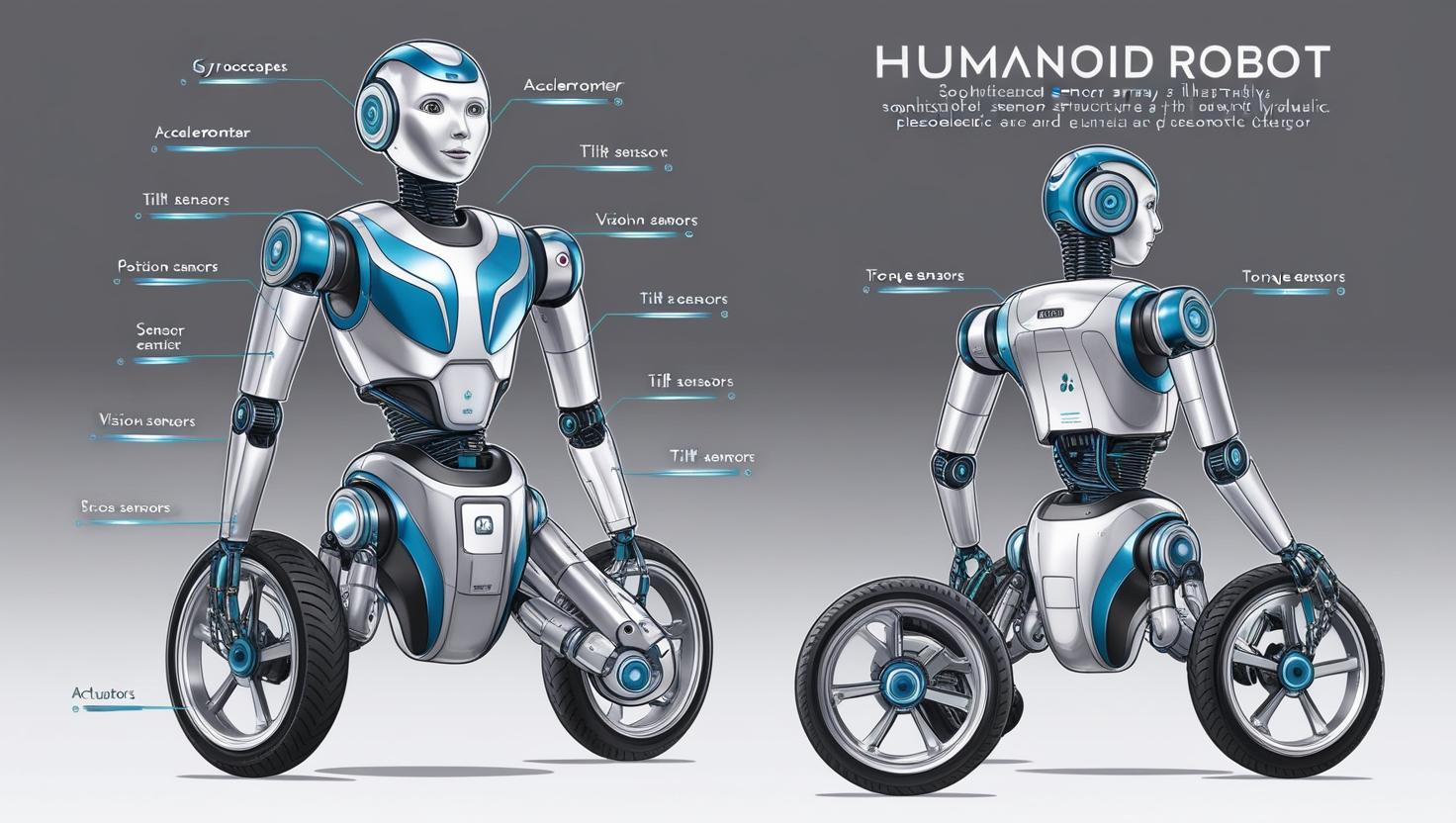
The market includes components such as linear and rotary actuators, motors, harmonic and planetary reducers, encoders, accelerometers, torque sensors, and motion and joint controllers. Improvements in these components are helping manufacturers develop robots with greater precision, speed, strength, and energy efficiency.
Advanced actuators are particularly important for biped robots because maintaining balance while walking requires highly coordinated control of multiple joints. Improved torque density and compact motor designs can help reduce robot weight while maintaining the power required for movement.
At the same time, harmonic and planetary reduction technologies can provide precise transmission and control for robotic joints. This creates opportunities for humanoid robots to perform more delicate manipulation tasks while maintaining stability during movement.
Biped Robots Driving Human-Centric Automation
Biped humanoid robots are emerging as a central focus of the industry because their body configuration allows them to operate in spaces already designed for humans. Factories, warehouses, offices, hospitals, stores, and homes contain stairs, doorways, workstations, shelves, tools, and other infrastructure developed around human movement.
According to MarketsandMarkets, the biped segment is expected to register the highest growth rate during the forecast period, supported by demand for robots capable of performing mobility-intensive and manipulation-based tasks in human-centric environments.
Biped designs can potentially reduce the need to redesign existing facilities for robotic deployment. This makes them particularly relevant for applications in which companies want to introduce automation without completely restructuring their operating environments.
However, biped mobility also creates engineering challenges related to balance, energy consumption, actuator reliability, control algorithms, and safety. Continued innovation in motion planning and real-time control will therefore remain important for commercial deployment.
AI-Powered Vision and Sensor Fusion
Humanoid robots require sophisticated perception systems because they operate in environments where people and objects can move unpredictably. Cameras and vision sensors provide visual information, while accelerometers, encoders, torque sensors, and other sensing technologies provide information about movement, position, orientation, and physical interaction.
Sensor fusion is becoming increasingly important because no single sensor can provide all the information required for autonomous operation. AI systems can combine information from multiple sensors to create a more comprehensive understanding of the environment.
For example, a humanoid robot working in a warehouse may use cameras to identify a package, position sensors to determine its arm location, force sensors to detect contact, and motion controllers to coordinate the lifting process.
This convergence of AI and sensor technologies is helping humanoid robots become more responsive and adaptable, supporting applications that were previously difficult to automate using conventional robotics.
Simulation and Digital Twins Accelerating Robot Training
Simulation-based training is another important Humanoid Robot Market Trend. Training physical robots directly in real-world environments can be expensive, slow, and potentially unsafe. Simulation enables manufacturers to expose robots to large numbers of virtual scenarios before transferring learned behaviors to physical systems.
Digital twins can replicate factories, warehouses, equipment, and other operating environments. Developers can then test navigation, manipulation, collision avoidance, and task execution virtually.
MarketsandMarkets identifies simulation-based robot training and digital twins among the technologies supporting humanoid robot commercialization.
The integration of simulation with AI can also support reinforcement learning, allowing robots to practice movements repeatedly in virtual environments. As computing capabilities increase, simulation can become an important component of the development lifecycle, reducing development time and improving testing efficiency.
Manufacturing Emerging as a Major Application Area
Manufacturing is expected to remain one of the most important application areas for humanoid robots. Manufacturers are increasingly investigating humanoids for material handling, assembly assistance, inspection, machine tending, packaging, and other labor-intensive operations.
The attractiveness of humanoid robots in manufacturing comes from their potential flexibility. A conventional automation system may need to be designed around a specific task, while a humanoid platform could potentially perform several activities using software-based task changes.
MarketsandMarkets expects the manufacturing application segment to register a 27%–30% growth rate during the forecast period.
The growing integration of AI-powered perception and manipulation could further expand industrial applications. Robots may eventually be able to identify different components, adjust their movements according to the workpiece, and collaborate with workers in shared environments.
Humanoid Robots Expanding into Warehousing and Logistics
Warehousing and distribution centers represent another significant opportunity for the Humanoid Robot Market. E-commerce growth, labor shortages, and the need for continuous operational efficiency are encouraging companies to explore automation technologies.
Humanoid robots could support activities such as picking, carrying, sorting, loading, unloading, and material movement. Their human-like form could allow them to interact with existing warehouse infrastructure rather than requiring completely redesigned facilities.
AI-powered navigation and perception can help robots identify packages and obstacles, while advanced motion control can support movement through changing warehouse environments.
Over time, the combination of humanoid robots with warehouse management systems, IoT sensors, cloud platforms, and fleet-management software could create connected robotic workflows.
Software Becoming a Critical Value-Creation Layer
Although hardware currently represents a large portion of humanoid robot market value, software is becoming increasingly important. MarketsandMarkets expects the hardware segment to hold the largest share in 2026, while software is expected to register the highest growth during the forecast period.
Software platforms can control perception, navigation, motion planning, manipulation, task scheduling, fleet management, simulation, and human-robot interaction.
This creates a shift in the robotics value chain. Future differentiation may increasingly depend not only on mechanical design but also on the intelligence layer that enables a robot to learn and execute different tasks.
AI models, operating systems, simulation platforms, cloud robotics, edge computing, and fleet-management software can therefore become important elements of the humanoid robotics ecosystem.
Robots-as-a-Service Reducing Deployment Barriers
The adoption of Robots-as-a-Service (RaaS) is another emerging opportunity in the humanoid robot industry. Advanced humanoid robots require significant investment in hardware, software, integration, maintenance, safety validation, and workforce training.
RaaS models can shift some of these costs from upfront capital expenditure toward recurring service payments. This can make advanced robotics more accessible to companies that may not want to purchase and maintain robotic fleets directly.
MarketsandMarkets identifies growing adoption of RaaS and fleet-management models as an opportunity for the market. These models can support remote monitoring, software updates, performance optimization, and multi-robot coordination.
As humanoid robots become more standardized, service-based deployment could become an important mechanism for scaling commercial adoption.
Healthcare and Personal Assistance Creating New Use Cases
Beyond industrial automation, healthcare and personal assistance are creating new opportunities for humanoid robots. Robots can potentially assist with repetitive physical tasks, patient support, transportation of materials, facility operations, education, and interaction-based services.
Healthcare environments are particularly challenging because robots must operate around vulnerable individuals and respond appropriately to unpredictable situations. Improvements in perception, navigation, manipulation, and safety technologies will therefore be essential.
Personal assistance and caregiving represent another long-term opportunity. Humanoid robots could potentially support household activities, reminders, mobility assistance, and social interaction as AI systems become more capable.
The development of such applications will depend on improvements in reliability, affordability, privacy, cybersecurity, and human acceptance.
Asia Pacific Strengthening Its Humanoid Robotics Ecosystem
Asia Pacific is expected to account for more than half of the global humanoid robot market throughout the forecast period, according to MarketsandMarkets. The region benefits from established robotics manufacturing capabilities, industrial automation investment, electronics supply chains, and expanding AI ecosystems.
China, Japan, South Korea, and other Asian economies are developing capabilities across robot hardware, actuators, sensors, semiconductors, AI, manufacturing, and automation.
China is expected to be an especially important market. MarketsandMarkets projects the China humanoid robot market to reach USD 2.80 billion by 2030, from USD 0.40 billion in 2025, representing a 47.6% CAGR from 2025 to 2030. South Korea is projected to reach USD 583.5 million by 2030 from USD 112.6 million in 2025, at a CAGR of 39.0%.
These developments indicate that the regional ecosystem is expanding beyond robotics assembly toward AI, components, software, manufacturing, and commercialization.
North America Advancing AI and Commercial Deployment
North America is also becoming an important hub for humanoid robotics innovation, particularly through developments in AI, robot foundation models, cloud computing, advanced semiconductors, and venture investment.
The US market is supported by companies developing humanoid platforms for manufacturing, logistics, research, and service applications. MarketsandMarkets projects the US humanoid robot market to reach USD 4.60 billion by 2030, rising from USD 857.9 million in 2025 at a CAGR of 39.9%.
The combination of AI software expertise and robotics development is helping accelerate experimentation with general-purpose robots. Partnerships between robot developers, manufacturers, technology companies, and end users could become increasingly important as the industry moves toward larger-scale deployments.
Safety and Reliability Remain Critical Challenges
Despite rapid technological progress, safety remains one of the most important challenges facing the Humanoid Robot Market. Humanoid robots are designed to operate near people, which means failures involving movement, manipulation, collision avoidance, or control can have direct safety implications.
MarketsandMarkets identifies safety concerns as a key challenge limiting adoption. Reliable movement, emergency response, collision avoidance, task accuracy, and compliance with applicable safety standards are important requirements for commercial deployment.
Cybersecurity is also becoming increasingly relevant as humanoid robots become connected to cloud platforms, enterprise systems, and external networks. Protecting robot software, communications, data, and AI models will become an important part of deployment strategies.
High Development Costs Creating Pressure for Scale
The development of sophisticated humanoid robots requires substantial investment. Manufacturers must integrate mechanical systems, batteries, motors, actuators, sensors, computing hardware, AI software, communication systems, and safety technologies.
MarketsandMarkets identifies significant capital investment and extensive R&D requirements as a restraint on market expansion.
As a result, manufacturers are focusing on improving component costs, manufacturing efficiency, modular architectures, software reuse, and scalable production. Higher production volumes could gradually reduce unit costs and support broader adoption.
Competitive Landscape Moving Toward Commercialization
The competitive environment includes established robotics companies, technology companies, startups, component manufacturers, and AI developers. MarketsandMarkets identifies Unitree Robotics, AGIBOT Innovation, UBTECH Robotics, Leju Robotics, EngineAI, Fourier, Figure AI, Agility Robotics, Tesla, and Boston Dynamics, among the key companies operating in the market.
Competition is increasingly focused on several interconnected capabilities: mobility, dexterity, AI intelligence, perception, battery performance, cost, safety, manufacturing scalability, and application-specific task performance.
Emerging companies and specialized robotics startups are also contributing to innovation. MarketsandMarkets identifies Mentee Robotics and ROBOTERA, among others, as emerging players and SMEs in the ecosystem.
Future Outlook for the Humanoid Robot Market
The future of the Humanoid Robot Market will increasingly depend on the convergence of physical AI, robotics hardware, foundation models, advanced sensors, high-performance computing, and scalable manufacturing.
The market is moving toward robots that can perform multiple tasks rather than single-purpose operations. Improvements in AI reasoning, multimodal perception, simulation, manipulation, and motion planning could expand the range of activities that humanoid robots can perform.
The transition from prototypes to commercially deployable systems will also depend on economics. Lower hardware costs, better battery efficiency, longer operating times, standardized components, RaaS models, and fleet-management platforms could help accelerate adoption.
With the global market projected to increase from USD 5.41 billion in 2026 to USD 50.27 billion by 2035, humanoid robotics is emerging as an important technology area within the broader intelligent automation ecosystem.
The Humanoid Robot Market Trends are increasingly centered on the convergence of AI and physical automation. Physical AI, robot foundation models, multimodal perception, advanced actuators, sensor fusion, digital twins, simulation, and intelligent control systems are transforming humanoid robots from experimental platforms into potential commercial automation tools.
Manufacturing and warehousing are expected to remain important early applications, while healthcare, education, hospitality, retail, and personal assistance provide additional opportunities. At the same time, software, AI intelligence, RaaS, and fleet management are becoming critical components of the market ecosystem.
As developers address safety, cost, reliability, energy efficiency, and scalability challenges, humanoid robots could become an increasingly important part of human-centric automation. The combination of advanced robotics hardware and AI-powered intelligence is likely to define the next stage of industrial and service automation.
Frequently Asked Questions
1. What is the size of the Humanoid Robot Market?
The global Humanoid Robot Market is estimated at USD 5.41 billion in 2026 and is projected to reach USD 50.27 billion by 2035, according to MarketsandMarkets.
2. What is driving Humanoid Robot Market growth?
Key growth factors include advancements in physical AI and robot foundation models, demand for flexible industrial automation, expanding applications in manufacturing and logistics, improvements in actuators and batteries, simulation-based training, and the emergence of Robots-as-a-Service models.
3. Which type of humanoid robot is expected to grow fastest?
The biped segment is expected to register the highest growth rate during the forecast period. Its ability to navigate human-designed environments makes it relevant to manufacturing, logistics, healthcare, education, and service applications.
4. Which region is expected to dominate the Humanoid Robot Market?
Asia Pacific is expected to account for more than half of the market throughout the forecast period. China, Japan, South Korea, and other regional markets benefit from established robotics manufacturing, automation investment, and growing AI capabilities.
5. What are the major challenges facing humanoid robots?
High development costs, extensive R&D requirements, safety concerns, battery limitations, reliability, complex motion control, and the need for robust human-robot interaction remain important challenges for commercialization.
