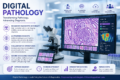
The global Digital pathology market is projected to grow from USD 1.58 billion in 2026 to USD 2.86 billion by 2031, at a CAGR of 12.5% during the forecast period. The market was valued at USD 1.42 billion in 2025. The growth of the digital pathology market is driven by the rapid digital transformation of hospitals and pathology laboratories, increasing adoption of cloud-based solutions, and the rising incidence of cancer. The growing demand for faster, more accurate, and efficient disease diagnosis is also accelerating the adoption of digital pathology platforms.
Digital pathology is increasingly being integrated into drug discovery, preclinical research, and clinical trials, creating additional demand for digital imaging, image management, and analytical solutions. Advances in artificial intelligence, machine learning, cloud computing, high-resolution slide scanning, and image analysis are further supporting the transition from conventional microscopy toward digitally enabled pathology workflows.
Spotlights on the Industry’s Leading Digital Pathology Companies
The digital pathology industry is evolving as healthcare organizations and pharmaceutical companies seek to improve diagnostic efficiency, streamline pathology workflows, and support data-driven decision-making. Companies operating in this market are developing solutions spanning whole-slide imaging, image management, cloud-based pathology platforms, artificial intelligence, image analysis, laboratory integration, and clinical decision-support technologies.
1. Danaher Corporation (US)
Danaher Corporation participates in the digital pathology market through its life sciences and diagnostics businesses, offering technologies that support pathology, laboratory workflows, imaging, and disease diagnosis.
The company’s broad portfolio enables the integration of digital imaging and analytical technologies into pathology workflows, supporting applications across clinical diagnostics, research, and pharmaceutical development.
2. F. Hoffmann-La Roche Ltd. (Switzerland)
F. Hoffmann-La Roche provides diagnostic and digital pathology technologies designed to support pathology laboratories, clinical diagnostics, and pharmaceutical research. Its digital pathology solutions facilitate the digitization, management, and analysis of pathology images.
The company is also focused on integrating digital technologies and advanced analytics into pathology workflows, supporting more efficient diagnosis and the development of precision medicine approaches.
3. Koninklijke Philips N.V. (Netherlands)
Koninklijke Philips provides digital pathology solutions that enable pathology laboratories to digitize tissue slides, manage digital images, and support remote collaboration and diagnostic workflows.
Its digital pathology technologies are designed to connect imaging, workflow management, and clinical information, helping pathology organizations improve operational efficiency and support faster access to diagnostic information.
4. Sectra AB (Sweden)
Sectra specializes in medical imaging and enterprise imaging solutions, including technologies supporting digital pathology. Its platforms facilitate secure management, storage, viewing, and sharing of medical images across healthcare organizations.
The company’s digital pathology capabilities support remote consultation, collaboration among pathologists, and integration of pathology images into broader enterprise imaging environments.
5. Hamamatsu Photonics (Japan)
Hamamatsu Photonics develops optical and imaging technologies used in scientific, medical, and analytical applications. Its imaging technologies support high-quality digital image acquisition, which is an important component of digital pathology systems.
The company’s expertise in sensors, cameras, and optical technologies contributes to the development of high-resolution imaging solutions for pathology and other life sciences applications.
6. Fujifilm Holdings Corporation (Japan)
Fujifilm Holdings provides medical imaging and digital pathology technologies designed to support pathology laboratories and healthcare organizations. Its solutions combine high-quality imaging with digital workflow capabilities.
The company’s broader healthcare portfolio and expertise in imaging technologies position it to support the transition toward digitally enabled pathology and more integrated diagnostic workflows.
7. Quanterix (US)
Quanterix develops technologies for ultra-sensitive biomarker detection and digital immunoassays. Its platforms support research into disease biomarkers and applications related to precision medicine.
Although its core capabilities are focused on biomarker analysis, these technologies can complement digital pathology workflows by enabling integrated assessment of tissue-based imaging and molecular information in research and diagnostic applications.
8. Hologic, Inc. (US)
Hologic provides diagnostic technologies focused on women’s health, including pathology and cancer-related diagnostic applications. Its portfolio supports screening, diagnosis, and disease management.
The increasing adoption of digital workflows in pathology and women’s health diagnostics creates opportunities for the integration of digital imaging and analytical technologies into diagnostic processes.
9. 3DHISTECH (Hungary)
3DHISTECH specializes in digital pathology solutions, including whole-slide scanners, image management systems, and digital pathology software. Its technologies enable pathology laboratories to convert glass slides into high-resolution digital images.
The company’s solutions support applications such as routine diagnostics, education, research, telepathology, and pharmaceutical studies, contributing directly to the digital transformation of pathology workflows.
10. Apollo Enterprise Imaging Corp. (US)
Apollo Enterprise Imaging provides enterprise imaging technologies designed to manage and distribute medical images across healthcare organizations. Its solutions support the integration of imaging data into clinical workflows.
Digital pathology is increasingly becoming part of enterprise-wide imaging strategies, creating demand for platforms capable of managing pathology images alongside other forms of medical imaging.
11. Huron Technologies International Inc. (Canada)
Huron Technologies International provides imaging and pathology-related technologies supporting the digitization and analysis of biological specimens.
Its solutions contribute to pathology workflows that require high-quality image acquisition and digital analysis, supporting the broader shift toward digital pathology and image-based research.
12. Indica Labs, LLC (US)
Indica Labs develops digital pathology software and image analysis solutions, including artificial intelligence and machine learning technologies. Its platforms support the analysis of tissue images for research, pharmaceutical development, and clinical applications.
The company’s AI-driven technologies help researchers and pathologists extract quantitative information from digital tissue images, supporting biomarker analysis, drug development, and more reproducible pathology workflows.
13. OptraSCAN (US)
OptraSCAN provides digital pathology solutions spanning whole-slide imaging, image management, and digital pathology services. Its technologies enable laboratories to digitize pathology slides and access them through digital platforms.
The company supports applications across clinical diagnostics, research, education, and pharmaceutical development, helping organizations transition from conventional microscopy toward digital workflows.
14. Glencoe Software, Inc. (US)
Glencoe Software develops software solutions for digital imaging, image management, and data interoperability. Its technologies support the management and integration of large volumes of scientific and pathology image data.
As digital pathology generates increasingly large datasets, scalable image management and interoperability solutions are becoming important components of modern pathology infrastructure.
15. Aiforia (Finland)
Aiforia develops AI-powered image analysis solutions for pathology and life sciences applications. Its technology uses artificial intelligence to analyze digital tissue images and identify cellular and tissue-level features.
The company’s platforms support applications including research, drug development, and pathology analysis, helping organizations automate image interpretation and generate quantitative insights from tissue samples.
16. Paige AI, Inc. (US)
Paige AI specializes in artificial intelligence technologies for pathology. Its platforms use AI to analyze digital pathology images and support pathologists in detecting and characterizing disease.
The company’s technologies are particularly relevant to oncology, where AI-assisted analysis can support the identification of cancer-related features and biomarkers while contributing to more efficient pathology workflows.
17. Proscia Inc. (US)
Proscia develops digital pathology and AI-powered solutions designed to transform pathology workflows. Its platforms support digital slide management, image analysis, and computational pathology applications.
The company’s technologies help pathology organizations use digital images and artificial intelligence to improve diagnostic workflows, support research, and advance precision medicine.
18. PathAI, Inc. (US)
PathAI develops artificial intelligence and machine learning technologies for pathology and drug development. Its platforms are designed to analyze pathology images and generate quantitative insights from tissue samples.
The company works across pharmaceutical research and clinical applications, where AI-powered pathology can support biomarker identification, clinical trial analysis, drug development, and disease characterization.
19. Evident (Japan)
Evident develops imaging and microscopy technologies for healthcare, life sciences, and research applications. Its advanced optical and imaging solutions support the acquisition and analysis of high-quality biological images.
The company’s imaging expertise contributes to the broader digital pathology ecosystem by enabling high-resolution visualization and digital analysis of tissue and cellular structures.
Conclusion:
The digital pathology market is expanding as hospitals, pathology laboratories, pharmaceutical companies, and research organizations increasingly adopt digital imaging and analytical technologies. The rising incidence of cancer, demand for faster and more accurate diagnosis, cloud adoption, and the growing use of pathology in drug discovery, preclinical research, and clinical trials are creating significant opportunities for digital pathology solutions.
For deeper insights into the Digital Pathology Market, including market size and growth, technology trends, applications, competitive landscape, regional opportunities, market segmentation, emerging AI applications, and growth prospects through 2031, access the complete market report.