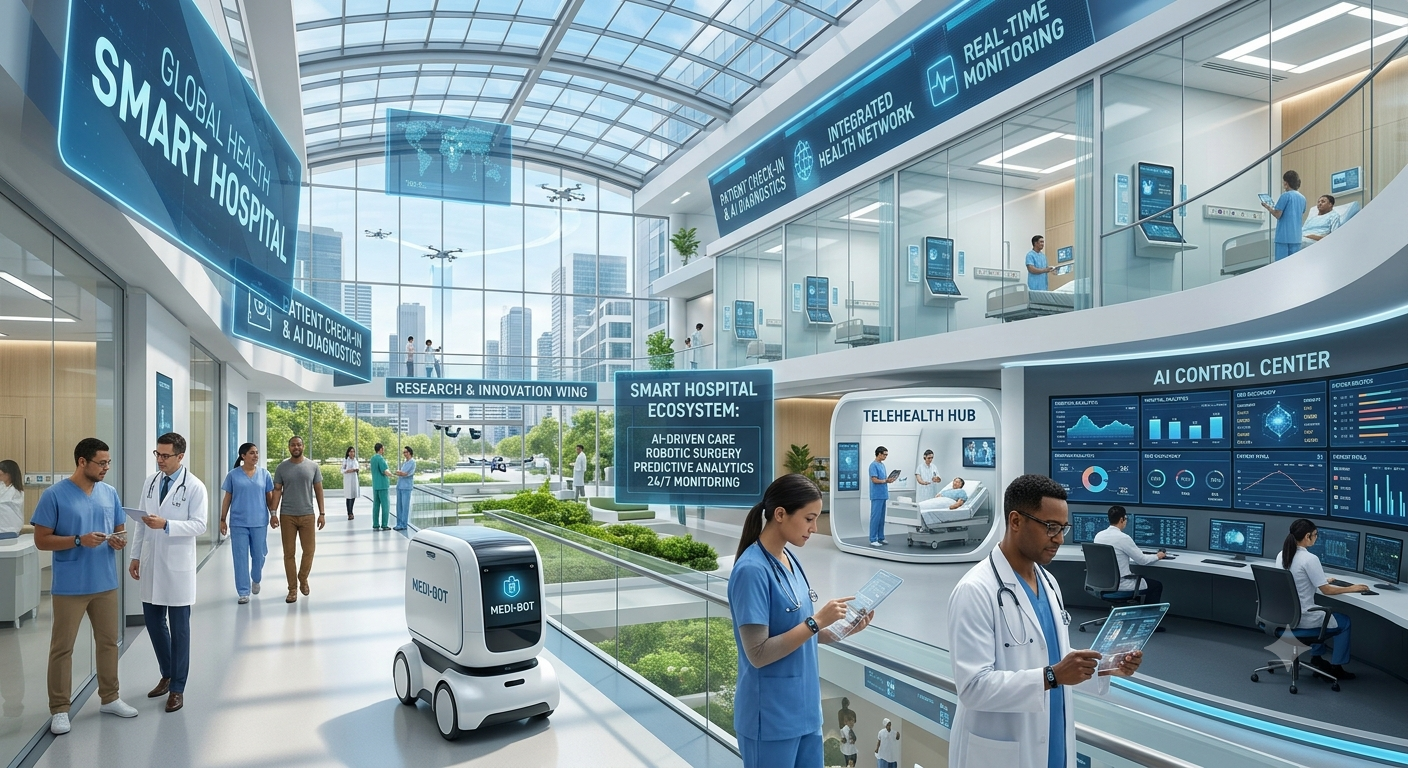
The global healthcare industry is undergoing a significant transformation as hospitals adopt digital technologies to improve patient care, streamline clinical workflows, and enhance operational efficiency. Smart hospitals are emerging as an important part of this transformation by integrating artificial intelligence (AI), the Internet of Medical Things (IoMT), cloud computing, robotics, connected medical devices, and advanced data analytics into healthcare environments. These technologies help healthcare providers make informed decisions, monitor patients in real time, manage hospital resources efficiently, and deliver more coordinated care.
According to MarketsandMarkets, the Smart Hospital Market is projected to grow from USD 134.69 billion in 2026 to USD 246.17 billion by 2032, registering a CAGR of 10.6% during 2026–2032. Increasing investments in hospital modernization, growing demand for connected patient monitoring, and the adoption of AI-enabled healthcare solutions are supporting this expansion.
The Smart Hospital Market Analysis highlights how innovation, investment, and digital transformation are reshaping healthcare delivery. Hospitals are moving beyond conventional digital systems toward integrated healthcare environments in which medical devices, patient information systems, clinical applications, and hospital infrastructure work together to improve care quality and productivity.
Top 10 Key Takeaways
- The Smart Hospital Market is projected to reach USD 246.17 billion by 2032.
- The market is expected to register a CAGR of 10.6% during 2026–2032.
- AI and machine learning are supporting clinical analytics and hospital workflow optimization.
- IoMT technologies enable connected patient monitoring and real-time data exchange.
- Hardware is expected to account for the largest share by offering.
- Cloud-based deployment is expected to register strong growth.
- Remote patient monitoring is an important application growth opportunity.
- Asia Pacific is expected to account for approximately 32.3% of market value in 2032.
- Cybersecurity, interoperability, implementation costs, and workforce readiness remain key challenges.
- Investment in integrated, secure, and scalable healthcare infrastructure will help shape the next phase of smart hospital innovation.
Smart Hospital Market Growth Driven by Digital Healthcare Transformation
Digital transformation has become a strategic priority for healthcare providers seeking to improve efficiency while responding to increasing patient volumes and rising operational costs. Traditional hospitals often rely on separate systems for patient records, diagnostic imaging, equipment management, and administrative processes. These disconnected systems can delay information exchange and create operational inefficiencies.
Smart hospital technologies address these challenges by connecting clinical and administrative functions through integrated digital platforms. Electronic health records, hospital information systems, connected medical devices, and real-time monitoring tools allow healthcare professionals to access relevant information more efficiently. Automated workflows can also reduce repetitive administrative tasks, allowing staff to focus more time on patient care.
The increasing adoption of digital healthcare infrastructure is creating opportunities for technology providers, medical device manufacturers, software developers, and system integrators. As hospitals prioritize modernization, demand is rising for scalable solutions that support interoperability, secure data sharing, and real-time operational visibility.
Artificial Intelligence and Machine Learning Transforming Hospital Operations
Artificial intelligence and machine learning are becoming important technologies in smart hospitals. AI-powered systems can analyze medical images, identify patterns in clinical data, support diagnostic workflows, and help healthcare professionals evaluate patient information. These capabilities can improve the efficiency of clinical processes when used alongside professional medical judgment and appropriate validation.
AI is also expanding beyond clinical applications into hospital administration and resource management. Predictive analytics can help hospitals anticipate patient demand, plan staffing requirements, and optimize equipment utilization. Intelligent scheduling systems can support more efficient management of appointments, diagnostic procedures, and operating rooms.
Another emerging application is the use of AI-enabled clinical decision-support systems. These tools analyze relevant information to provide healthcare professionals with insights that may support diagnosis, treatment planning, and patient monitoring. Their effectiveness depends on data quality, system validation, workflow integration, and appropriate clinical oversight.
As healthcare organizations increase investment in AI infrastructure, the Smart Hospital Market is expected to benefit from growing demand for intelligent software, connected medical devices, and advanced analytics platforms.
Download PDF Brochure @ https://www.marketsandmarkets.com/pdfdownloadNew.asp?id=29319948
Internet of Medical Things Enabling Connected Patient Care
The Internet of Medical Things is a key component of the smart hospital ecosystem. It connects medical devices, monitoring systems, wearables, and other healthcare equipment so that information can be collected and shared across hospital environments.
Connected patient monitoring devices enable healthcare professionals to track vital signs and other relevant health indicators. When integrated with hospital information systems, these devices can help staff identify changes in a patient’s condition and respond more efficiently. Remote patient monitoring also allows healthcare providers to extend selected monitoring services beyond traditional hospital settings.
IoMT technologies support additional applications, including medical equipment tracking, medication management, asset monitoring, and automated alerts. Real-time location systems and connected sensors can help hospital administrators identify equipment availability, improve asset utilization, and reduce time spent locating essential devices.
However, successful IoMT deployment requires reliable connectivity, secure data transmission, interoperability, and effective device management. Hospitals must also establish clear procedures for responding to alerts and protecting sensitive patient information.
Cloud Computing and Digital Hospital Infrastructure
Cloud computing is becoming increasingly important as hospitals generate and manage growing volumes of clinical, diagnostic, and operational data. Cloud-based platforms support centralized data management, scalable computing resources, and access to digital applications across healthcare networks.
According to MarketsandMarkets, the cloud-based deployment segment is expected to register a CAGR of approximately 20.6% during the forecast period. Demand is supported by the growing adoption of electronic health records, AI analytics, connected medical devices, telemedicine, and remote patient monitoring.
Cloud-based hospital systems can help healthcare organizations reduce dependence on fragmented IT infrastructure and improve access to information across departments. They can also support collaboration between hospitals, diagnostic centers, and other authorized healthcare providers.
Nevertheless, healthcare organizations must carefully assess data residency requirements, privacy regulations, cybersecurity controls, system availability, and vendor dependence before moving sensitive workloads to the cloud. Hybrid and on-premises deployments may remain suitable for hospitals with specific security, performance, or infrastructure requirements.
Smart Hospital Market Segmentation and Emerging Opportunities
The Smart Hospital Market includes hardware, software, and services that support connected and intelligent healthcare operations.
By Offering
Hardware includes patient monitoring devices, smart beds, medical imaging systems, connected therapeutic and life-support equipment, networking infrastructure, wearable medical devices, and robotics. MarketsandMarkets expects the hardware segment to account for the largest share during the forecast period as hospitals continue investing in connected medical equipment and modern healthcare infrastructure.
Software includes electronic health records, hospital information systems, clinical decision-support systems, laboratory information systems, radiology information systems, asset management platforms, AI analytics, and cybersecurity applications. Software connects hospital data and workflows, helping organizations coordinate care and improve operational visibility.
Services include consulting, system integration, implementation, managed services, maintenance, and training. These services are important because hospitals must integrate new technologies with existing systems while maintaining reliable clinical operations.
By Deployment Mode
The market includes cloud-based, on-premises, and hybrid deployments. Cloud-based systems are gaining momentum because they offer scalability and centralized access to information. On-premises solutions continue to serve organizations requiring greater direct control over infrastructure, while hybrid models allow hospitals to balance cloud capabilities with specific security and operational requirements.
By Technology
Major technologies include AI and machine learning, IoMT, cloud computing, edge computing, big data analytics, robotics, digital twins, and cybersecurity. Their combined use enables hospitals to connect clinical applications, analyze operational data, and automate selected processes.
Digital twins offer opportunities to create virtual representations of hospital facilities, equipment, or workflows. These models can support simulation, capacity planning, and operational optimization. Robotics can assist with selected surgical, logistical, rehabilitation, and service tasks, depending on the application and clinical requirements.
By Application
Smart hospital applications include patient care management, clinical workflow optimization, asset tracking, remote patient monitoring, medication management, telemedicine, diagnostic imaging, hospital workflow management, and building and energy management.
Remote patient monitoring is expected to register a CAGR of approximately 15.9%, according to MarketsandMarkets. Increasing demand for continuous monitoring, connected devices, and patient-centered care is supporting this segment. These solutions can help healthcare teams monitor selected health indicators outside conventional hospital settings and identify situations that may require clinical attention.
Investment Opportunities in the Smart Hospital Market
Investment in smart hospitals is expanding as healthcare providers seek technologies that improve patient experiences, operational efficiency, and the use of limited resources. Opportunities extend across medical devices, healthcare software, AI applications, connectivity infrastructure, cybersecurity, and system integration.
Hospital Modernization and Connected Infrastructure
Existing hospitals require technology upgrades to support connected medical devices, reliable networks, digital records, and automated workflows. Retrofitting legacy facilities presents opportunities for vendors that can integrate modern systems without requiring complete infrastructure replacement.
AI-Enabled Clinical and Operational Platforms
AI-powered diagnostic support, clinical analytics, workflow automation, and predictive resource management offer opportunities for healthcare technology companies. Hospitals are likely to prioritize solutions that address measurable operational or clinical needs and can be integrated into established workflows.
Remote Patient Monitoring and Connected Care
Connected monitoring technologies can support care continuity and selected services beyond hospital walls. Opportunities include monitoring devices, wearable sensors, secure data platforms, and applications that enable healthcare teams to review relevant patient information remotely.
Hospital Command Centers
Hospital command centers combine information from patient monitoring systems, electronic records, real-time location systems, and operational platforms. They provide centralized visibility into bed availability, patient flow, staffing, and equipment utilization. As hospitals focus on coordinating complex operations, command-center technologies offer an opportunity for software providers and system integrators.
Cybersecurity and Data Protection
The expansion of connected medical devices and digital health platforms increases the importance of cybersecurity. Hospitals need solutions for identity and access management, network protection, device security, threat detection, data encryption, and incident response. Security technologies will remain essential to building trust in connected healthcare infrastructure.
Regional Outlook: Asia Pacific’s Growing Role
The Smart Hospital Market spans North America, Europe, Asia Pacific, South America, and the Middle East and Africa. Regional growth depends on healthcare infrastructure, digitalization initiatives, technology investment, regulatory frameworks, and the availability of skilled professionals.
Asia Pacific is expected to account for approximately 32.3% of the Smart Hospital Market by value in 2032, according to MarketsandMarkets. The region’s position is supported by healthcare infrastructure development, rising demand for digital healthcare services, and increasing adoption of AI, IoMT, cloud computing, and connected medical devices.
Countries including China, India, Japan, South Korea, Singapore, and Australia are important markets for healthcare technology adoption. Investments in hospital modernization, telemedicine, connected monitoring, and digital health platforms are creating opportunities for both international suppliers and regional technology companies.
North America remains an important market because of its established healthcare technology ecosystem and adoption of advanced medical systems. Europe also offers opportunities through hospital digitalization, connected care initiatives, and investment in healthcare infrastructure. Across all regions, adoption will depend on affordability, regulatory compliance, interoperability, cybersecurity, and the ability to demonstrate practical benefits.
Competitive Landscape and Key Market Players
The Smart Hospital Market features medical technology companies, healthcare IT providers, device manufacturers, and infrastructure specialists. Competition is increasingly focused on integrated solutions that connect medical equipment, software, analytics, and hospital workflows.
Key companies identified by MarketsandMarkets include Siemens Healthineers AG, GE HealthCare Technologies Inc., Koninklijke Philips N.V., FUJIFILM Holdings Corporation, Canon Inc., Stryker Corporation, Baxter International Inc., Medtronic plc, Becton, Dickinson and Company, and Abbott Laboratories.
These companies participate in areas such as medical imaging, patient monitoring, connected medical devices, therapeutic equipment, and digital healthcare solutions. Their competitive strategies include product innovation, software integration, partnerships, service expansion, and the development of connected technology platforms.
Technology companies and software providers also play an important role in hospital digital transformation. Their solutions support electronic health records, cloud infrastructure, AI analytics, cybersecurity, and clinical workflow management. Collaboration between medical technology manufacturers, software vendors, hospitals, and system integrators is expected to remain important as healthcare organizations move toward more integrated digital environments.
Challenges Affecting Smart Hospital Market Growth
Despite strong growth prospects, smart hospital adoption faces several challenges.
High implementation costs can make it difficult for smaller hospitals and resource-constrained healthcare systems to invest in advanced infrastructure. Costs may include connected devices, networks, software licenses, integration, cybersecurity, maintenance, and staff training.
Interoperability issues can prevent different devices and software platforms from exchanging information effectively. Hospitals often operate legacy systems that were not designed to work together, increasing integration complexity.
Cybersecurity and patient privacy risks are also major concerns. Connected medical devices and digital records can create additional security exposure if systems are not properly protected and maintained. Healthcare organizations must implement robust access controls, monitoring, data protection, and incident-response procedures.
Workforce readiness is another consideration. Staff need training to use new technologies effectively, while hospitals must ensure that automation supports rather than disrupts clinical workflows. Regulatory compliance and responsible use of AI also require careful oversight.
Addressing these challenges will be essential to achieving the expected benefits of smart hospital investments.
Future Outlook: The Next Phase of Smart Hospital Innovation
The future of the Smart Hospital Market will be shaped by greater integration of AI, IoMT, cloud computing, robotics, digital twins, and advanced analytics. Rather than adopting isolated technologies, hospitals are increasingly seeking connected platforms that support clinical decision-making and operational management across departments.
AI-enabled imaging, continuous patient monitoring, predictive maintenance, smart operating rooms, and automated hospital logistics are likely to remain important areas of innovation. Digital twins and centralized command centers may help hospitals simulate operational scenarios and allocate resources more efficiently. Cloud and edge computing will support data-intensive applications, while cybersecurity and interoperability will remain foundational requirements.
Investment decisions are likely to increasingly emphasize measurable outcomes, including improved workflow efficiency, better visibility into hospital resources, reduced administrative burden, and more coordinated patient care. Vendors that provide secure, scalable, interoperable solutions aligned with real hospital needs will be well positioned to benefit from continued digital transformation.
Conclusion
The Smart Hospital Market is becoming a major part of healthcare’s digital transformation. With the market projected to grow from USD 134.69 billion in 2026 to USD 246.17 billion by 2032 at a CAGR of 10.6%, opportunities are expanding across connected medical devices, AI-powered platforms, cloud infrastructure, remote patient monitoring, and hospital automation.
Innovation is changing how hospitals collect information, coordinate workflows, monitor patients, and manage resources. At the same time, investment in modern infrastructure and digital health solutions is creating opportunities for established medical technology companies, software providers, and emerging innovators.
Although high costs, interoperability challenges, cybersecurity risks, and workforce readiness remain important considerations, the long-term direction is toward more connected, data-driven, and efficient healthcare environments. The Smart Hospital Market will continue to evolve as healthcare providers prioritize technology that supports reliable operations, informed decisions, and patient-centered care.
Frequently Asked Questions (FAQs)
1. What is the projected size of the Smart Hospital Market?
The Smart Hospital Market is projected to grow from USD 134.69 billion in 2026 to USD 246.17 billion by 2032, at a CAGR of 10.6% during 2026–2032.
2. What are the major factors driving Smart Hospital Market growth?
Key growth factors include increasing adoption of AI, IoMT, cloud computing, connected medical devices, remote patient monitoring, hospital automation, and investments in digital healthcare infrastructure.
3. Which technologies are transforming smart hospitals?
AI and machine learning, IoMT, cloud computing, edge computing, big data analytics, robotics, digital twins, and cybersecurity are among the major technologies transforming hospital operations.
4. Which region is expected to account for a major share of the Smart Hospital Market?
Asia Pacific is expected to account for approximately 32.3% of the market by value in 2032, supported by healthcare infrastructure development and growing adoption of digital health technologies.
5. Who are the key players in the Smart Hospital Market?
Key players include Siemens Healthineers AG, GE HealthCare Technologies Inc., Koninklijke Philips N.V., FUJIFILM Holdings Corporation, Canon Inc., Stryker Corporation, Baxter International Inc., Medtronic plc, Becton, Dickinson and Company, and Abbott Laboratories.
