The smart home technology market is experiencing significant growth as consumers increasingly adopt connected devices, intelligent automation systems, and advanced digital solutions to improve residential convenience, security, and energy efficiency. The integration of Artificial Intelligence (AI), the Internet of Things (IoT), cloud computing, wireless connectivity, and voice-controlled technologies is transforming traditional homes into intelligent living environments.
Smart home technology enables homeowners to remotely monitor, control, and automate household devices through smartphones, voice assistants, and centralized home management platforms. Applications such as smart lighting, connected thermostats, intelligent security cameras, automated door locks, smart appliances, and energy management systems are becoming increasingly popular.
The growing demand for convenience, rising awareness of energy conservation, and increasing adoption of connected devices are creating new opportunities for technology providers. Furthermore, improvements in wireless communication technologies and AI-powered automation are making smart home solutions more accessible, efficient, and user-friendly.
As residential environments become increasingly digitalized, smart home technology is evolving beyond basic remote device control toward predictive, personalized, and interconnected living experiences. AI, IoT, and automation are therefore becoming essential growth drivers shaping the future of the smart home technology market.
Smart home Market is projected to reach USD 230.76 billion in 2026 and USD 450.20 billion by 2032, exhibiting a CAGR of 11.8%
AI Integration Transforming Smart Home Technology
Artificial Intelligence is becoming one of the most influential technologies in the smart home ecosystem. AI-powered systems enable connected devices to analyze user behavior, recognize patterns, automate household activities, and make intelligent decisions with minimal human intervention.
Traditional home automation systems generally operate according to predefined schedules or commands. However, AI-enabled solutions can learn household preferences and adjust operations according to changing requirements.
For example, intelligent thermostats can analyze temperature preferences and occupancy patterns to optimize heating and cooling. AI-powered lighting systems can automatically adjust brightness according to environmental conditions and user activities. Similarly, smart security systems can distinguish between familiar individuals, visitors, and unusual movements.
Generative AI and intelligent voice assistants are also creating new opportunities for natural interaction with connected home devices. Homeowners can use conversational commands to control lighting, appliances, entertainment systems, and security functions.
Key AI-driven applications include:
- Predictive Home Automation: Learning household routines and automatically adjusting connected devices.
- Intelligent Security Monitoring: Identifying unusual activities and generating real-time alerts.
- Smart Energy Optimization: Analyzing electricity consumption and recommending energy-saving adjustments.
- Personalized Home Experiences: Customizing lighting, temperature, and entertainment settings.
- Voice-Based Control: Enabling natural-language interactions with smart home devices.
The integration of AI is making home automation more adaptive and intelligent while creating opportunities for manufacturers to develop differentiated connected living solutions.
Download PDF Brochure @ https://www.marketsandmarkets.com/pdfdownloadNew.asp?id=121
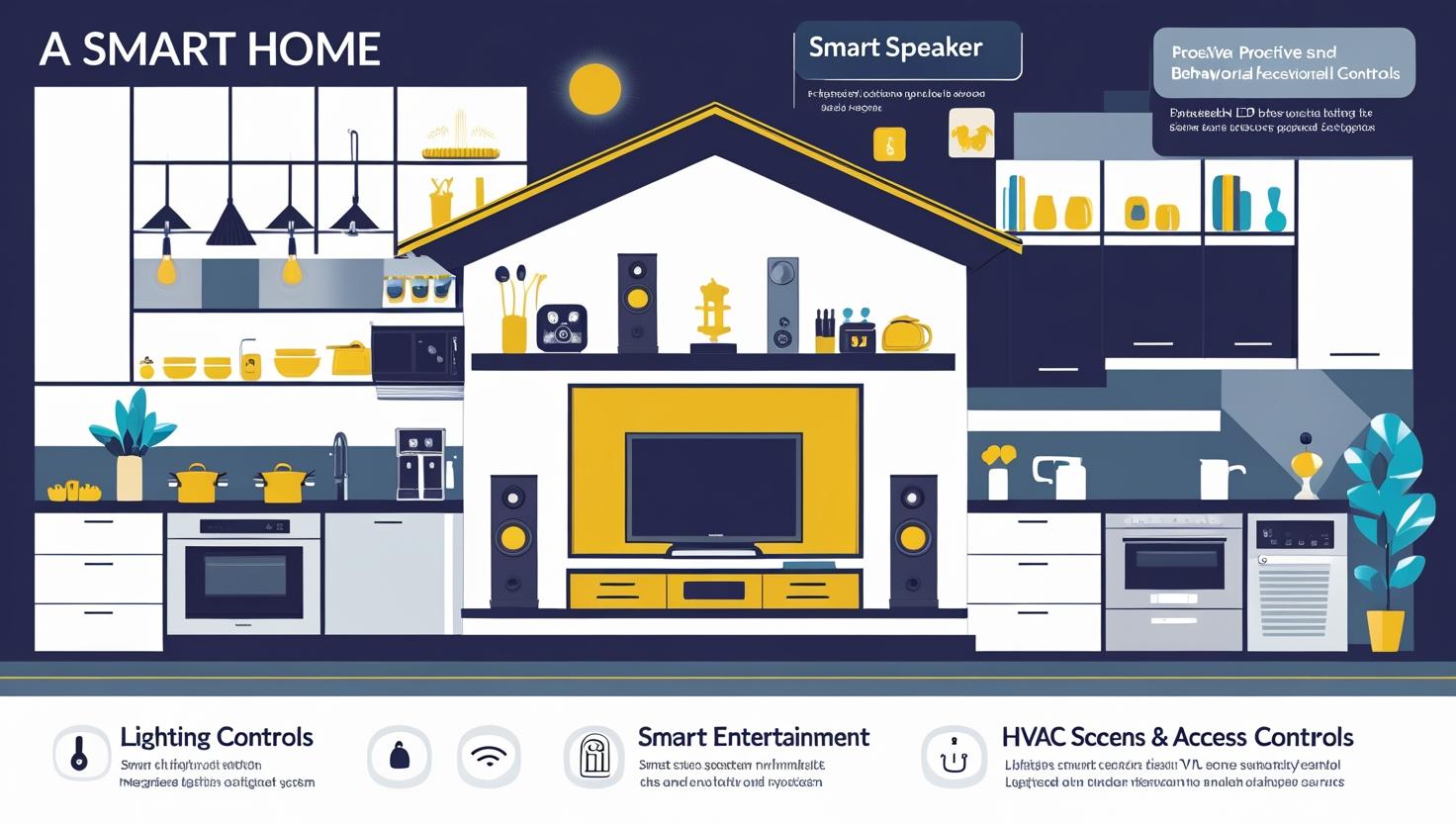
IoT Connectivity Expanding the Smart Home Ecosystem
The Internet of Things is a fundamental technology supporting smart home development. IoT enables household devices, sensors, appliances, and control systems to communicate and exchange information through connected networks.
By integrating IoT connectivity, homeowners can manage multiple devices through centralized platforms and remotely monitor household operations.
For instance, connected refrigerators can monitor internal conditions, smart washing machines can provide operating notifications, and intelligent thermostats can regulate indoor temperatures based on occupancy.
IoT-enabled sensors also play an important role in residential security and safety. Motion sensors, smoke detectors, water leakage sensors, and environmental monitoring devices can identify potential risks and notify homeowners.
The expansion of Wi-Fi, Bluetooth, Zigbee, Thread, and other wireless connectivity technologies is further strengthening smart home ecosystems.
Interoperability is also becoming increasingly important as consumers adopt devices from different manufacturers. Standards such as Matter are helping improve compatibility between supported smart home products, making it easier to connect and manage devices across different platforms.
As the number of connected household devices increases, IoT will remain an important foundation for developing integrated and intelligent residential environments.
Smart Security and Access Control Driving Consumer Adoption
Home security is one of the most important application areas supporting smart home technology adoption. Increasing consumer concerns about residential safety, property protection, and remote monitoring are encouraging investments in connected security solutions.
Modern smart security ecosystems combine surveillance cameras, smart locks, motion detectors, video doorbells, alarm systems, and access control technologies.
AI-powered surveillance systems can analyze video feeds, identify unusual activities, and generate alerts when suspicious movements are detected. Smart locks allow homeowners to manage door access remotely, while connected video doorbells enable real-time communication with visitors.
Cloud-based monitoring platforms further improve security by allowing users to access camera recordings, receive notifications, and manage security devices through mobile applications.
Important trends in smart home security include:
- AI-enabled video surveillance and intelligent motion detection.
- Biometric authentication and facial recognition technologies.
- Remote access control through smartphones and connected devices.
- Cloud-based video storage and monitoring services.
- Integrated alarm systems and automated emergency notifications.
The integration of intelligent security technologies is transforming residential protection from traditional alarm-based systems into proactive and connected security ecosystems.
Smart Energy Management Supporting Sustainable Living
Energy efficiency is becoming a major purchasing consideration for homeowners as electricity costs, environmental concerns, and sustainability initiatives influence residential technology investments.
Smart home energy management systems help consumers monitor electricity consumption, optimize household energy usage, and reduce unnecessary power consumption.
Connected thermostats, smart lighting controllers, intelligent power outlets, and energy monitoring devices allow homeowners to manage electricity consumption more effectively.
For example, smart thermostats can automatically adjust indoor temperatures according to occupancy patterns and user preferences. Smart lighting systems can switch off lights in unoccupied rooms, while intelligent power management devices can reduce unnecessary standby consumption.
Integration with rooftop solar systems, smart meters, and home energy storage solutions is creating additional opportunities for connected energy management.
AI-based energy optimization can further improve efficiency by analyzing consumption patterns and recommending adjustments to household operations.
Government initiatives promoting green buildings, energy-efficient infrastructure, and sustainable residential development are also creating opportunities for smart home technology providers.
As energy management becomes increasingly important, manufacturers are focusing on developing connected solutions that combine automation, real-time monitoring, and intelligent power optimization.
Smart HVAC Systems Improving Comfort and Energy Efficiency
Heating, ventilation, and air conditioning (HVAC) systems represent an important segment of the smart home ecosystem. Intelligent HVAC technologies enable homeowners to control indoor temperature, ventilation, and air quality through connected devices and automated platforms.
Smart thermostats and connected HVAC controllers can adjust temperature settings based on occupancy, weather conditions, and household preferences.
AI-enabled systems can analyze historical usage patterns to optimize heating and cooling operations. Remote monitoring also allows homeowners to control HVAC equipment when they are away from their properties.
Smart HVAC solutions offer several benefits:
- Automated temperature regulation.
- Improved indoor comfort and air quality.
- Reduced unnecessary energy consumption.
- Remote equipment monitoring and control.
- Predictive maintenance and operational optimization.
The integration of smart HVAC with other home automation systems is creating more comprehensive residential energy management ecosystems.
Smart Healthcare and Assisted Living Expanding Application Opportunities
The convergence of smart home technology and healthcare is creating new opportunities in remote patient monitoring, independent living, and assisted care.
Connected healthcare devices can monitor health-related parameters and transmit information to authorized caregivers or healthcare professionals. Wearable devices, smart sensors, connected monitoring equipment, and automated alert systems can support individuals who require continuous assistance.
Smart home technologies are particularly relevant for older adults and individuals who want to maintain independence while living in familiar residential environments.
Applications include:
Remote Health Monitoring: Connected devices can collect and transmit health-related information for remote observation.
Fall Detection Systems: Sensors and wearable technologies can identify potential falls and trigger emergency notifications.
Medication Management: Smart medication dispensers can provide reminders and support scheduled medication routines.
Environmental Monitoring: Connected sensors can monitor indoor conditions such as temperature, humidity, and air quality.
Voice-Assisted Living: Voice-controlled systems can help users manage household devices without requiring manual interaction.
The integration of healthcare technologies into residential automation is expanding the role of smart homes beyond convenience and security toward safety, wellness, and independent living.
Wireless Connectivity and Interoperability Shaping Smart Home Ecosystems
Wireless communication technologies are essential for connecting smart home devices and enabling seamless interaction between different systems.
Wi-Fi, Bluetooth, Zigbee, and Thread support communication between connected appliances, sensors, lighting systems, security devices, and automation platforms.
Wireless connectivity offers installation flexibility and reduces the need for extensive physical wiring. This is particularly beneficial for homeowners upgrading existing properties with smart technologies.
Interoperability is another important market trend. Consumers increasingly prefer integrated systems that allow products from different manufacturers to operate through common platforms.
The adoption of Matter is helping address compatibility challenges by providing a common connectivity standard for supported smart home devices.
Improved interoperability can simplify device installation, enhance user experience, and encourage consumers to expand their connected home ecosystems.
According to MarketsandMarkets, the smart home market continues to face challenges related to interoperability gaps and the lack of unified standards. Therefore, compatibility and seamless integration will remain important priorities for technology providers.
Smart Home Technology Market Growth and Regional Opportunities
The global smart home market is expanding as rising internet penetration, increasing adoption of connected devices, and growing consumer demand for energy efficiency and residential security accelerate investments in intelligent home technologies.
Asia Pacific
Asia Pacific is emerging as an important growth region for smart home technologies, supported by urbanization, expanding middle-class populations, increasing internet penetration, and growing adoption of connected consumer electronics.
China, Japan, South Korea, and India are important markets contributing to the regional smart home ecosystem.
In India, rising smartphone adoption, expanding internet connectivity, residential construction, and increasing interest in home security and energy-efficient appliances are creating opportunities for smart home technology providers.
North America
North America represents an established market for smart home technologies, supported by consumer awareness, advanced digital infrastructure, and strong adoption of connected security, lighting, entertainment, and energy management systems.
The presence of major technology companies and smart home platform providers is also encouraging product innovation and ecosystem development.
Europe
Europe is witnessing increasing adoption of intelligent residential technologies driven by energy efficiency requirements, sustainability initiatives, smart building development, and demand for connected home security.
The integration of smart lighting, HVAC automation, and energy monitoring systems is supporting the development of more efficient residential environments.
South America and Middle East & Africa
Growing urban development, increasing connectivity, and investments in modern residential infrastructure are creating emerging opportunities across South America and the Middle East & Africa.
As smart devices become more accessible, demand for connected security, home automation, and energy management solutions is expected to expand.
Challenges Affecting Smart Home Technology Market Growth
Despite strong growth opportunities, several challenges continue to influence the adoption of smart home technologies.
1. High Initial Installation Costs: Smart home devices, automation platforms, sensors, and connected appliances can involve significant upfront investment. This can limit adoption among price-sensitive consumers.
2. Data Privacy and Cybersecurity Risks: Connected home devices collect personal information and household activity data. Weak security measures can expose users to unauthorized access, cyberattacks, and privacy violations.
3. Internet Connectivity Dependence: Many smart home solutions rely on stable internet connections. Network interruptions can affect remote monitoring, device communication, and automation functions.
4. Interoperability Issues: Different manufacturers often use different communication protocols and software platforms. Compatibility limitations can make it difficult to integrate devices into a unified ecosystem.
5. Device Reliability and Maintenance: Hardware failures, software updates, sensor malfunctions, and connectivity problems can affect the overall smart home experience.
Addressing these challenges through affordable products, stronger cybersecurity, standardized communication protocols, and reliable device management will be essential for expanding smart home adoption.
Future Outlook: Intelligent and Autonomous Homes Creating New Opportunities
The future of the smart home technology market will be shaped by deeper integration of AI, IoT, automation, cloud computing, and advanced wireless connectivity.
Smart homes are expected to evolve from collections of individually connected devices into intelligent ecosystems capable of coordinating multiple household functions.
Several emerging trends will influence the next phase of market development:
- Generative AI Integration: Conversational AI will enable more intuitive interactions with household devices and automation platforms.
- Predictive Automation: Smart home systems will increasingly anticipate user requirements and automatically adjust household settings.
- Advanced Energy Management: AI-powered energy platforms will optimize electricity consumption and integrate renewable energy resources.
- Intelligent Security: Advanced video analytics, biometric authentication, and connected access control will improve residential protection.
- Smart Healthcare Integration: Remote monitoring and assisted living technologies will support independent residential living.
- Connected Appliance Ecosystems: Refrigerators, washing machines, kitchen appliances, and other household equipment will become increasingly interconnected.
- Matter and Interoperability: Standardized communication technologies will support more seamless integration across manufacturers and platforms.
The increasing convergence of smart home technologies with smart buildings, renewable energy, and connected healthcare will create additional business opportunities for technology developers and solution providers.
Conclusion
Smart home technology is transforming residential environments through the integration of artificial intelligence, IoT connectivity, and intelligent automation. Growing demand for convenience, security, energy efficiency, and remote monitoring is encouraging consumers to adopt connected household devices and integrated home management platforms.
AI-powered automation, smart security systems, connected HVAC, energy management solutions, and assisted living technologies are expanding the applications of smart home ecosystems. At the same time, improvements in wireless communication and interoperability are making connected residential environments more accessible and efficient.
According to MarketsandMarkets, the global smart home market is projected to reach USD 450.20 billion by 2032, reflecting the growing importance of intelligent residential technologies.
Going forward, companies that prioritize AI-driven innovation, cybersecurity, interoperability, energy optimization, and user-friendly automation will be well positioned to capitalize on emerging opportunities. Smart home technology will increasingly become an essential part of connected living, supporting safer, more sustainable, and more personalized residential environments.
Frequently Asked Questions (FAQs)
Q1. What are the major trends driving the smart home technology market?
A. Major trends include AI-powered automation, IoT connectivity, smart security systems, voice-controlled devices, energy management solutions, and connected home appliances.
Q2. What is the projected size of the global smart home market by 2032?
A. According to MarketsandMarkets, the global smart home market is projected to reach USD 450.20 billion by 2032, growing at a CAGR of 11.8% from 2026 to 2032.
Q3. How is AI transforming smart home technology?
A. AI enables predictive automation, intelligent security monitoring, personalized device control, voice assistance, and optimized household energy consumption.
Q4. Which technologies are supporting smart home automation?
A. Key technologies include IoT, AI, machine learning, cloud computing, Wi-Fi, Bluetooth, Zigbee, Thread, and Matter-enabled connectivity.
Q5. Who are the key players in the smart home technology market?
A. Major companies include Schneider Electric, Siemens, Amazon, Honeywell International, Johnson Controls, Bosch, ASSA ABLOY, ABB, ADT, and Daikin Industries.
