Non-Destructive Testing (NDT) is an essential practice for assessing the integrity of industrial assets without causing damage. Traditional manual NDT methods, while effective, are often labor-intensive, time-consuming, and subject to human error. Automated stationary NDT inspection systems have emerged as a solution to these limitations. These systems consist of fixed-position equipment integrated with advanced sensors, robotics, and intelligent software capable of performing high-precision inspections on materials, components, and assemblies. Unlike portable or handheld NDT devices, stationary systems offer consistent and repeatable results, making them ideal for high-volume manufacturing environments or critical applications where precision is paramount.
Technological Advancements Driving Automation
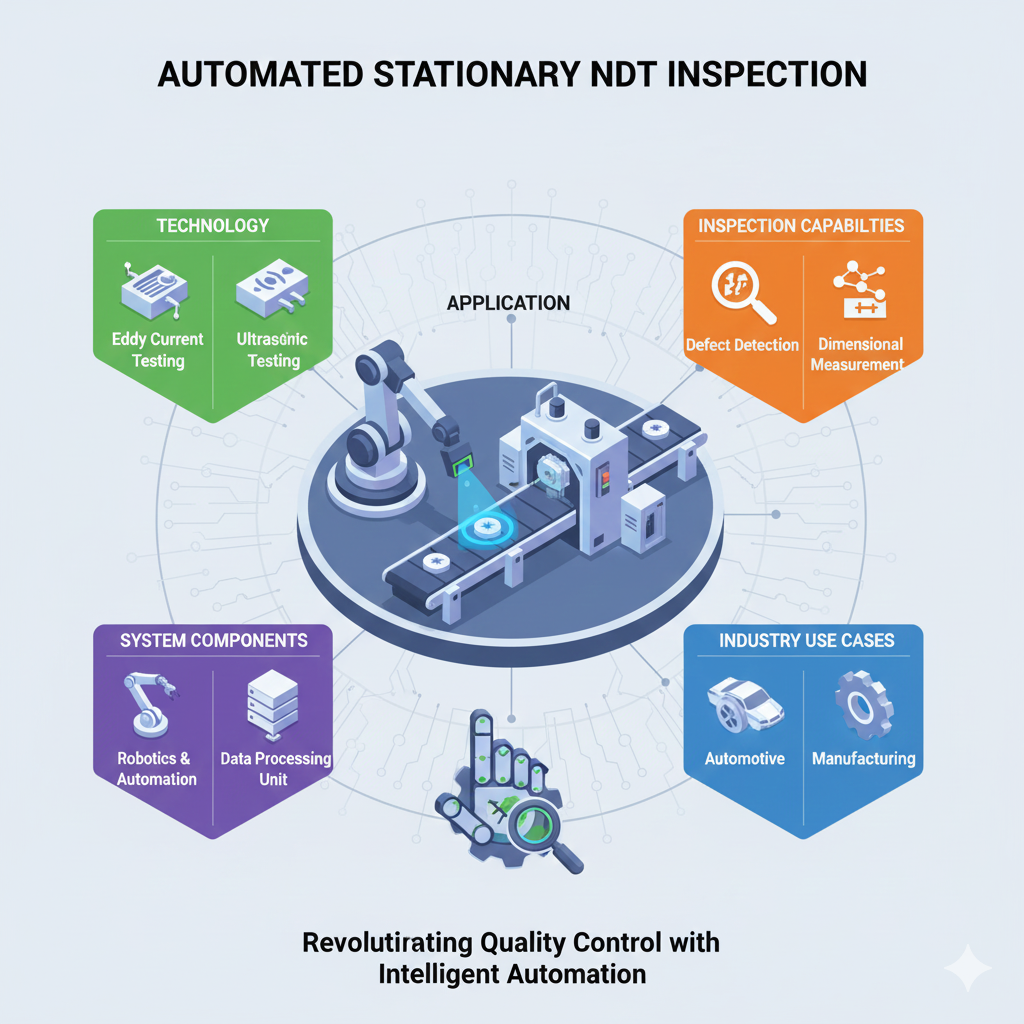
Recent years have witnessed remarkable technological progress in automated stationary NDT inspection. One of the key advancements is the integration of robotics and motion control. Robotic arms and precision actuators enable complex scanning patterns across surfaces, ensuring thorough coverage and reducing the possibility of missed defects. Additionally, the incorporation of high-resolution sensors, such as ultrasonic transducers, X-ray detectors, eddy current sensors, and thermographic cameras, has significantly enhanced defect detection capabilities. These sensors can identify micro-cracks, corrosion, voids, and other structural anomalies with a level of accuracy and consistency that is difficult to achieve through manual inspections.
Artificial intelligence and machine learning have further transformed automated NDT. Modern systems can now analyze vast amounts of inspection data in real time, identifying patterns and anomalies that may go unnoticed by human operators. Predictive analytics can also forecast potential failures, allowing maintenance teams to intervene proactively and prevent costly downtime. The convergence of automation and AI has made inspections not only faster and more reliable but also smarter, enabling decision-makers to leverage actionable insights from the collected data.
Download PDF Brochure @ https://www.marketsandmarkets.com/pdfdownloadNew.asp?id=233564506
Integration with Industry 4.0 and Digital Ecosystems
Automated stationary NDT inspection is increasingly becoming a core component of Industry 4.0 initiatives. These systems can be integrated into industrial IoT networks, connected to digital twin models, and synchronized with enterprise resource planning systems. Such integration allows centralized monitoring, data logging, and real-time reporting, providing a holistic view of the inspection process across multiple sites. This connectivity ensures that inspection data is easily accessible for quality audits, regulatory compliance, and performance optimization, creating a seamless link between inspection processes and broader operational strategies.
Enhancing Industrial Safety and Operational Efficiency
The adoption of automated stationary NDT inspection has a direct impact on industrial safety and operational efficiency. By providing consistent, high-precision inspections, these systems help prevent failures that could lead to accidents, equipment damage, or costly recalls. Automated inspections also streamline workflows by reducing the time required for quality assurance, allowing highly skilled personnel to focus on planning, analysis, and decision-making rather than repetitive inspection tasks. In addition, companies can achieve significant cost savings by minimizing unplanned downtime, extending equipment life, and ensuring regulatory compliance with minimal manual intervention.
Applications Across Industries
Industries such as aerospace, automotive, energy, and manufacturing are at the forefront of adopting automated NDT solutions. In aerospace, where safety is non-negotiable, stationary NDT systems are used to inspect critical components such as turbine blades, fuselage panels, and landing gear assemblies. The automotive sector leverages automated inspections to ensure structural integrity and consistency across mass-produced vehicles. In the energy sector, pipelines, power plants, and renewable energy installations benefit from high-precision inspections that detect corrosion, weld defects, and other structural anomalies before they become major issues. Manufacturing industries utilize stationary NDT for quality control, ensuring that components meet stringent specifications and reducing the risk of defective products entering the supply chain.
Market Outlook and Future Prospects
The automated stationary NDT inspection market is expected to experience robust growth in the coming years. Rising industrial safety standards, increasing automation in manufacturing, and the integration of advanced technologies such as AI, robotics, and IoT are driving demand. As industries seek to enhance operational efficiency and reduce risks associated with equipment failures, the adoption of automated NDT systems is likely to expand further. Ongoing research and innovation are expected to deliver more compact, cost-effective, and versatile inspection solutions, making high-quality automated NDT accessible to a broader range of industries.
Automated stationary NDT inspection is reshaping industrial quality assurance by combining precision, consistency, and intelligence in one system. Technological advancements in robotics, sensors, and AI, coupled with integration into digital ecosystems, are enabling industries to improve safety, efficiency, and reliability. As the demand for high-quality inspection and predictive maintenance continues to rise, automated stationary NDT inspection is set to become an indispensable component of modern industrial operations, driving both economic value and operational excellence.
Automated Stationary NDT Inspection Market – Investor FAQ
1. What is driving investor interest in automated stationary NDT inspection?
Investor interest is primarily driven by the rising demand for industrial safety, quality assurance, and operational efficiency across sectors such as aerospace, automotive, energy, and manufacturing. Automation in NDT reduces human error, improves defect detection, and enhances predictive maintenance capabilities, making it a strategic investment for companies seeking long-term efficiency gains and risk mitigation.
2. How is the market segmented?
The market can be segmented into hardware, software, and services. Hardware includes robotic arms, sensors, actuators, and inspection platforms. Software comprises inspection algorithms, data analytics, AI-enabled defect detection, and predictive maintenance tools. Services include system integration, maintenance, calibration, training, and consulting. Each segment presents unique investment opportunities, with hardware often representing higher capital expenditure and software/services offering recurring revenue potential.
3. Which industries are the largest adopters?
Industries with high safety and quality requirements are early adopters of automated NDT inspection systems. Aerospace uses these systems for turbine blades, fuselage panels, and landing gear inspections. Automotive manufacturers leverage them for structural integrity checks in high-volume production. Energy sectors, including oil & gas, power generation, and renewables, rely on automated NDT to detect corrosion, cracks, and structural anomalies. Manufacturing industries use these solutions for quality control and regulatory compliance.
4. What is the competitive landscape?
The market features a mix of established industrial automation providers, specialized NDT companies, and technology startups. Competitive differentiation often comes from technological innovation, IP ownership, sensor and robotics integration, AI capabilities, and service networks. Partnerships with industrial OEMs and adoption of Industry 4.0 standards are also key strategic advantages.
5. What are the primary risks for investors?
Key risks include high initial capital expenditure, technology adoption barriers, market fragmentation, and dependence on industrial cycles. Additionally, ongoing R&D costs and the need for continuous technological upgrades to maintain competitive advantage pose challenges. Mitigating these risks often involves investing in companies with strong service models, recurring revenue streams, or scalable software platforms.
6. How does automation in NDT enhance long-term ROI?
Automation improves inspection accuracy, throughput, and predictive maintenance, reducing operational downtime and preventing costly equipment failures. This leads to direct cost savings and protects revenue streams. Companies investing in automated NDT systems can also achieve compliance with strict regulatory and safety standards, reducing legal and reputational risks—factors that strengthen long-term ROI.
7. What are the emerging trends in this market?
Emerging trends include integration with AI and machine learning for real-time defect detection, IoT connectivity and digital twin modeling for predictive maintenance, and enhanced sensor technologies for more accurate inspections. Growth is also fueled by the increasing focus on automation in smart manufacturing and Industry 4.0 initiatives.
