The evolution of warfare has entered a new era in which unmanned systems are no longer supporting assets but central instruments of military power. Drone warfare has transformed how nations gather intelligence, project force, and manage risk in increasingly complex security environments. As global defense strategies shift toward speed, precision, and information dominance, unmanned aerial vehicles are emerging as decisive tools that reshape both tactical operations and long term military planning.
The global drone warfare market reflects this transformation through sustained and robust growth. Valued at USD 20.1 billion in 2023, the market is expected to expand significantly, reaching USD 30.5 billion by 2028. This growth is not driven by a single factor but by the convergence of technological advancement, operational efficiency, and evolving geopolitical threats. Modern conflicts increasingly demand persistent surveillance, rapid strike capability, and reduced exposure of human personnel, all of which drones are uniquely positioned to deliver.
Download PDF Brochure @ https://www.marketsandmarkets.com/requestsampleNew.asp?id=117992027
Artificial intelligence plays a central role in redefining the capabilities of military drones. Unlike earlier generations of remotely piloted systems, today’s UAVs are equipped with AI enabled algorithms that allow them to process sensor data in real time, identify potential threats, and support faster decision making. This capability is especially valuable in high tempo combat environments where commanders must act on accurate information within seconds. AI integration also enables drones to operate more autonomously, reducing communication delays and enhancing mission resilience in contested or denied environments.
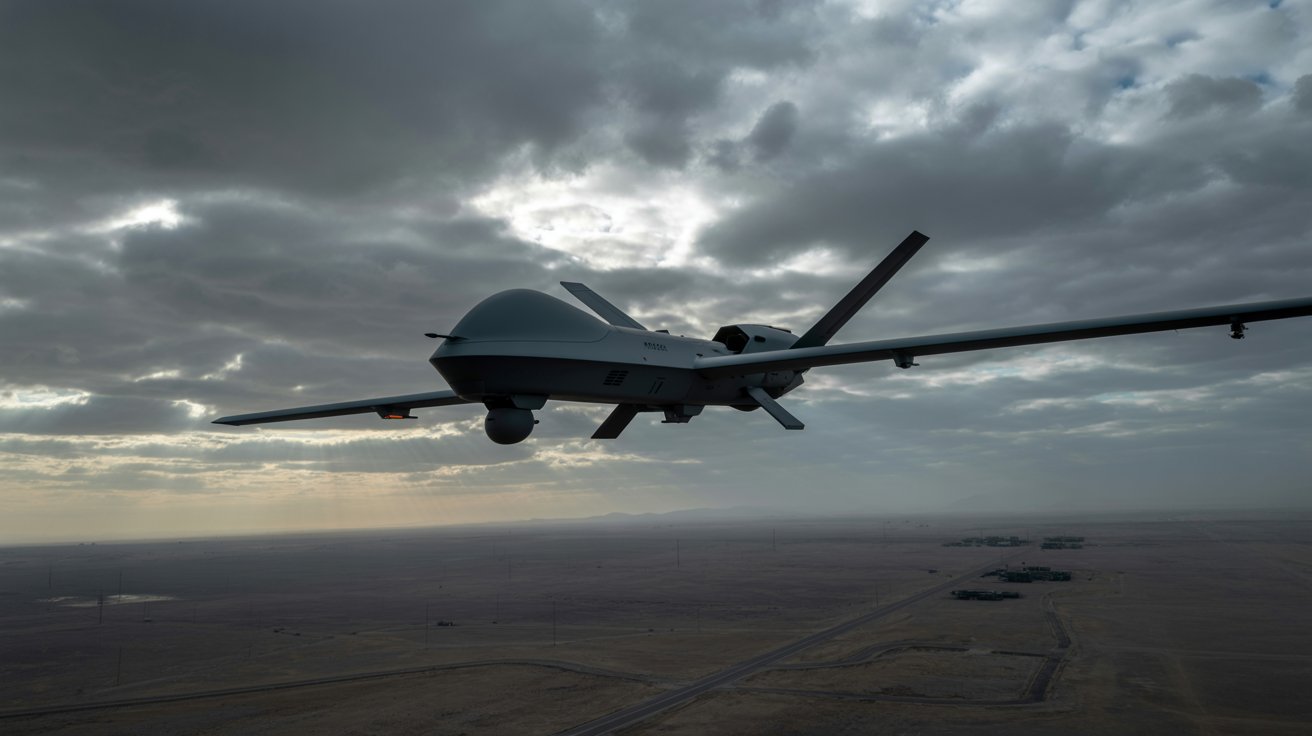
The shift toward network centric warfare further amplifies the importance of drones. In modern battlefields, success depends on the seamless integration of air, land, sea, space, and cyber domains. Drones function as critical nodes within this network, collecting and transmitting intelligence across platforms and command centers. Their ability to provide continuous situational awareness allows defense forces to anticipate enemy actions, coordinate responses, and maintain operational superiority. As militaries invest in interconnected systems, drones become force multipliers that enhance the effectiveness of entire defense architectures.
Economic considerations strongly support the growing reliance on drone warfare. Compared with manned aircraft, drones offer substantial cost advantages across their operational lifecycle. They consume less fuel, require simpler maintenance, and demand lower training investments. These efficiencies enable defense forces to deploy drones more frequently and for longer durations, particularly in surveillance and reconnaissance roles. The absence of onboard pilots also eliminates the political and financial consequences associated with human casualties, making drones a more flexible option for sensitive or high risk missions.
Applications such as intelligence, surveillance, and reconnaissance continue to dominate drone deployment, driven by rapid improvements in sensors and imaging technologies. High resolution cameras, infrared sensors, and radar systems allow drones to operate effectively in diverse conditions, from urban conflict zones to remote border regions. This capability has proven essential in counterterrorism operations, maritime security, and battlefield monitoring. Beyond surveillance, armed drones are increasingly used for precision strikes, offering the ability to neutralize targets with minimal collateral damage.
Regional dynamics reveal how drone warfare priorities differ across the globe. Europe is emerging as a fast growing market, supported by defense modernization programs and rising security concerns. The conflict in Eastern Europe has highlighted the strategic value of drones in both reconnaissance and strike roles, accelerating procurement and development initiatives. European nations are investing in indigenous drone capabilities to strengthen autonomy and reduce dependence on external suppliers, further stimulating market growth.
North America remains the largest and most mature drone warfare market, led by the United States. Extensive operational experience, sustained defense spending, and strong industrial capabilities have positioned the US as a global leader in military UAV deployment. Continuous investment in research and development has driven innovation in areas such as stealth design, endurance, and autonomous operation. The presence of major defense contractors and technology firms reinforces the region’s dominance in shaping the future of drone warfare.
Despite strong growth prospects, the market faces significant regulatory and ethical challenges. International frameworks governing the use of autonomous weapons are still evolving, creating uncertainty for developers and end users. Concerns about accountability, civilian harm, and decision making without human oversight continue to influence public debate and policy formation. These issues can slow adoption and complicate cross border collaboration. However, efforts to establish clear guidelines, ethical standards, and human in the loop systems aim to balance innovation with responsibility.
Emerging opportunities are expanding the scope of drone warfare beyond traditional offensive roles. Electronic warfare systems designed to disrupt enemy drones are gaining prominence as UAV proliferation increases. Anti air laser technologies and drone interceptors offer new approaches to countering aerial threats with speed and precision. These developments highlight a growing emphasis on defensive and counter drone capabilities, creating additional avenues for investment and technological progress.
Technological limitations such as weather sensitivity and payload constraints remain challenges, particularly for smaller platforms. Adverse environmental conditions can restrict operations, while limited payload capacity affects mission versatility. Ongoing advancements in materials, propulsion, and swarm technologies are addressing these issues by improving resilience and enabling collaborative drone operations. Swarm based concepts, where multiple drones operate as coordinated units, are expected to enhance adaptability and mission success in the future.
Looking ahead, the drone warfare market is set to play an increasingly influential role in global defense. The progression toward semi autonomous and autonomous systems signals a fundamental shift in how military power is projected and managed. As technological capabilities mature and regulatory clarity improves, drones will become even more integral to defense strategies worldwide. Their combination of intelligence gathering, precision engagement, and cost efficiency positions drone warfare as a defining element of modern and future conflict.
