The aviation industry is undergoing a significant transformation as airports worldwide invest in automation, digitalization, and intelligent infrastructure to improve operational efficiency and enhance passenger experiences. Among the critical technologies supporting this evolution, baggage handling monitoring systems are becoming increasingly important for ensuring accurate tracking, improved security, reduced baggage delays, and seamless airport operations.
The Baggage Handling Monitoring Market is expected to experience strong growth through 2032, driven by rising air passenger traffic, airport modernization initiatives, increasing demand for real-time baggage visibility, and the adoption of advanced technologies such as artificial intelligence (AI), Internet of Things (IoT), automation, and data analytics.
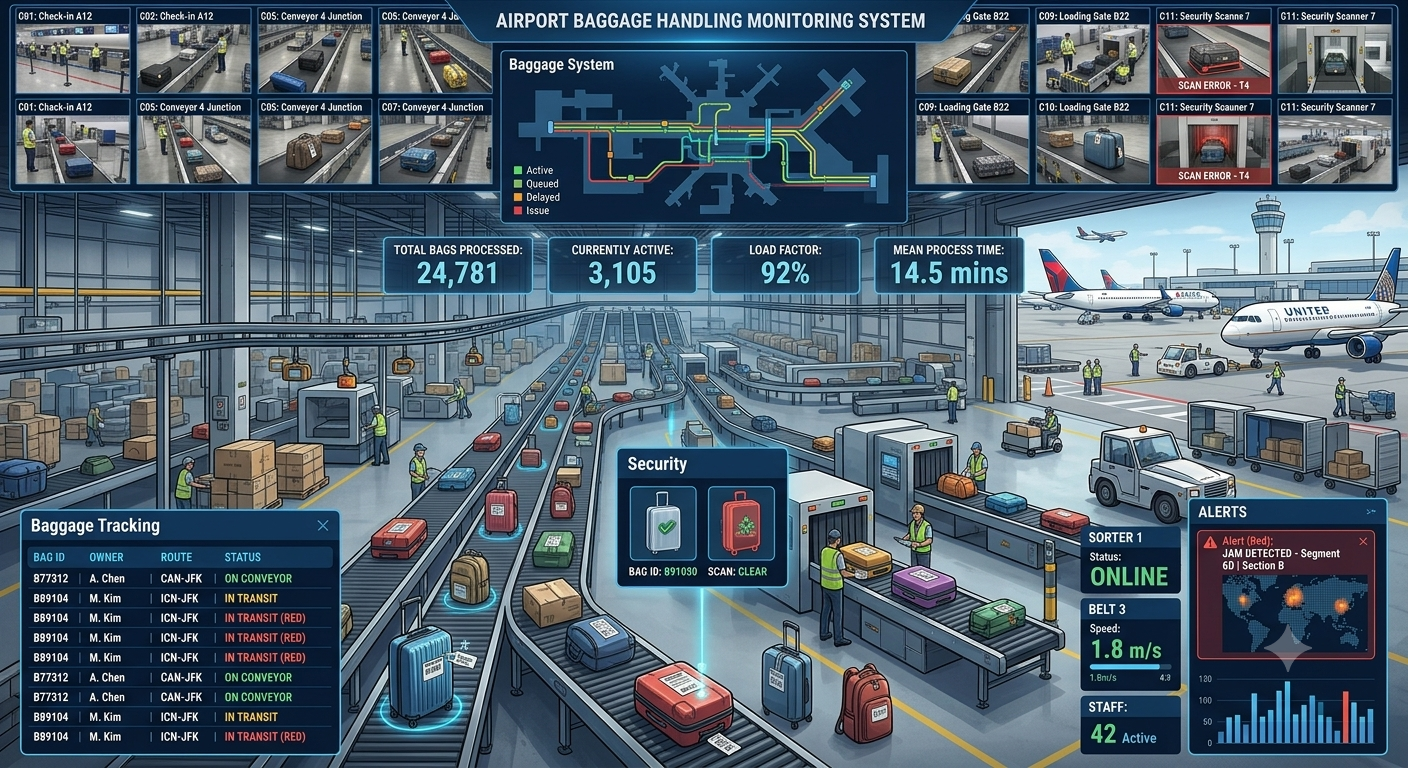
Modern baggage monitoring solutions enable airports and airlines to track baggage movement throughout the entire journey—from check-in and security screening to aircraft loading, transfer, and final delivery—helping reduce mishandled baggage incidents while improving operational performance.
The Growing Importance of Baggage Handling Monitoring Systems
Airports manage millions of baggage items every day, making efficient tracking and management essential for smooth operations. Traditional baggage handling processes face challenges such as misplaced luggage, delayed transfers, operational bottlenecks, and limited visibility across multiple touchpoints.
Baggage handling monitoring systems address these challenges by providing:
- Real-time baggage tracking and monitoring
- Automated identification and routing
- Improved baggage security
- Faster issue detection and resolution
- Enhanced operational decision-making
- Better passenger satisfaction
As airports become more connected and passenger expectations continue to rise, intelligent baggage monitoring has become a key component of smart airport ecosystems.
Key Market Growth Drivers
1. Rising Air Passenger Traffic and Airport Expansion
The continuous growth of global air travel is increasing pressure on airports to improve capacity, efficiency, and service quality. Airport operators are investing in advanced baggage handling infrastructure to manage higher passenger volumes while maintaining operational reliability.
New airport construction projects and terminal expansions are creating opportunities for advanced baggage monitoring solutions that support automated operations and improved passenger experiences.
2. Increasing Adoption of Smart Airport Technologies
The transition toward smart airports is accelerating the adoption of connected technologies across airport operations. IoT-enabled sensors, automated systems, and advanced analytics are enabling real-time monitoring and improved visibility of baggage flows.
Integration of digital technologies allows airport operators to optimize baggage processes, identify disruptions quickly, and enhance resource utilization.
3. Growing Focus on Passenger Experience
Passenger expectations have shifted toward faster, more transparent, and convenient travel experiences. Real-time baggage tracking solutions provide passengers with greater confidence by enabling better visibility into baggage status.
Improved baggage management reduces delays, minimizes lost luggage incidents, and contributes to higher customer satisfaction.
4. Increasing Security Requirements
Airports face growing security challenges requiring advanced monitoring capabilities. Baggage handling monitoring systems help improve security by enabling accurate identification, tracking, and verification of baggage throughout airport operations.
Download PDF Brochure @ https://www.marketsandmarkets.com/pdfdownloadNew.asp?id=49221585
Market Segmentation
By Component
The baggage handling monitoring market includes various hardware, software, and services designed to improve baggage visibility and operational efficiency.
Hardware Components
- Sensors
- RFID readers
- Barcode scanners
- Tracking devices
- Monitoring equipment
Software Solutions
- Baggage tracking platforms
- Data management systems
- Analytics solutions
- Monitoring and control software
Services
- Installation
- Maintenance
- System integration
- Support services
By Technology
Radio Frequency Identification (RFID)
RFID technology enables automated baggage identification and real-time tracking, improving accuracy and reducing manual intervention.
Barcode Technology
Barcode-based systems continue to support baggage identification and routing processes due to their widespread adoption and cost-effectiveness.
Internet of Things (IoT)
IoT connectivity enables continuous monitoring of baggage movement and supports data-driven airport operations.
Artificial Intelligence and Analytics
AI-based systems help predict operational issues, optimize baggage flows, and improve decision-making.
By Airport Type
Large and International Airports
Major airports are leading adopters of advanced baggage monitoring solutions due to high passenger volumes and complex baggage operations.
Regional Airports
Regional airports are increasingly adopting digital monitoring solutions to improve efficiency and enhance service quality.
Emerging Market Trends
AI-Powered Baggage Management
Artificial intelligence is transforming baggage operations by enabling predictive analytics, automated decision-making, and improved resource allocation. AI can identify potential delays, optimize routing, and support proactive issue resolution.
RFID-Based Real-Time Tracking
RFID adoption is increasing as airports and airlines seek greater baggage visibility and accuracy. The technology reduces manual scanning requirements and improves tracking throughout the baggage journey.
IoT-Enabled Smart Airports
IoT sensors and connected devices are creating more transparent and responsive baggage ecosystems. Real-time data collection enables airports to monitor equipment performance, baggage movement, and operational conditions.
Automation and Robotics
Automated guided vehicles, robotic baggage systems, and intelligent sorting technologies are improving speed, accuracy, and efficiency in baggage handling operations.
Cloud-Based Airport Solutions
Cloud platforms are enabling scalable baggage monitoring systems with centralized data access, improved collaboration, and advanced analytics capabilities.
Growth Opportunities
Airport Modernization Programs
Governments and airport authorities worldwide are investing in modernization projects that include automated baggage handling and monitoring systems.
Integration with Airline Digital Platforms
Connecting baggage monitoring systems with airline applications and passenger platforms creates opportunities for improved communication and enhanced customer experiences.
Expansion of Smart City and Smart Airport Initiatives
Smart infrastructure investments are creating opportunities for connected airport solutions that integrate baggage operations with broader digital ecosystems.
Sustainable Airport Operations
Efficient baggage management can contribute to sustainability goals by reducing operational waste, optimizing resource utilization, and improving energy efficiency.
Challenges Impacting Market Growth
Despite strong growth potential, the baggage handling monitoring market faces several challenges:
- High installation and integration costs
- Complexity of upgrading existing airport infrastructure
- Need for interoperability between systems
- Cybersecurity concerns related to connected airport technologies
- Maintenance requirements for advanced monitoring systems
However, ongoing advancements in automation, cloud computing, and AI are expected to help overcome these challenges.
Future Outlook
The future of the Baggage Handling Monitoring Market through 2032 will be shaped by continued airport digital transformation, increasing passenger expectations, and the demand for secure and efficient baggage operations.
As airports evolve into intelligent transportation hubs, baggage monitoring systems will become an essential technology for improving operational reliability, reducing delays, and delivering a seamless passenger journey.
The integration of AI, IoT, RFID, automation, and advanced analytics will further enhance baggage visibility and enable airports to move toward fully connected and predictive baggage management ecosystems.
Baggage handling monitoring systems are becoming a critical element of modern airport infrastructure. By improving tracking accuracy, operational efficiency, security, and passenger satisfaction, these solutions are helping airports address the challenges of increasing travel demand and complex baggage operations.
With ongoing investments in smart airports and digital transformation, the Baggage Handling Monitoring Market is positioned for significant growth by 2032, creating new opportunities for technology providers, airport operators, and aviation stakeholders worldwide.
