Battlefield sustainment and autonomous logistics are fundamentally transforming modern combat operations by enabling faster deployment, resilient supply chain management, predictive maintenance, and real-time operational support across multi-domain warfare environments. As military operations become increasingly distributed, data-driven, and technologically advanced, defense organizations worldwide are investing heavily in autonomous logistics ecosystems capable of supporting highly mobile forces operating in contested and complex operational theaters.
The The Military Logistics and Defense Sustainment Market is projected to exceed USD 380–470 billion by 2035, growing at a CAGR of 7%–9% during the forecast period. Rising geopolitical tensions, growing adoption of autonomous combat systems, increasing military modernization programs, and the expanding use of artificial intelligence are accelerating demand for advanced battlefield sustainment technologies globally.
Artificial intelligence, IoT-enabled logistics networks, robotic resupply systems, autonomous vehicles, predictive analytics, digital twin platforms, and cloud-based command infrastructures are rapidly reshaping military logistics operations. These technologies are enhancing battlefield readiness, reducing supply chain vulnerabilities, minimizing operational risk, and improving force survivability in modern combat scenarios.
Download Free PDF Brochure: https://www.marketsandmarkets.com/pdfdownloadNew.asp?id=155479010
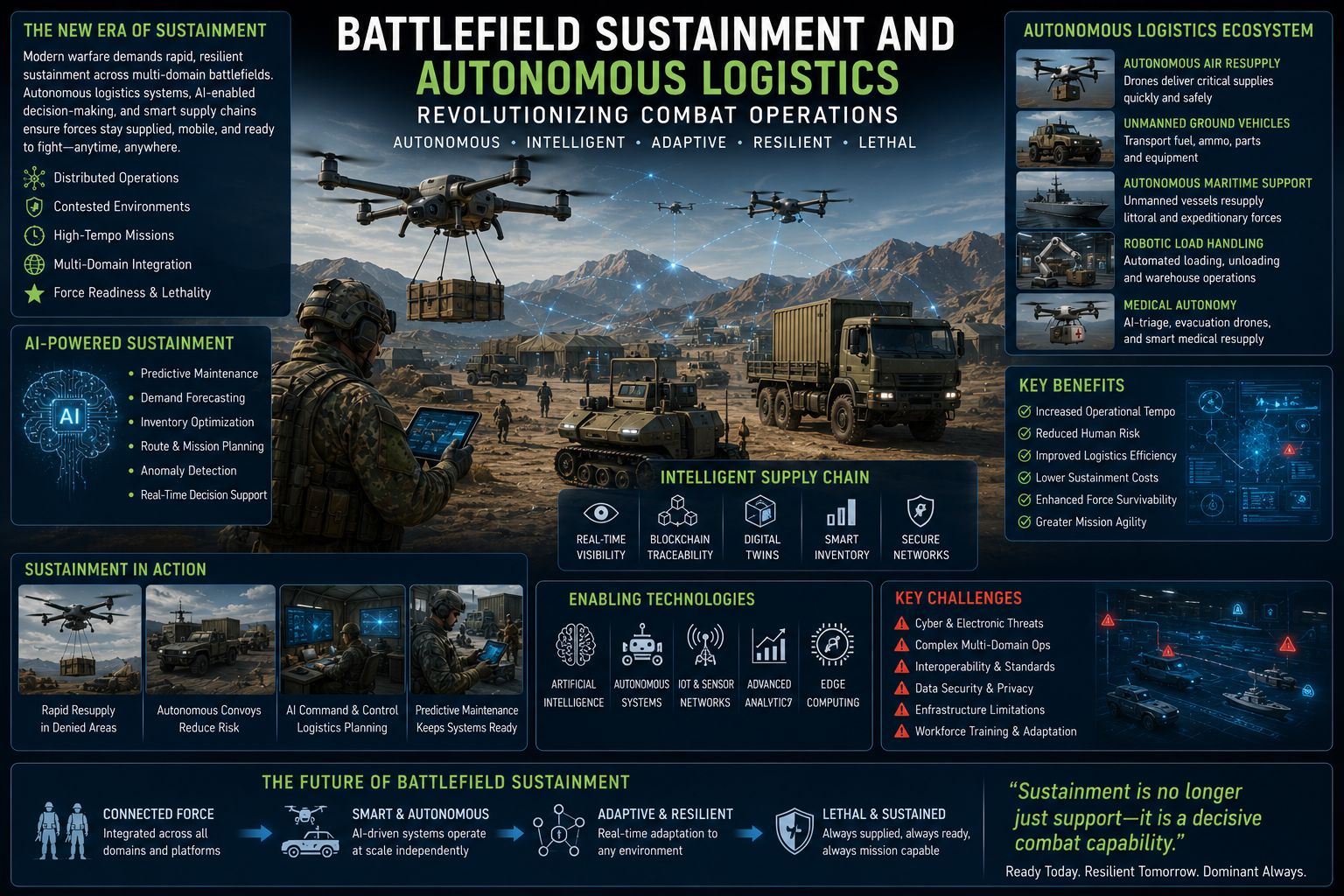
Evolution of Battlefield Sustainment
Battlefield sustainment has evolved far beyond traditional transportation and supply chain management functions. Modern military sustainment now encompasses highly integrated operational ecosystems that coordinate fuel delivery, ammunition resupply, equipment maintenance, medical evacuation, communication infrastructure, and operational mobility across distributed combat environments.
Today’s military operations require sustainment systems capable of supporting:
- Multi-domain combat operations
- Autonomous combat platforms
- Expeditionary warfare missions
- Distributed force deployments
- Cyber-resilient logistics networks
- Long-duration ISR operations
As combat operations become increasingly decentralized, military organizations are prioritizing agile logistics architectures capable of operating effectively even under contested communication and electronic warfare conditions.
Autonomous Logistics Systems Driving Operational Efficiency
Autonomous logistics systems are becoming central to future combat operations by reducing human exposure to hostile environments while improving resupply speed and operational flexibility. Autonomous transportation technologies include unmanned ground vehicles (UGVs), cargo drones, robotic warehouse systems, autonomous maritime supply vessels, and AI-driven convoy management platforms.
These systems support critical battlefield functions such as:
- Autonomous ammunition delivery
- Fuel resupply operations
- Medical supply transportation
- Equipment recovery missions
- Battlefield maintenance support
- ISR payload distribution
Autonomous logistics platforms provide significant operational advantages, including improved supply chain continuity, lower personnel risk, reduced operational costs, and faster sustainment response times.
Drone-based resupply systems are increasingly used to deliver mission-critical equipment to frontline forces operating in difficult or hostile terrain. Autonomous cargo drones also support rapid casualty evacuation and emergency medical logistics.
Artificial Intelligence Enhancing Sustainment Operations
Artificial intelligence is playing a transformative role in battlefield sustainment by enabling predictive logistics, intelligent route planning, automated inventory management, and real-time operational optimization.
AI-powered sustainment systems can analyze battlefield data, equipment telemetry, environmental conditions, and supply chain patterns to improve decision-making and operational efficiency.
Key AI-enabled capabilities include:
- Predictive maintenance diagnostics
- Autonomous supply prioritization
- Real-time logistics optimization
- Intelligent fleet management
- Automated repair scheduling
- Dynamic battlefield route planning
Predictive maintenance systems use machine learning algorithms to detect potential equipment failures before they occur, reducing downtime and improving mission readiness.
Artificial intelligence also improves logistics resilience by autonomously rerouting supply operations around combat threats, damaged infrastructure, or cyber-disrupted environments.
IoT-Enabled Battlefield Visibility
The Internet of Things is significantly improving battlefield sustainment visibility through connected logistics infrastructures and real-time asset monitoring systems. IoT-enabled sensors embedded in military vehicles, containers, ammunition depots, fuel systems, and communication equipment provide continuous operational data to logistics commanders.
Connected sustainment ecosystems enable:
- Real-time cargo tracking
- Smart inventory monitoring
- Fuel consumption analysis
- Environmental condition tracking
- Equipment performance diagnostics
- Autonomous warehouse management
IoT technologies enhance situational awareness across military supply chains and improve coordination between operational units, logistics hubs, and command centers.
These systems also support faster response times during combat operations by providing commanders with accurate and real-time sustainment intelligence.
Cloud-Based Logistics and Digital Command Networks
Cloud computing technologies are becoming essential for managing modern military sustainment operations. Cloud-enabled logistics platforms provide centralized operational visibility and support coordination across globally distributed military networks.
Modern digital sustainment systems support:
- Real-time operational synchronization
- Centralized logistics planning
- Secure battlefield data sharing
- Multi-domain command integration
- Predictive analytics management
- AI-driven operational coordination
Cloud-based logistics architectures improve interoperability between allied forces and support multinational coalition operations.
Cybersecurity has also become a major focus area as digitally connected sustainment systems face increasing threats from cyberattacks and electronic warfare operations. Defense organizations are investing heavily in zero-trust security architectures and encrypted battlefield communication systems.
Predictive Maintenance and Equipment Readiness
Equipment readiness remains one of the most important objectives of battlefield sustainment. Traditional reactive maintenance approaches often result in operational delays and reduced mission effectiveness. Modern predictive maintenance systems significantly improve operational readiness by proactively identifying equipment issues before failures occur.
Advanced predictive sustainment systems utilize:
- AI-powered diagnostics
- Real-time telemetry monitoring
- Digital twin simulation platforms
- Automated fault detection systems
- Remote maintenance analytics
Military platforms including armored vehicles, aircraft, naval systems, and autonomous drones increasingly rely on predictive sustainment architectures to maintain operational availability.
Digital twin technologies create real-time virtual replicas of military equipment, enabling engineers to simulate wear patterns, analyze structural performance, and optimize maintenance cycles.
Additive Manufacturing Supporting Frontline Sustainment
Additive manufacturing is revolutionizing battlefield sustainment by enabling on-demand production of spare parts and mission-critical components directly within operational environments.
Military organizations are increasingly deploying:
- Mobile 3D printing units
- Expeditionary repair facilities
- Automated fabrication systems
- Digital manufacturing platforms
- Rapid prototyping technologies
Forward-deployed additive manufacturing capabilities reduce dependence on extended supply chains while improving operational responsiveness and repair efficiency.
The ability to manufacture replacement components near combat zones significantly improves mission continuity and reduces logistical vulnerabilities.
Supply Chain Resilience in Contested Environments
Modern combat environments are increasingly characterized by cyber threats, electronic warfare, infrastructure disruption, and long-range precision attacks targeting logistics networks. As a result, supply chain resilience has become a strategic military priority.
Future sustainment architectures emphasize:
- Distributed logistics hubs
- Decentralized supply networks
- AI-driven supply forecasting
- Autonomous resupply capabilities
- Redundant communication systems
- Strategic inventory management
Military planners are increasingly adopting distributed logistics concepts to reduce operational vulnerability and improve sustainment survivability during high-intensity conflicts.
Access 100+ Data Tables & Charts @ https://www.marketsandmarkets.com/Market-Reports/military-vehicle-sustainment-market-155479010.html
Multi-Domain Warfare Increasing Sustainment Complexity
The rise of multi-domain warfare is dramatically increasing the complexity of battlefield sustainment operations. Modern military logistics systems must simultaneously support land forces, naval assets, aerospace systems, cyber infrastructures, autonomous platforms, and space-based communication networks.
Future sustainment operations must accommodate:
- Autonomous combat systems
- AI-enabled ISR platforms
- Hypersonic weapons systems
- Space-based military infrastructure
- Electronic warfare ecosystems
- Integrated battlefield networks
These evolving operational environments require highly adaptive and digitally integrated logistics architectures capable of supporting complex and rapidly changing mission demands.
Regional Market Insights
North America currently dominates the Battlefield Sustainment and Autonomous Logistics Market due to extensive investments in military modernization, AI-driven logistics systems, and autonomous battlefield technologies. The United States continues to lead in predictive maintenance systems, autonomous resupply platforms, and cloud-enabled military logistics.
Europe is experiencing significant growth through NATO interoperability initiatives, defense mobility modernization programs, and investments in autonomous military transportation systems.
Asia Pacific is expected to witness the fastest market growth during the forecast period. China, India, Japan, and South Korea are heavily investing in autonomous logistics systems, digital military infrastructure, and AI-enabled sustainment technologies.
The Middle East is also increasing investments in military mobility and battlefield sustainment modernization amid rising regional security concerns.
Competitive Landscape
The Battlefield Sustainment and Autonomous Logistics Market is highly competitive, with leading defense contractors and technology companies investing aggressively in AI-enabled sustainment platforms, robotic logistics systems, cloud-based operational management, and autonomous transportation technologies.
Major companies operating in the market include:
- Lockheed Martin
- Northrop Grumman
- RTX Corporation
- General Dynamics
- BAE Systems
- Boeing Defense
- Palantir Technologies
- IBM
- SAP
- L3Harris Technologies
These organizations are focusing on digital transformation, predictive maintenance, autonomous logistics ecosystems, and secure battlefield communication technologies to strengthen their market position.
The future of battlefield sustainment and autonomous logistics will be defined by artificial intelligence, robotics, predictive analytics, cloud computing, IoT-enabled supply chains, and autonomous transportation systems. Sustainment operations are evolving into highly intelligent and adaptive ecosystems capable of supporting modern combat operations across contested and multi-domain environments.
AI-driven logistics coordination, predictive maintenance platforms, autonomous resupply systems, and digital sustainment networks are expected to significantly improve operational readiness, battlefield survivability, and mission effectiveness through 2035.
As military operations continue shifting toward distributed and autonomous warfare concepts, advanced battlefield sustainment and autonomous logistics systems will remain essential for maintaining operational superiority and ensuring long-term combat readiness in future conflicts.
