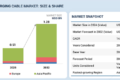
The Canada artificial intelligence in healthcare market is a rapidly growing sector, valued at approximately USD 163.80 million in 2024 and projected to reach over USD 3.3 billion by 2033, driven by a compound annual growth rate of nearly 37%. This landscape is defined by the increasing integration of AI in medical imaging, diagnostics, and personalized medicine, as well as the rising adoption of AI-powered wearable health technologies for remote patient monitoring. Canada holds a strong global reputation in the field, supported by the world’s first national AI strategy and ongoing investments in research and development aimed at addressing the challenges of an aging population and rising chronic disease prevalence. While the market benefits from a robust innovation ecosystem and government support, it currently operates within a complex and evolving legal and regulatory framework, relying on existing privacy laws and voluntary codes as specific AI legislation continues to develop. Organizations are increasingly focusing on AI scribes, predictive analytics, and clinical decision support systems to improve patient outcomes and streamline healthcare operations, though success remains contingent on navigating data security concerns and ensuring human oversight in clinical decision-making.
Key Drivers, Restraints, Opportunities, and Challenges in the Canada Artificial Intelligence in Healthcare Market
The Canada artificial intelligence in healthcare market is primarily driven by the increasing demand for personalized medicine tailored to individual genetic profiles, the rising integration of AI in wearable health technologies for real-time monitoring, and government initiatives like the Pan-Canadian AI Strategy. Significant growth opportunities exist in leveraging Canada’s high-quality health data for drug discovery, adopting AI scribes to reduce clinician burnout, and utilizing predictive analytics to improve patient outcomes in medical imaging and diagnostics. However, the market faces notable restraints, including a fragmented data landscape that hinders the creation of centralized datasets and a complex, uncoordinated regulatory environment that lacks a comprehensive, health-specific AI framework. Major challenges remain, such as addressing potential biases in training data to ensure health equity, navigating liability and accountability concerns for AI-generated recommendations, and overcoming infrastructure gaps and low AI literacy among healthcare providers to ensure successful implementation.
Customer Segmentation, Needs, Preferences, and Buying Behavior in the Canada Artificial Intelligence in Healthcare Market
The target customers for the Canada artificial intelligence in healthcare market primarily include healthcare providers such as hospitals and clinics, pharmaceutical and biotechnology companies, government health institutions, and individual patients. These customers prioritize solutions that enhance diagnostic accuracy, streamline administrative workflows to reduce clinician burnout, and enable personalized medicine tailored to individual genetic profiles. Healthcare providers and government payers prefer AI tools that integrate seamlessly with existing electronic health records and demonstrate clear improvements in system efficiency and patient outcomes, particularly for managing chronic diseases in an aging population. Purchasing behavior is increasingly driven by a shift toward value-based care, with institutional buyers seeking strategic partnerships that offer ethical, transparent, and regulatory-compliant software-as-a-service (SaaS) models. Meanwhile, the growing consumer segment is characterized by the adoption of AI-powered wearables and mobile health apps for real-time monitoring and proactive health management.
Regulatory, Technological, and Economic Factors Impacting the Canada Artificial Intelligence in Healthcare Market
The Canada artificial intelligence in healthcare market is influenced by a complex interplay of regulatory, technological, and economic factors. Regulated primarily through Health Canada’s Medical Devices Regulations, AI tools categorized as Software as a Medical Device (SaMD) face stringent risk-based classification and monitoring, while the lack of a comprehensive federal AI framework following the lapse of the Artificial Intelligence and Data Act (AIDA) leaves organizations to navigate a fragmented landscape of privacy laws and professional accountability standards. Technologically, the integration of machine learning and natural language processing is driving efficiency in diagnostics, personalized medicine, and administrative workflows, although challenges such as data fragmentation, algorithmic bias, and the need for interoperable digital health systems remain significant hurdles. Economically, while substantial public and private investments and the potential for billions in healthcare savings sustain demand, high implementation costs, a risk-averse procurement culture that prioritizes short-term pricing over long-term value, and a critical shortage of specialized skills can restrain profitability and limit market expansion for new entrants.
Current and Emerging Trends in the Canada Artificial Intelligence in Healthcare Market
The Canada artificial intelligence in healthcare market is undergoing a rapid transformation driven by the integration of AI into diagnostic imaging, the rise of personalized medicine, and the widespread adoption of AI-powered administrative tools like automated notetaking and scheduling. These trends are evolving quickly, as evidenced by the proliferation of over 175 documented AI initiatives across the country and the projection that AI-driven predictive analytics and wearable health technologies will significantly decentralize care. Furthermore, the market is accelerating through substantial public and private investments, with emerging focus areas such as generative AI and clinical training tools poised to reshape the 2025 healthcare landscape. While the shift toward preventative health and real-time patient monitoring is gaining permanent traction, the industry is simultaneously establishing robust ethical and regulatory frameworks to ensure responsible deployment and public trust.
Technological Innovations and Disruption Potential in the Canada Artificial Intelligence in Healthcare Market
Technological innovations such as machine learning and natural language processing are gaining significant traction and are poised to disrupt the Canadian healthcare market by enhancing diagnostic accuracy and streamlining administrative workflows. Key advancements include AI-driven medical imaging for disease detection, such as mammography and stroke analysis, as well as AI scribes that automate clinical documentation to reduce provider burnout. Furthermore, the integration of generative AI and large language models is transforming patient engagement and drug discovery, while predictive analytics tools like CHARTWatch are improving clinical outcomes by identifying patient deterioration in real-time. These innovations, supported by large-scale investments in AI centers of excellence and decentralized monitoring tools like wearable biosensors, are shift the industry toward a more efficient, data-driven, and patient-centric model of care.
Short-Term vs. Long-Term Trends in the Canada Artificial Intelligence in Healthcare Market
In the Canada artificial intelligence in healthcare market, the initial hype surrounding the immediate replacement of specialized medical professionals is being replaced by a long-term structural shift where AI serves as a powerful complement to human expertise. While early predictions suggested a rapid displacement of roles like radiologists, the enduring reality is a move toward integrating AI to handle mundane intellectual tasks and administrative burdens, such as clinical notetaking and scheduling, to allow providers more time for direct patient care. This transformation is further characterized by the long-term adoption of AI for predictive analytics, such as the CHARTWatch system for early detection of patient deterioration, and personalized medicine driven by large-scale health data registries. These structural shifts are supported by national investments like the Pan-Canadian AI Strategy and a growing emphasis on ethical governance and responsible deployment to maintain public trust. Conversely, the notion of AI as a short-term “silver bullet” for productivity is stabilizing into a more realistic understanding that meaningful gains require thoughtful, long-term organizational redesign and workforce upskilling.