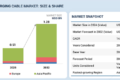
The Canada patient monitoring devices market is a robust and growing sector valued at over USD 10 billion, driven primarily by an aging population and a high prevalence of chronic conditions such as diabetes and cardiovascular diseases. The landscape is characterized by a significant shift toward decentralized care, with increasing adoption of remote patient monitoring and home-based technologies to address healthcare professional shortages, particularly in rural areas. Technological integration is a major trend, featuring the use of artificial intelligence, wearable biosensors, and the synchronization of electronic health records to provide real-time, data-driven clinical oversight. While the market is dominated by global leaders like Medtronic, GE Healthcare, and Philips, it also features a diverse ecosystem of over 1,500 local medtech firms and specialized digital health platforms like TELUS Health and Cloud DX. Despite challenges such as high implementation costs and a heavy reliance on imports, the industry is poised for steady expansion as provincial healthcare systems transition toward proactive, value-based care models.
Key Drivers, Restraints, Opportunities, and Challenges in the Canada Patient Monitoring Devices Market
The Canada patient monitoring devices market is primarily driven by an aging population and the rising prevalence of chronic conditions like diabetes and cardiovascular diseases, which necessitate continuous health oversight. Technological advancements in wireless, wearable, and AI-powered remote monitoring systems further propel growth by improving diagnostic accuracy and enabling care beyond traditional hospital settings. However, the market faces significant restraints, including the high capital costs of advanced equipment and stringent regulatory requirements from Health Canada. Despite these hurdles, substantial opportunities exist in the expansion of home-based healthcare and the integration of digital health tools to reduce hospital readmissions. Key challenges include persistent shortages of skilled healthcare personnel to interpret complex data, technical interoperability issues between devices and electronic medical records, and escalating cybersecurity risks regarding sensitive patient information.
Customer Segmentation, Needs, Preferences, and Buying Behavior in the Canada Patient Monitoring Devices Market
The target customers for the Canada patient monitoring devices market primarily include hospitals and clinics, ambulatory surgical centers, and a rapidly growing home healthcare segment. These customers prioritize solutions that enhance patient outcomes and operational efficiency, with a strong preference for technology-driven tools such as AI-integrated systems, wearable devices, and telehealth platforms that support real-time data tracking and chronic disease management. Institutional purchasers like hospitals focus on accuracy and the ability to manage high-acuity patients while reducing readmission rates, whereas home-care users and providers value convenience, ease of use, and the ability to maintain independence through remote monitoring. Purchasing behavior is increasingly influenced by public funding, provincial coverage programs like Ontario’s Assistive Devices Program for glucose monitors, and a strategic shift toward long-term partnerships with digital health leaders like TELUS Health and Cloud DX to address healthcare professional shortages and improve access in rural communities.
Regulatory, Technological, and Economic Factors Impacting the Canada Patient Monitoring Devices Market
The Canada patient monitoring devices market is significantly influenced by a complex interplay of regulatory, technological, and economic factors. Regulated by Health Canada, market entry is shaped by a rigorous four-class risk-based system that ensures safety but can present hurdles due to long approval timelines and a lack of regulatory clarity for emerging areas like mHealth apps. Technologically, the integration of artificial intelligence, wireless sensor technology, and wearable devices is driving market expansion by enabling smarter, real-time data collection, though it introduces challenges related to data privacy, cybersecurity, and the need for seamless interoperability with existing electronic medical records. Economically, while the rising prevalence of chronic diseases among an aging population sustains high demand and government healthcare spending supports adoption, profitability can be restrained by high development costs, a heavy reliance on imports that exposes the market to supply chain disruptions, and a procurement model that often prioritizes initial costs over the long-term value of innovative outcomes.
Current and Emerging Trends in the Canada Patient Monitoring Devices Market
The Canada patient monitoring devices market is undergoing a rapid digital transformation characterized by the widespread adoption of connected platforms, wearable technologies, and artificial intelligence. Current trends are evolving quickly, as evidenced by the increasing integration of monitoring equipment with hospital information systems and electronic health records to eliminate manual errors and the expansion of continuous ward monitoring programs using lightweight wearables. These shifts are accelerating to meet the needs of an aging population and a high burden of chronic diseases, with the digital segment alone projected to grow at a CAGR of over 25% through 2030. Furthermore, emerging innovations such as AI-driven alarm management, non-invasive hemodynamic monitoring, and the rise of decentralized care through remote patient monitoring are reshaping the landscape by enabling more proactive, personalized, and efficient healthcare delivery outside of traditional clinical settings.
Technological Innovations and Disruption Potential in the Canada Patient Monitoring Devices Market
Technological innovations such as the integration of artificial intelligence (AI) and machine learning are fundamentally disrupting the Canada patient monitoring devices market by enabling real-time data analysis, predictive risk stratification, and the development of hyper-personalized treatment plans. The rapid adoption of wearable biosensors and wireless monitoring devices is gaining significant traction, facilitating a shift toward a more patient-centric approach that offers greater freedom of movement and continuous, real-time physiological tracking outside of traditional clinical settings. Furthermore, advancements in remote patient monitoring (RPM) platforms, such as those from TELUS Health and Cloud DX, are increasingly incorporating AI-guided analytics and interoperable electronic health record (EHR) integration to streamline laboratory workflows and provide healthcare professionals with actionable insights for proactive chronic disease management. These technologies, alongside emerging tools like continuous glucose monitors and AI-powered radiology instruments, are decentralizing healthcare delivery across Canada by reducing hospital readmissions and improving diagnostic accuracy for an aging population.
Short-Term vs. Long-Term Trends in the Canada Patient Monitoring Devices Market
In the Canada patient monitoring devices market, the rapid surge in demand for contactless communication tools and specific monitoring devices like pulse oximeters triggered by the COVID-19 pandemic is viewed as a short-term phenomenon that has stabilized, while other trends represent permanent structural shifts. The transition toward remote patient monitoring and home-based care is a long-term transformation driven by the fundamental demographic reality of an aging population and a rising burden of chronic diseases such as diabetes and heart disease. Similarly, the integration of artificial intelligence and machine learning into monitoring systems is an enduring shift aimed at improving diagnostic accuracy and addressing chronic healthcare professional shortages through predictive analytics and automated workflows. Other permanent changes include the steady adoption of wearable health technologies and the digital integration of monitoring data into electronic health records, which are fueled by a broader healthcare mandate to improve cost-efficiency and clinical outcomes within the publicly funded Canadian health system.