The Autonomous Underwater Vehicle (AUV) market is experiencing a transformative phase, propelled by rapid advancements in technology that are redefining underwater exploration, marine research, defense, and industrial applications. Emerging technologies in the AUV market are enabling these vehicles to perform complex tasks autonomously, with enhanced precision, efficiency, and adaptability in challenging underwater environments. From artificial intelligence (AI) and machine learning to advanced sensor systems and biomimicry, these innovations are unlocking new possibilities for oceanographic studies, environmental monitoring, and maritime security. This article delves into the cutting-edge developments shaping the future of the AUV market, their applications, and the challenges that lie ahead.
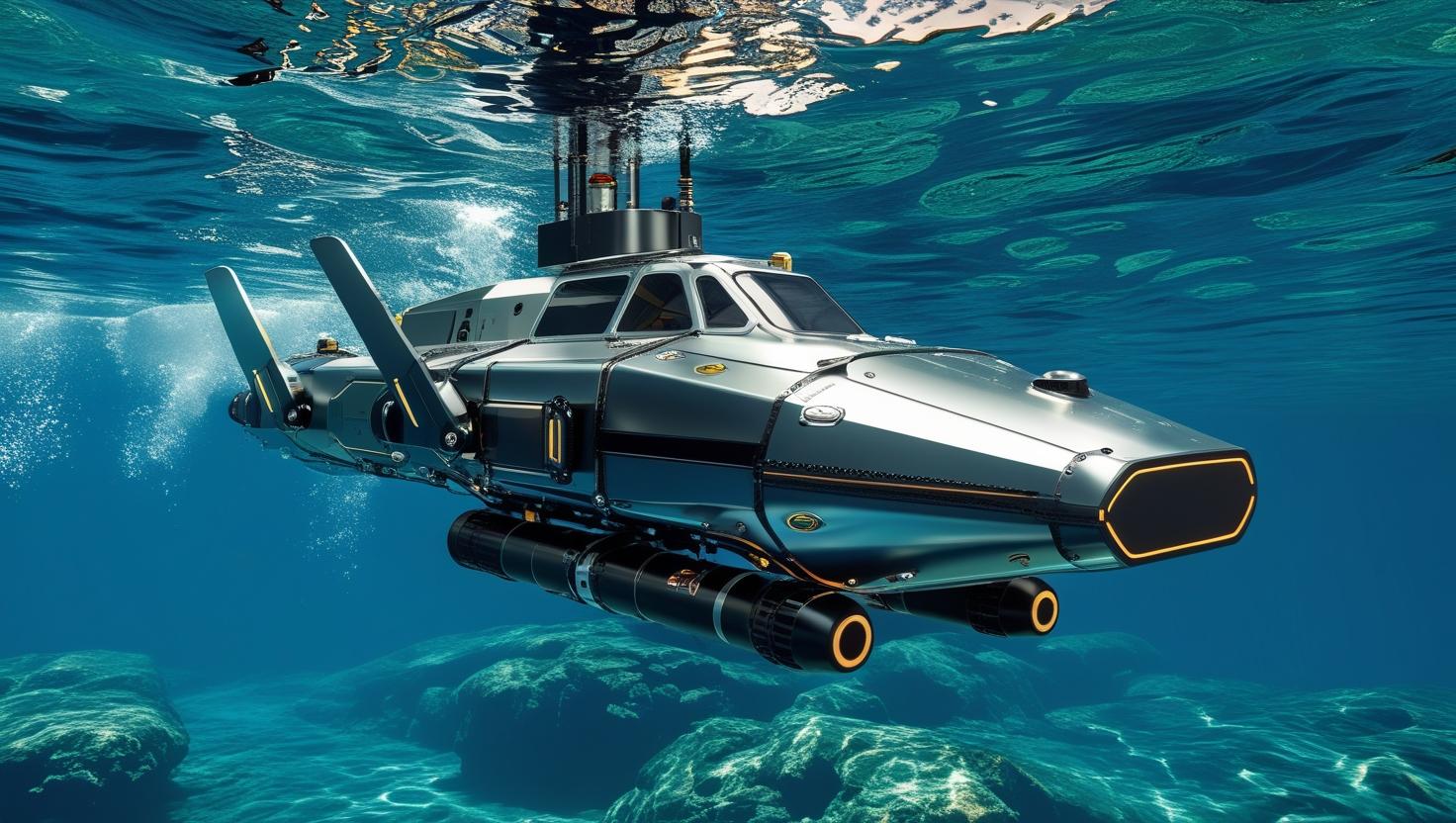
Evolution and Importance of Autonomous Underwater Vehicles in Modern Applications
The journey of AUVs began with rudimentary designs in the 1950s, such as the Self-Propelled Underwater Research Vehicle (SPURV), which laid the groundwork for autonomous underwater exploration. Over the decades, the integration of emerging technologies in the AUV market has transformed these vehicles into sophisticated tools capable of operating at extreme depths and performing intricate tasks without human intervention. Unlike Remotely Operated Vehicles (ROVs), which rely on tethered connections, AUVs offer unmatched maneuverability and cost-efficiency, making them indispensable for applications like seabed mapping, oil and gas exploration, and military surveillance. The growing demand for deep-sea exploration and sustainable resource management has further fueled the adoption of AUVs across various sectors.
The significance of AUVs lies in their ability to access remote and hazardous underwater environments, reducing human risk and operational costs. With advancements in battery technology, sensor integration, and navigation algorithms, emerging technologies in the AUV market are enabling these vehicles to undertake missions that were once deemed impossible. For instance, AUVs are now used to monitor underwater infrastructure, track marine ecosystems, and support defense operations like mine countermeasures and anti-submarine warfare. As global interest in underwater resources—such as minerals, energy, and biodiversity—continues to rise, the AUV market is poised for significant growth, driven by technological innovation.
Artificial Intelligence and Machine Learning: Powering Autonomous Decision-Making
One of the most impactful emerging technologies in the AUV market is the integration of artificial intelligence (AI) and machine learning (ML). These technologies empower AUVs to make real-time decisions, adapt to dynamic underwater conditions, and process vast amounts of data autonomously. AI-driven algorithms enable AUVs to analyze sensor data, detect objects, and navigate complex environments without relying on pre-programmed instructions. For example, machine learning models can identify environmental changes or predict underwater currents, enhancing mission success rates.
AI and ML also play a crucial role in improving object recognition and environmental analysis. By employing techniques like Hue, Saturation, Value (HSV) extraction, AUVs can detect intricate color patterns in underwater environments, aiding in tasks like coral reef monitoring or shipwreck exploration. These advancements in autonomous intelligence ensure that AUVs can operate independently for extended periods, making them ideal for long-duration missions in marine geoscience, archaeology, and environmental monitoring. The incorporation of AI and ML is a cornerstone of emerging technologies in the AUV market, driving efficiency and precision in underwater operations.
Advanced Sensor Technologies: Enhancing Data Collection and Navigation
The integration of advanced sensor technologies is another pivotal development in the AUV market. Modern AUVs are equipped with a suite of sensors, including sonar, laser, acoustic modems, and stereo vision systems, which enable precise localization, navigation, and mapping. These sensors are critical for gathering high-resolution data in challenging underwater environments where light penetration and visibility are limited. For instance, sonar-based systems allow AUVs to create detailed maps of the ocean floor, while stereo vision systems enhance 3D reconstruction for tasks like infrastructure inspection.
Emerging sensor technologies are also improving the accuracy of AUV navigation. Techniques like Simultaneous Localization and Mapping (SLAM) enable AUVs to build real-time maps of their surroundings while tracking their position, even in the absence of GPS signals. Additionally, the use of Doppler Velocity Log (DVL) systems allows AUVs to measure velocity and direction with high precision, further enhancing their navigational capabilities. These advancements in sensor technology are key components of emerging technologies in the AUV market, enabling AUVs to perform complex tasks with unprecedented accuracy.
Biomimicry in AUV Design: Drawing Inspiration from Nature
Biomimicry, the practice of emulating natural systems, is an exciting frontier among emerging technologies in the AUV market. By mimicking the propulsion and navigation strategies of marine animals like fish or jellyfish, engineers are developing AUVs with improved efficiency and maneuverability. Bionic models inspired by aquatic creatures allow AUVs to navigate complex underwater environments, such as narrow pathways or turbulent currents, with greater agility.
- Bionic Propulsion Systems: AUVs with biomimetic propulsion, such as flapping fins or undulating tails, reduce energy consumption and improve stability in turbulent waters.
- Enhanced Maneuverability: Designs inspired by marine animals enable AUVs to navigate tight spaces, making them ideal for tasks like underwater archaeology or pipeline inspection.
These biomimetic designs not only enhance performance but also contribute to energy efficiency, extending mission durations. As research in biomimicry advances, we can expect AUVs to become even more adept at handling the unpredictable conditions of the underwater environment, solidifying their role in the evolving AUV market.
Innovations in Underwater Communication Systems
Underwater communication has long been a challenge due to the limitations of electromagnetic waves in aquatic environments. However, emerging technologies in the AUV market are addressing these challenges through advancements in acoustic, optical, and magnetic induction-based communication systems. Acoustic modems, for instance, use sound waves to transmit data, enabling AUVs to communicate with surface vessels or other underwater vehicles over long distances. These systems are critical for real-time data transfer in applications like environmental monitoring and naval operations.
Recent developments in optical communication, such as laser-based systems, are also enhancing data transmission rates in clear water conditions. Additionally, the concept of the Internet of Underwater Things (IoUT) is gaining traction, creating a network of interconnected underwater devices that support applications like maritime security and disaster prevention. These communication advancements are vital for the scalability of AUV operations, making them a cornerstone of emerging technologies in the AUV market.
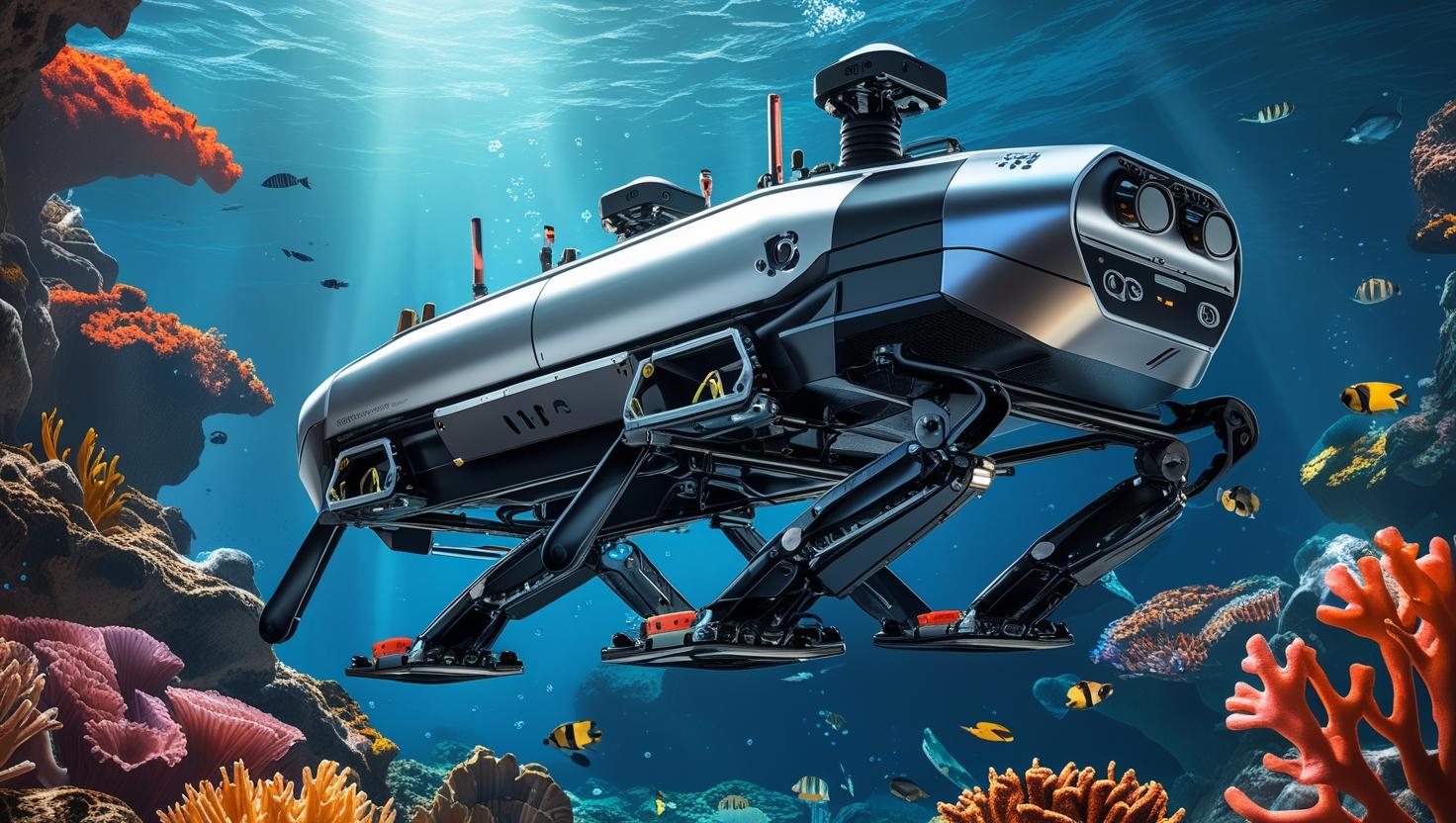
Energy Solutions: Powering Long-Endurance Missions
Energy efficiency is a critical factor in the performance of AUVs, particularly for long-endurance missions. Emerging technologies in the AUV market are focusing on innovative energy solutions to extend operational durations. The integration of hydrogen fuel cells and advanced lithium-ion batteries is enabling AUVs to operate for days or even weeks without recharging. These energy systems are particularly valuable for deep-sea exploration, where access to power sources is limited.
- Hydrogen Fuel Cells: These provide a sustainable and high-capacity energy source, reducing the environmental impact of AUV operations.
- Solar and Wave Energy: Some AUVs are exploring hybrid energy systems that harness solar or wave energy when operating near the surface, further extending mission durations.
These energy innovations not only enhance the endurance of AUVs but also support their deployment in remote and extreme environments, reinforcing the transformative potential of emerging technologies in the AUV market.
Path Planning and Control Systems: Navigating Complex Environments
Effective path planning and control are essential for AUVs to navigate the unpredictable underwater environment. Emerging technologies in the AUV market are introducing advanced algorithms, such as particle swarm optimization and genetic algorithms, to optimize path planning. These algorithms enable AUVs to avoid obstacles, such as reefs or shipwrecks, and reach their destinations efficiently. Additionally, control systems that account for hydrodynamic effects are improving the stability and accuracy of AUV movements.
The integration of AI-driven path planning further enhances AUV autonomy by allowing real-time adaptation to changing conditions, such as underwater currents or unexpected obstacles. These advancements are critical for applications like mine countermeasures, where precise navigation is essential for mission success. By leveraging sophisticated control systems, emerging technologies in the AUV market are enabling AUVs to perform complex tasks with minimal human intervention.
Integration with Autonomous Surface Vehicles (ASVs): Expanding Operational Capabilities
The collaboration between AUVs and Autonomous Surface Vehicles (ASVs) is an emerging trend that is reshaping the AUV market. ASVs can track AUVs, extend communication ranges, and provide real-time data relays to operators on shore. This integration enhances the efficiency of underwater missions by allowing AUVs to operate independently while maintaining connectivity with surface systems. For example, ASVs equipped with reconfigurable intelligence surfaces (RIS) can act as communication relays, expanding coverage to previously inaccessible areas.
This synergy between AUVs and ASVs is particularly valuable for large-scale oceanographic surveys and military operations. By combining the strengths of both vehicle types, emerging technologies in the AUV market are creating a more robust and versatile ecosystem for underwater exploration and surveillance.
Underwater Imaging and Vision Systems: Revolutionizing Data Acquisition
Underwater imaging is a critical component of AUV functionality, enabling high-resolution data acquisition for scientific and commercial applications. Emerging technologies in the AUV market are advancing underwater vision systems through the use of binocular vision, deep convolutional neural networks (CNNs), and onboard processing. Binocular vision systems enhance depth perception and 3D reconstruction, making them ideal for tasks like seabed mapping and infrastructure inspection.
The adoption of GPU-based processing is also revolutionizing underwater imaging by enabling real-time image enhancement and object detection. These advancements address challenges like light absorption and scattering, which have historically limited underwater imaging capabilities. By improving the quality and speed of data acquisition, emerging technologies in the AUV market are expanding the scope of applications for AUVs in marine research and industry.
Challenges in Adopting Emerging Technologies in the AUV Market
Despite the promise of emerging technologies in the AUV market, several challenges remain. High development and maintenance costs are a significant barrier, with advanced AUVs like the Exail A-18 costing between $2-6 million. The complexity of underwater environments, including high pressure, limited light penetration, and turbulent currents, also poses technical challenges for sensor and communication systems. Additionally, the slow adoption of advanced technologies due to high costs and system complexity limits their scalability.
Another challenge is the reliability of underwater communication systems, which are hindered by long propagation delays and low bandwidth. Addressing these issues requires ongoing research into robust communication protocols and energy-efficient designs. Overcoming these challenges is essential for the widespread adoption of emerging technologies in the AUV market and their integration into mainstream applications.
Market Trends and Growth Drivers in the AUV Industry
The global autonomous underwater vehicle (AUV) market size is valued at USD 2.0 billion in 2024 and is projected to reach USD 4.3 billion by 2029, growing at a CAGR of 15.9% from 2024 to 2029. Key growth drivers include increasing defense spending, growing demand for oceanographic research, and the need for cost-effective solutions in underwater exploration. Emerging technologies in the AUV market, such as AI, advanced sensors, and biomimicry, are further fueling this growth by enhancing the capabilities of AUVs.
Regions like North America, Europe, and Asia-Pacific are leading the AUV market due to their advanced technological infrastructure and strong demand from defense and oil and gas sectors. Countries like the United States and China are investing heavily in AUV development, particularly for military applications like maritime surveillance and anti-submarine warfare. These market trends underscore the transformative impact of emerging technologies in the AUV market on global industries.
Download PDF Brochure @ https://www.marketsandmarkets.com/pdfdownloadNew.asp?id=141855626
Future Directions: The Next Frontier for AUV Technologies
The future of the AUV market lies in the continued evolution of emerging technologies. Innovations like deep learning, swarm intelligence, and hybrid propulsion systems are expected to further enhance AUV capabilities. Swarm intelligence, for instance, could enable multiple AUVs to collaborate on complex missions, such as large-scale ocean mapping or disaster response. Additionally, advancements in onboard data processing and compression will allow AUVs to handle large volumes of data more efficiently.
The integration of renewable energy sources, such as wave and tidal energy, is another promising direction for extending AUV endurance. As emerging technologies in the AUV market continue to mature, we can expect AUVs to play a central role in addressing global challenges like climate change, resource scarcity, and maritime security. The next decade will likely see AUVs become indispensable tools for exploring the uncharted depths of our oceans.
The Transformative Potential of AUV Technologies
Emerging technologies in the AUV market are revolutionizing the way we explore and interact with the underwater world. From AI-driven autonomy to biomimetic designs and advanced sensor systems, these innovations are enabling AUVs to tackle complex challenges in marine research, defense, and industry. While obstacles like high costs and environmental complexities remain, ongoing research and development are paving the way for more efficient, reliable, and versatile AUVs. As the global demand for underwater exploration grows, emerging technologies in the AUV market will continue to drive progress, unlocking the vast potential of our oceans for scientific discovery, resource management, and maritime security.
Explore In-Depth Semiconductor & Electronics Market Research –https://www.marketsandmarkets.com/semiconductorand-electonics-market-research-87.html
FAQs
What are the key emerging technologies in the AUV market?
Key emerging technologies in the AUV market include artificial intelligence, machine learning, advanced sensor systems (sonar, laser, and stereo vision), biomimicry, underwater communication systems, and innovative energy solutions like hydrogen fuel cells.
How do AI and machine learning benefit AUVs?
AI and machine learning enable AUVs to make autonomous decisions, adapt to dynamic underwater conditions, and process data in real-time, improving efficiency in tasks like navigation, object detection, and environmental monitoring.
What role does biomimicry play in AUV design?
Biomimicry involves designing AUVs based on the propulsion and navigation strategies of marine animals, enhancing maneuverability and energy efficiency for tasks like pipeline inspection and underwater archaeology.
What are the challenges facing the AUV market?
Challenges include high development and maintenance costs, complex underwater environments, limited communication bandwidth, and the need for robust energy solutions to support long-endurance missions.
See The Latest Semiconductor Reports:
Valve Positioner Market Size, Share & Trends : https://www.marketsandmarkets.com/Market-Reports/valve-positioner-market-138950854.html
Environmental Remediation Market Size, Share & Trends : https://www.marketsandmarkets.com/Market-Reports/environmental-remediation-market-93290334.html
UV LED Market Size, Share & Trends: https://www.marketsandmarkets.com/Market-Reports/uv-led-market-143107738.html
Control Valve Market Size, Share & Trends: https://www.marketsandmarkets.com/Market-Reports/control-valves-market-111759647.html
GPU Server Market Size, Share & Trends: https://www.marketsandmarkets.com/Market-Reports/gpu-server-market-224437074.html
