Rising Importance of LiDAR Across Europe
The Europe LiDAR market is experiencing rapid transformation as industries increasingly rely on high-precision spatial data for decision-making. From autonomous vehicles to smart infrastructure and environmental monitoring, LiDAR technology is becoming a critical enabler of digital and physical world integration. The growing need for accurate 3D mapping and real-time sensing is pushing the Europe LiDAR market toward continuous innovation and broader adoption across both public and private sectors.Europe LiDAR Market in terms of revenue is estimated to be worth $0.87 billion in 2025 and is poised to reach $3.16 billion by 2030 , growing at a CAGR of 29.6% during the forecast period
Evolution from Mechanical to Solid-State Systems
One of the most notable developments shaping the Europe LiDAR market is the transition from traditional mechanical LiDAR systems to solid-state LiDAR technology. Mechanical systems, while accurate, are often bulky and expensive, limiting their scalability. In contrast, solid-state LiDAR offers compact design, improved durability, and reduced manufacturing costs. This shift is making LiDAR more accessible for mass-market applications, particularly in automotive and consumer electronics, while accelerating the overall evolution of the Europe LiDAR market.
Advancements in Resolution, Range, and Accuracy
Technological improvements are enabling LiDAR systems to deliver higher resolution, longer detection ranges, and enhanced accuracy. These advancements are particularly important for applications such as autonomous driving and advanced mapping, where precise environmental perception is critical. As sensor performance improves, the Europe LiDAR market is seeing increased deployment in complex environments like urban centers, highways, and industrial zones, where reliable data is essential for safe and efficient operations.
Download PDF Brochure @ https://www.marketsandmarkets.com/pdfdownloadNew.asp?id=16020462
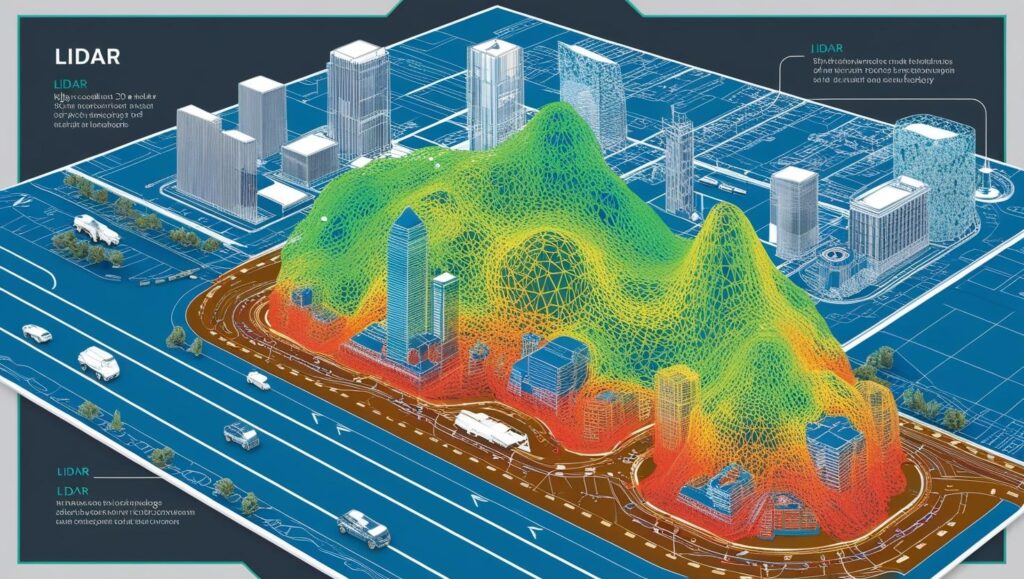
Integration with Artificial Intelligence and Software Platforms
Another major factor driving the evolution of the Europe LiDAR market is the integration of artificial intelligence and advanced software systems. AI-powered LiDAR solutions are capable of processing large volumes of spatial data in real time, enabling better object detection, classification, and predictive analysis. This integration allows industries to move beyond raw data collection toward actionable insights, making LiDAR systems smarter and more efficient. As software-defined solutions gain traction, the Europe LiDAR market is becoming increasingly data-driven and adaptable.
Expanding Role in Autonomous Vehicles and Mobility
The automotive sector remains one of the largest contributors to the Europe LiDAR market. With Europe being a hub for automotive innovation, manufacturers are incorporating LiDAR into advanced driver-assistance systems and autonomous driving platforms. LiDAR provides critical capabilities such as obstacle detection, lane recognition, and navigation in low-visibility conditions. As regulatory standards evolve and safety requirements become stricter, the demand for LiDAR-equipped vehicles is expected to further accelerate the growth of the Europe LiDAR market.
Growth in Smart Cities and Infrastructure Applications
European governments are heavily investing in smart city initiatives, and LiDAR plays a key role in these developments. The technology is widely used for urban planning, traffic management, and infrastructure monitoring. By providing accurate 3D models of cities, LiDAR enables better decision-making in areas such as construction, transportation, and public safety. This widespread adoption in urban environments is significantly contributing to the expansion of the Europe LiDAR market.
Increasing Use in Environmental and Geospatial Applications
LiDAR technology is also transforming environmental monitoring and geospatial mapping across Europe. It is used to analyze terrain, monitor forests, assess coastal erosion, and support climate change research. The ability to capture detailed spatial data makes LiDAR an essential tool for environmental scientists and policymakers. As sustainability and climate awareness continue to grow, these applications are expected to play a crucial role in shaping the future of the Europe LiDAR market.
Convergence with Drones, Robotics, and Cloud Technologies
The evolution of the Europe LiDAR market is closely tied to its integration with other emerging technologies such as drones, robotics, and cloud computing. LiDAR-equipped drones are widely used for aerial mapping, surveying, and inspection, offering cost-effective and efficient data collection. Similarly, robotics systems rely on LiDAR for navigation and obstacle avoidance in industrial and logistics environments. Cloud platforms further enhance LiDAR capabilities by enabling large-scale data storage, processing, and collaboration, making the Europe LiDAR market more scalable and interconnected.
Challenges and Future Opportunities
Despite its rapid growth, the Europe LiDAR market faces challenges such as high initial costs, technical complexity, and environmental limitations like weather sensitivity. However, continuous innovation, increasing competition, and declining hardware costs are expected to address these barriers over time. At the same time, new opportunities are emerging in areas such as smart infrastructure, defense, agriculture, and renewable energy, ensuring long-term growth and diversification of the Europe LiDAR market.
Future Outlook of the Europe LiDAR Market
Looking ahead, the Europe LiDAR market is poised for significant expansion as technologies like autonomous mobility, smart cities, and AI-driven analytics continue to evolve. The shift toward more compact, cost-efficient, and intelligent LiDAR systems will further enhance adoption across industries. As Europe continues to lead in innovation and sustainability, LiDAR technology will remain a key driver in shaping the region’s future across multiple domains, reinforcing the strong growth trajectory of the Europe LiDAR market.
Frequently Asked Questions (FAQs)
1. What is driving the Europe LiDAR market growth?
The Europe LiDAR market is primarily driven by the rising adoption of autonomous vehicles, increasing investments in smart city infrastructure, and the growing demand for high-precision mapping and environmental monitoring. Advancements in solid-state LiDAR and AI integration are also accelerating growth.
2. How is LiDAR technology evolving across Europe?
LiDAR technology in Europe is evolving through the transition from mechanical to solid-state systems, improved sensor accuracy, and integration with AI and cloud-based platforms. These advancements are making LiDAR more efficient, scalable, and suitable for a wide range of applications.
3. Which industries are the key users of LiDAR in Europe?
The Europe LiDAR market serves industries such as automotive, construction, aerospace, environmental monitoring, and smart infrastructure. The automotive sector, in particular, is a major adopter due to its use in autonomous driving and advanced driver-assistance systems.
4. What role does LiDAR play in autonomous vehicles?
LiDAR is essential for autonomous vehicles as it provides precise 3D mapping, object detection, and real-time environmental awareness. It helps vehicles navigate safely by identifying obstacles, road conditions, and surrounding objects with high accuracy.
5. What are the main challenges in the Europe LiDAR market?
Despite strong growth, the Europe LiDAR market faces challenges such as high system costs, sensitivity to weather conditions, and technical complexity. However, ongoing innovations and increasing adoption are helping to overcome these limitations.
6. What is the future outlook of the Europe LiDAR market?
The future of the Europe LiDAR market is highly promising, with expected growth driven by autonomous mobility, smart cities, AI-driven analytics, and increasing demand for high-resolution spatial data across industries.
About MarketsandMarkets™
MarketsandMarkets™ has been recognized as one of America’s Best Management Consulting Firms by Forbes, as per their recent report.
MarketsandMarkets™ is a blue ocean alternative in growth consulting and program management, leveraging a man-machine offering to drive supernormal growth for progressive organizations in the B2B space. With the widest lens on emerging technologies, we are proficient in co-creating supernormal growth for clients across the globe.
Today, 80% of Fortune 2000 companies rely on MarketsandMarkets, and 90 of the top 100 companies in each sector trust us to accelerate their revenue growth. With a global clientele of over 13,000 organizations, we help businesses thrive in a disruptive ecosystem.
The B2B economy is witnessing the emergence of $25 trillion in new revenue streams that are replacing existing ones within this decade. We work with clients on growth programs, helping them monetize this $25 trillion opportunity through our service lines – TAM Expansion, Go-to-Market (GTM) Strategy to Execution, Market Share Gain, Account Enablement, and Thought Leadership Marketing.
Built on the ‘GIVE Growth’ principle, we collaborate with several Forbes Global 2000 B2B companies to keep them future-ready. Our insights and strategies are powered by industry experts, cutting-edge AI, and our Market Intelligence Cloud, KnowledgeStore™, which integrates research and provides ecosystem-wide visibility into revenue shifts.
To find out more, visit www.MarketsandMarkets™.com or follow us on Twitter , LinkedIn and Facebook .
Contact:
Mr. Rohan Salgarkar
MarketsandMarkets™ INC.
630 Dundee Road
Suite 430
Northbrook, IL 60062
USA : 1-888-600-6441
