The Energy Harvesting Market for IoT and Wireless Sensor Networks is witnessing remarkable growth as the demand for sustainable, battery-free solutions to power Internet of Things (IoT) devices and wireless sensor networks (WSNs) surges. With billions of connected devices driving smart cities, precision agriculture, healthcare, and industrial automation, traditional battery-powered systems face challenges like limited lifespan, maintenance costs, and environmental concerns. Energy harvesting technologies, which capture ambient energy from sources like solar, thermal, kinetic, and radio frequency (RF), offer a promising alternative. This article delves into the dynamics of the Energy Harvesting Market for IoT and Wireless Sensor Networks, exploring its key drivers, technologies, applications, challenges, and future trends.
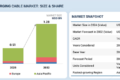
The energy harvesting system market size is expected to grow from USD 0.61 billion in 2025 to USD 0.94 billion in 2030, growing with a CAGR of 9.1% during the forecast period.

Understanding the Importance of Energy Harvesting in IoT and Wireless Sensor Networks
Energy harvesting, also known as power scavenging, involves capturing and converting ambient energy into electrical power to operate low-energy devices. In the context of IoT and WSNs, this technology eliminates the need for frequent battery replacements, making it ideal for remote, inaccessible, or large-scale deployments. The Energy Harvesting Market for IoT and Wireless Sensor Networks addresses the critical challenge of energy efficiency, enabling self-sustaining devices that enhance operational longevity and reduce environmental impact.
Traditional batteries, while cost-effective initially, pose significant drawbacks, including high maintenance costs and ecological concerns due to disposal. Energy harvesting technologies provide a renewable, eco-friendly alternative, aligning with global sustainability goals and driving the growth of the Energy Harvesting Market for IoT and Wireless Sensor Networks.
Key Drivers Fueling the Growth of the Energy Harvesting Market for IoT and Wireless Sensor Networks
Several factors are propelling the expansion of the Energy Harvesting Market for IoT and Wireless Sensor Networks, making it a pivotal segment in the global technology landscape.
- Rising Demand for IoT Devices Across Industries: The increasing adoption of IoT in smart homes, healthcare, agriculture, and industrial automation has heightened the need for reliable, low-maintenance power sources. Energy harvesting ensures uninterrupted operation, boosting market growth.
- Focus on Sustainability and Green Technologies: With growing environmental awareness, industries are prioritizing eco-friendly solutions. Energy harvesting reduces reliance on batteries, minimizing waste and supporting sustainable practices.
- Advancements in Energy Harvesting Technologies: Innovations in materials, such as nanomaterials and metamaterials, have improved the efficiency of energy harvesting systems, making them viable for diverse applications.
- Cost Savings in Maintenance: By eliminating the need for battery replacements, energy harvesting reduces operational costs, particularly in remote or large-scale IoT deployments.
These drivers underscore the transformative potential of the Energy Harvesting Market for IoT and Wireless Sensor Networks, positioning it as a cornerstone of modern IoT ecosystems.
Core Technologies Powering the Energy Harvesting Market for IoT and Wireless Sensor Networks
The Energy Harvesting Market for IoT and Wireless Sensor Networks leverages a range of technologies to capture and convert ambient energy. Each technology has unique advantages and applications, catering to diverse IoT and WSN requirements.
Solar Energy Harvesting: Harnessing Light for IoT Power
Solar energy harvesting, or photovoltaic (PV) harvesting, uses solar panels to convert light into electrical energy. It is one of the most widely adopted technologies in the Energy Harvesting Market for IoT and Wireless Sensor Networks due to its high energy density. Solar-powered IoT devices are ideal for outdoor applications like environmental monitoring and smart agriculture. However, their efficiency depends on light availability, limiting indoor use unless supplemented with advanced low-light PV cells.
Thermal Energy Harvesting: Converting Heat into Power
Thermal energy harvesting utilizes thermoelectric generators (TEGs) to convert temperature gradients into electricity. This technology is suitable for industrial IoT applications where waste heat is abundant, such as in manufacturing plants or data centers. The Energy Harvesting Market for IoT and Wireless Sensor Networks benefits from TEGs’ reliability in stable thermal environments, though their efficiency remains a challenge for low-temperature gradients.
Kinetic Energy Harvesting: Powering Devices with Motion
Kinetic energy harvesting captures energy from mechanical vibrations or motion using piezoelectric or electromagnetic generators. Piezoelectric devices, which generate power under strain or pressure, are compact and cost-effective, making them popular in wearable IoT devices and structural health monitoring. The Energy Harvesting Market for IoT and Wireless Sensor Networks is exploring hybrid kinetic systems to enhance power output and reliability.
Radio Frequency (RF) Energy Harvesting: Leveraging Wireless Signals
RF energy harvesting captures ambient electromagnetic waves, such as Wi-Fi or cellular signals, to power IoT devices. This technology is ideal for urban environments with abundant RF signals but yields limited power, requiring efficient rectennas and power management systems. The Energy Harvesting Market for IoT and Wireless Sensor Networks is advancing RF harvesting for applications like smart cities and healthcare.
Hybrid Energy Harvesting: Combining Multiple Sources
Hybrid energy harvesting combines multiple sources, such as solar and kinetic or RF and thermal, to ensure consistent power supply. This approach enhances reliability in dynamic environments, making it a growing segment in the Energy Harvesting Market for IoT and Wireless Sensor Networks. Hybrid systems are particularly valuable for mission-critical applications where power interruptions are unacceptable.
Applications Transforming the Energy Harvesting Market for IoT and Wireless Sensor Networks
The Energy Harvesting Market for IoT and Wireless Sensor Networks is reshaping industries by enabling sustainable, autonomous IoT deployments. Key applications include:
- Smart Cities and Infrastructure: Energy harvesting powers sensors for traffic monitoring, waste management, and structural health, reducing maintenance costs and enhancing urban efficiency.
- Precision Agriculture: Solar and kinetic energy harvesting supports sensors for soil moisture, weather, and crop health, enabling data-driven farming with minimal environmental impact.
- Healthcare and Wearable Devices: RF and kinetic harvesting powers wearable sensors for health monitoring, offering battery-free solutions for patient care.
- Industrial IoT: Thermal and kinetic harvesting drives sensors for predictive maintenance, process monitoring, and energy tracking in manufacturing.
- Environmental Monitoring: Solar-powered sensors track air quality, water levels, and wildlife, supporting conservation efforts in remote areas.
These applications highlight the versatility of the Energy Harvesting Market for IoT and Wireless Sensor Networks, driving its adoption across diverse sectors.
Challenges Hindering the Energy Harvesting Market for IoT and Wireless Sensor Networks
Despite its potential, the Energy Harvesting Market for IoT and Wireless Sensor Networks faces several challenges that must be addressed to achieve widespread adoption.
- Limited Energy Output: Many harvesting technologies, such as RF and piezoelectric, produce low power, necessitating advanced power management systems to meet IoT device demands.
- Environmental Dependence: Solar and kinetic harvesting depend on environmental conditions, limiting their reliability in certain scenarios.
- High Initial Costs: Developing efficient energy harvesting systems involves significant upfront investment, which may deter small-scale adopters.
- Integration Complexity: Incorporating harvesting technologies into compact IoT devices requires sophisticated design, increasing development time and costs.
Addressing these challenges is critical to unlocking the full potential of the Energy Harvesting Market for IoT and Wireless Sensor Networks.
Future Trends Shaping the Energy Harvesting Market for IoT and Wireless Sensor Networks
The Energy Harvesting Market for IoT and Wireless Sensor Networks is poised for significant evolution, driven by technological advancements and market demands. Emerging trends include:
Integration with Advanced Materials and Nanotechnology
Research into nanomaterials and metamaterials is enhancing the efficiency of energy harvesting systems. For instance, nanostructured solar cells and piezoelectric materials improve power output, making them viable for ultra-low-power IoT devices. The Energy Harvesting Market for IoT and Wireless Sensor Networks will benefit from these innovations, enabling smaller, more efficient harvesters.
Growth of Wireless Power Transfer (WPT) Technologies
Wireless power transfer, including simultaneous wireless information and power transfer (SWIPT), is gaining traction in the Energy Harvesting Market for IoT and Wireless Sensor Networks. WPT eliminates the need for physical connections, offering flexibility for IoT deployments in smart homes and industrial settings.
Adoption of Energy Harvesting in 5G and Edge Computing
The rollout of 5G networks and edge computing is increasing the demand for low-power, self-sustaining IoT devices. The Energy Harvesting Market for IoT and Wireless Sensor Networks is aligning with these trends, developing harvesters optimized for high-speed, low-latency applications.
Expansion of Hybrid and Multi-Source Harvesting Systems
Hybrid systems that combine multiple energy sources are becoming mainstream, offering greater reliability and efficiency. The Energy Harvesting Market for IoT and Wireless Sensor Networks is investing in multi-source harvesters to support complex IoT ecosystems.
Focus on Recyclability and Sustainability
As sustainability becomes a priority, the Energy Harvesting Market for IoT and Wireless Sensor Networks is exploring recyclable materials for harvesters and storage devices. Projects like InComEss, part of the European Horizon H2020 program, are developing eco-friendly piezoelectric and thermoelectric generators, enhancing market appeal.

Download PDF Brochure for More Info @ https://www.marketsandmarkets.com/pdfdownloadNew.asp?id=734
Market Outlook and Opportunities in the Energy Harvesting Market for IoT and Wireless Sensor Networks
The Energy Harvesting Market for IoT and Wireless Sensor Networks is projected to grow significantly, driven by the increasing adoption of IoT and the push for sustainable technologies.
- Emerging Markets: Developing regions with expanding IoT infrastructure, such as Asia-Pacific and Latin America, present untapped potential for energy harvesting solutions.
- Collaborations and Partnerships: Industry players are forming alliances to develop integrated harvesting systems, accelerating market growth.
- Government Support: Policies promoting renewable energy and IoT adoption are creating a favorable environment for the Energy Harvesting Market for IoT and Wireless Sensor Networks.
Stakeholders, including manufacturers, researchers, and policymakers, must capitalize on these opportunities to drive innovation and market expansion.
The Future of the Energy Harvesting Market for IoT and Wireless Sensor Networks
The Energy Harvesting Market for IoT and Wireless Sensor Networks is at the forefront of transforming how IoT devices are powered, offering sustainable, cost-effective, and reliable solutions. By harnessing ambient energy from solar, thermal, kinetic, and RF sources, this market addresses the limitations of traditional batteries, enabling autonomous IoT ecosystems. Despite challenges like limited power output and environmental dependence, advancements in materials, hybrid systems, and wireless power transfer are paving the way for a bright future. As industries embrace IoT and sustainability, the Energy Harvesting Market for IoT and Wireless Sensor Networks will play a pivotal role in shaping a connected, eco-friendly world.
Explore In-Depth Semiconductor & Electronics Market Research –https://www.marketsandmarkets.com/semiconductorand-electonics-market-research-87.html
FAQs
Q1: What is the Energy Harvesting Market for IoT and Wireless Sensor Networks?
A1: The Energy Harvesting Market for IoT and Wireless Sensor Networks involves technologies that capture ambient energy (e.g., solar, thermal, kinetic, RF) to power IoT devices and wireless sensor networks, eliminating the need for batteries and enhancing sustainability.
Q2: Why is energy harvesting important for IoT devices?
A2: Energy harvesting ensures long-term, self-sustaining operation of IoT devices, reducing maintenance costs, environmental impact, and reliance on batteries, especially in remote or large-scale deployments.
Q3: What are the key technologies in the Energy Harvesting Market for IoT and Wireless Sensor Networks?
A3: Key technologies include solar (photovoltaic), thermal (thermoelectric), kinetic (piezoelectric and electromagnetic), RF, and hybrid energy harvesting systems.
Q4: What challenges does the Energy Harvesting Market for IoT and Wireless Sensor Networks face?
A4: Challenges include limited energy output, environmental dependence, high initial costs, and integration complexity, which require ongoing research and innovation to overcome.
Q5: How is the Energy Harvesting Market for IoT and Wireless Sensor Networks expected to grow?
A5: The market is projected to grow significantly by 2030, driven by IoT adoption, sustainability goals, and advancements in harvesting technologies, with opportunities in emerging markets and 5G applications.
See The Latest Semiconductor Reports:
Hydrogen Detection Market Size, Share & Trends : https://www.marketsandmarkets.com/Market-Reports/hydrogen-detection-market-52631881.html
Supercapacitor Market Size, Share & Trends : https://www.marketsandmarkets.com/Market-Reports/supercapacitor-market-37140453.html
Valve Positioner Market Size, Share & Trends : https://www.marketsandmarkets.com/Market-Reports/valve-positioner-market-138950854.html
Environmental Remediation Market Size, Share & Trends : https://www.marketsandmarkets.com/Market-Reports/environmental-remediation-market-93290334.html
Control Valve Market Size, Share & Trends : https://www.marketsandmarkets.com/Market-Reports/control-valves-market-111759647.html