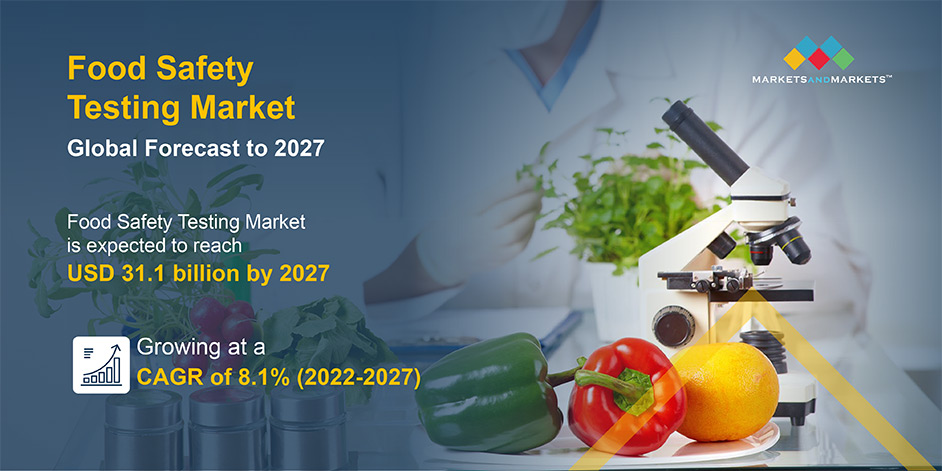
The global food safety testing market is on a strong growth trajectory, expected to reach $31.1 billion by 2027 from $21.1 billion in 2022, registering a compound annual growth rate (CAGR) of 8.1 percent. At its core, this market ensures the safety, quality, and compliance of the food supply we consume every day.
As public concern over food-borne illnesses and contamination rises, and as global supply chains grow more complex, the demand for accurate, fast, and cost-effective food testing solutions is escalating. Whether it’s a pathogen in poultry or an undeclared allergen in packaged goods, the ability to detect these threats before products reach the consumer is more critical than ever.
Why Food Recalls Are Fueling Market Growth
One of the primary drivers of food safety testing market growth is the rising number of food recalls due to non-compliant or hazardous products. These recalls are triggered by discoveries of contaminants such as Salmonella, Listeria, Cyclospora, foreign objects like metal or glass, or undeclared allergens. Large-scale recalls, like those involving peanut products or millions of eggs, have brought intense scrutiny to the food industry.
The financial cost of these recalls is staggering. Studies estimate an average direct cost of $10 million per incident, not accounting for damage to brand reputation or lost market share. The regulatory landscape is responding with tighter oversight and clearer guidelines, pushing food companies to invest more in robust testing and monitoring infrastructure.
Request Personalized Data Insights for Your Business Goals
Europe Leads in Market Share, APAC Fastest in Growth
Europe currently holds the largest market share in the food safety testing industry. The region’s structured regulatory bodies, such as the European Food Safety Authority (EFSA) and EU Reference Laboratories, actively monitor and control foodborne threats. In 2018 alone, the EU recorded over 5,000 foodborne outbreaks, mainly tied to Salmonella in eggs across Slovakia, Spain, and Poland.
Meanwhile, the Asia Pacific region is poised for the highest CAGR during the forecast period. As nations like China, India, Indonesia, and Thailand ramp up processed food production, concerns about contamination and poisoning incidents are rising. Regulatory bodies are stepping in with new frameworks, and initiatives like the APEC Food Safety Cooperation Forum are enhancing testing capabilities across borders.
Meat, Poultry, and Seafood: High-Risk, High Priority
Among food types tested, the meat, poultry, and seafood segment is expected to experience the fastest growth. These products are vulnerable to contamination throughout the supply chain, especially during handling, defeathering, skinning, and processing. Poor hygiene practices and equipment cleaning procedures further increase the risk.
Governments and food safety organizations are reinforcing hazard analysis systems like HACCP to prevent contamination, while regulations from agencies such as the FSIS are tightening across slaughterhouses and processing units.
Pathogens and Rapid Tech: Key Areas of Focus
In terms of contaminants, pathogens are the largest target for testing. Foodborne pathogens are responsible for millions of gastrointestinal illnesses globally every year. As food systems evolve and new pathogens emerge, especially under the shadow of global events like COVID-19, the demand for testing is only expected to rise.
On the technology front, rapid testing methods are taking over. These include PCR-based tools, immunoassays, and chromatography and spectrometry techniques. Startups and small food manufacturers are embracing these solutions due to their affordability and speed, especially in fast-growing economies like China and India.
Who’s Leading the Market?
The global food safety testing landscape features a mix of international giants and regional experts. Key players include SGS SA, Eurofins Scientific, Intertek Group plc, Bureau Veritas, ALS Limited, TÜV SÜD, NEOGEN Corporation, and Mérieux NutriSciences. These companies are expanding through partnerships and acquisitions, supported by strong distribution and testing networks across Europe, North America, and Asia Pacific.
