The global shift toward electric mobility is reshaping the transportation landscape, and at the center of this transformation lies the Automotive Battery Management Systems Industry. As electric vehicles (EVs) become more mainstream, the demand for smarter, safer, and more efficient battery technologies is growing rapidly. The battery management system (BMS) plays a critical role in enabling the performance, safety, and longevity of EV batteries, making it a cornerstone of the electric vehicle ecosystem.
What Is the Automotive Battery Management System?
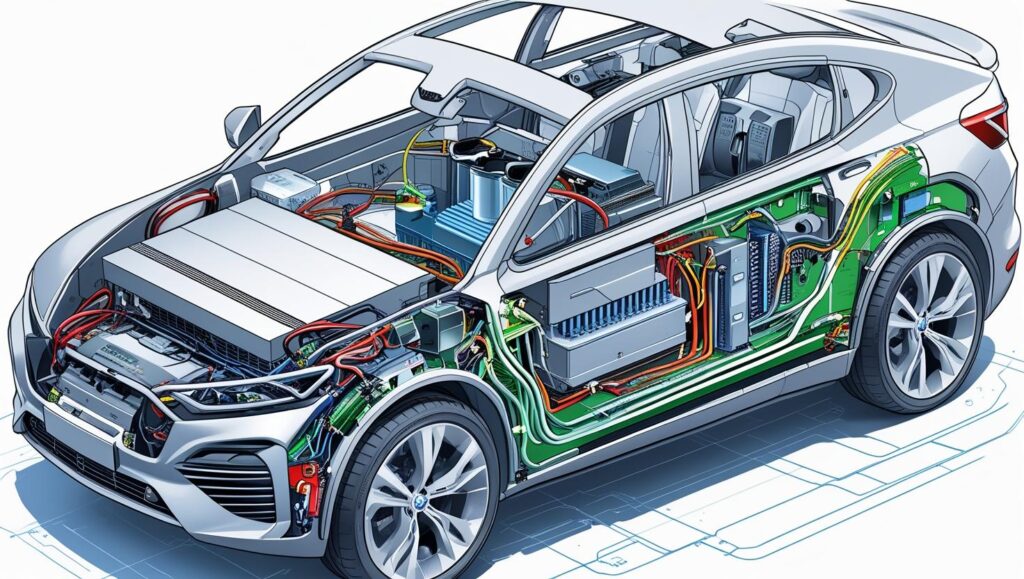
In the context of electric vehicles, a Battery Management System (BMS) is an advanced electronic system that controls and monitors various aspects of the battery’s performance. The BMS ensures optimal battery usage by monitoring voltage, current, temperature, state of charge (SoC), and state of health (SoH). It protects the battery from overcharging, deep discharging, and overheating—common issues that can shorten a battery’s lifespan or cause safety hazards.
The Automotive Battery Management Systems Industry has developed increasingly sophisticated technologies to manage these functions, ensuring that EV batteries are both high-performing and reliable. Without BMS integration, EVs would suffer from poor efficiency, shorter battery life, and greater safety risks.
Growth of the Automotive Battery Management Systems Industry
The rapid expansion of the electric vehicle market is fueling unprecedented growth in the Automotive Battery Management Systems Industry. As automakers scale up EV production to meet global emissions goals, they require intelligent BMS solutions that support performance and efficiency. The global automotive battery management system market is estimated to be USD 6.53 billion in 2025 and is projected to reach USD 15.65 billion by 2030, registering a CAGR of 19.1%.
Download PDF Brochure @ https://www.marketsandmarkets.com/pdfdownloadNew.asp?id=15321159
This growth is driven by multiple factors: rising EV adoption, stricter emissions regulations, advances in lithium-ion battery chemistries, and increasing demand for high-voltage battery packs in passenger and commercial vehicles. The market’s trajectory underscores how essential BMS technology is to the future of sustainable transportation.
Innovations Shaping the Future of Battery Management Systems
Technology trends are transforming the Automotive Battery Management Systems Industry. One of the most notable innovations is wireless battery management systems (wBMS), which eliminate traditional wired communication between cells and controllers. This leads to reduced system complexity, lower costs, and greater design flexibility—particularly important in modular EV platforms.
Artificial intelligence (AI) and machine learning are also being embedded into BMS architecture. These technologies allow for real-time performance optimization, predictive diagnostics, and smarter thermal management. Additionally, the integration of cloud connectivity enables over-the-air (OTA) updates and remote monitoring, making BMS solutions scalable and fleet-friendly.
As vehicle platforms diversify—from electric two-wheelers and autonomous delivery bots to long-range trucks—modular and intelligent BMS designs are becoming vital to automakers’ strategies.
BMS and Its Role in Battery Reuse and Sustainability
The Automotive Battery Management Systems Industry is also a key player in battery reuse, recycling, and second-life applications. As EV batteries reach the end of their automotive life cycle, they often retain sufficient capacity for applications like energy storage systems (ESS). In these scenarios, the BMS is essential for adapting the battery to new use cases while maintaining safety and performance standards.
Additionally, BMS data enables manufacturers to assess battery degradation trends and make informed decisions about reuse or recycling. In a circular economy, where sustainability and efficiency are paramount, BMS technologies support environmental goals and resource conservation.
Strategic Value for OEMs and Tier 1 Suppliers
For original equipment manufacturers (OEMs) and battery suppliers, controlling the Automotive Battery Management Systems Industry is now a strategic imperative. Many leading EV brands are investing in proprietary BMS development or forming alliances with BMS providers to gain better control over battery performance, safety features, and supply chain security.
BMS solutions are no longer just components—they are differentiators that influence the overall EV user experience. The ability to offer longer range, faster charging, and reliable safety systems depends largely on the underlying BMS technology. As a result, OEMs view battery management as a core competency and competitive edge.
BMS Industry Driving Clean Mobility Forward
The Future of Automotive Battery Management Systems Industry is more than a supporting player—it is a central force powering the future of electric vehicles. With advances in wireless control, artificial intelligence, cloud connectivity, and predictive analytics, modern BMS platforms are redefining how EV batteries are managed across their lifecycle.
As the EV market continues to expand across global regions and segments, the role of BMS in enabling safe, efficient, and long-lasting battery systems will become even more critical. The industry’s innovations will not only enhance vehicle performance but also accelerate the world’s transition to a cleaner, smarter, and more sustainable transportation future.
See More Latest Semiconductor Reports:
Automotive Manufacturing Equipment market
Semiconductor and Electronics Market Research Reports
Frequently Asked Questions (FAQ)
Q1: What is the Automotive Battery Management Systems Industry?
The Automotive Battery Management Systems Industry refers to the sector involved in the design, development, and production of electronic systems that monitor and control battery performance in electric vehicles (EVs). These systems ensure battery safety, longevity, and optimal functionality by managing temperature, voltage, and charge levels.
Q2: Why is a Battery Management System important in electric vehicles?
A Battery Management System (BMS) is critical because it protects the battery from overheating, overcharging, or deep discharging. It ensures balanced power distribution across cells, extends battery life, and provides accurate data on battery health and charge level, enhancing the overall safety and performance of EVs.
Q3: How big is the Automotive Battery Management Systems Industry?
The global Automotive Battery Management System (BMS) Industry worth $15.65 billion by 2030, driven by increasing electric vehicle adoption, advancements in battery technologies, and regulatory pressures to reduce emissions.
