The global push toward clean energy has sparked innovation across every corner of the solar industry — and few technologies are gaining momentum faster than solar trackers. These smart systems, which tilt and rotate solar panels to follow the sun’s path throughout the day, are fast becoming a cornerstone of large-scale renewable energy infrastructure.
Why Solar Trackers Matter
The global energy landscape is witnessing an unprecedented solar energy boom. However, traditional fixed-tilt solar panels can only capture a fraction of available sunlight throughout the day. This is where solar trackers step in, offering a dynamic solution that follows the sun’s path across the sky, significantly enhancing energy capture and conversion efficiency.
The market for solar trackers is experiencing remarkable growth:
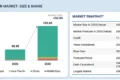
- Solar Tracker Industry Valued at $10.32 billion in 2024, it is projected to reach $22.87 billion by 2029, growing at a CAGR of 17.3%.
- This momentum is fueled by the global push for renewable energy adoption, declining solar technology costs, and the urgent need to maximize energy output from solar installations.
Key Growth Drivers
Enhanced Energy Yield and Efficiency – Solar trackers can increase electricity generation by approximately 25-40% compared to fixed-tilt systems. Single-axis trackers, which follow the sun from east to west, typically boost energy output by 10-25%, while dual-axis systems can achieve gains up to 40%. This significant enhancement makes solar projects more economically viable and accelerates return on investment.
Supportive Government Policies and Incentives – Governments worldwide are implementing aggressive renewable energy targets and providing substantial incentives for solar deployment. In the United States, initiatives like the SunShot program and federal tax credits are driving adoption. Brazil has extended tax exemptions for photovoltaic power generation through 2045, while India aims for 500 GW of renewable capacity by 2030, creating massive demand for solar tracking systems.
Technological Innovation and Cost Reduction – Continuous advancements in tracker technology are driving market growth. AI-powered tracking systems, such as Nextracker’s TrueCapture technology, optimize panel positioning based on real-time weather data and site conditions. Integration with IoT enables remote monitoring and predictive maintenance, while innovations in materials and design have reduced costs and improved reliability. The falling prices of solar PV panels further support the economic case for tracker deployment.
Market Segmentation and Applications
| Segment | Key Insights |
|---|---|
| By Axis Type | Single-axis (horizontal, vertical, tilted), Dual-axis (tip-tilt, azimuth-altitude) |
| By Technology | Solar Photovoltaic (PV), Concentrated Solar Power (CSP), Concentrated Photovoltaic (CPV) |
| By Application | Utility-scale projects, Commercial & Industrial, Residential, Agrivoltaics |
| By Type | Grid-connected, Off-grid systems |
Single-axis trackers dominate the market with approximately 90% share due to their cost-effectiveness, simpler design, and lower maintenance requirements. They are particularly well-suited for large utility-scale installations where land optimization and reliable performance are paramount.
Regional Spotlight: Asia Pacific and North America Lead
Asia Pacific is projected to dominate the solar tracker market throughout the forecast period, driven by:
- China’s leadership in manufacturing, producing 40% of the world’s solar tracker capacity
- India’s ambitious renewable energy targets and government incentives
- Massive infrastructure investments in solar energy across the region
North America holds the second-largest market share with strong growth momentum, supported by:
- Aggressive renewable energy mandates and decarbonization goals
- Substantial federal and state-level incentives
- A favorable investment environment attracting major project development
- Leading technology companies headquartered in the region
Challenges and Opportunities
Challenges
- High initial investment costs compared to fixed-tilt systems, particularly driven by steel prices which account for over 65% of tracker system costs
- Increased maintenance requirements for mechanical and electrical components
- Energy consumption for tracker operation, which may reduce net efficiency gains in some scenarios
Opportunities
- Integration with bifacial solar panels to further enhance energy production
- Expansion into emerging markets with high solar irradiance
- Development of specialized trackers for challenging terrain and extreme weather conditions
- Growing adoption of agrivoltaics, combining solar generation with agriculture
- Smart grid integration and advanced monitoring capabilities through IoT and AI
Want to dive deeper? Get your PDF copy today
Leading Players and Competitive Landscape
The solar tracker market features strong competition among established leaders, including Nextracker Inc. (US), Array Technologies Inc. (US), Soltec (Spain), Arctech Solar (China), Trinasolar (China), GameChange Solar (US), PV Hardware (Spain), Convert Italia (Italy), STI Norland (Spain), and Valmont Industries (US), among others.
Nextracker holds the largest global market share, backed by its extensive manufacturing capacity, innovative smart tracking systems, and strong international presence. The company has achieved cumulative shipments exceeding 75 GW and maintains a 10 GW annual manufacturing capacity in India.