Industrial gas analysis has become a critical component of modern manufacturing, energy production, environmental monitoring, and process automation. Industries such as oil & gas, chemicals, power generation, cement, mining, metals, pharmaceuticals, and food processing depend on accurate gas measurement to optimize production, ensure workplace safety, comply with environmental regulations, and reduce operational costs.
Among the most advanced technologies driving this transformation is the Tunable Diode Laser Analyzer (TDLA). Unlike conventional gas analyzers that require frequent calibration and extensive maintenance, TDLAs provide fast, highly selective, and real-time gas measurements with exceptional accuracy. Their ability to monitor gases directly within industrial processes has made them an increasingly preferred solution for critical applications.
As industries worldwide continue investing in automation, digital transformation, and sustainability initiatives, the Tunable Diode Laser Analyzer Market is expanding rapidly. Organizations are adopting these analyzers to improve process efficiency, reduce emissions, optimize combustion, and strengthen regulatory compliance.
What is a Tunable Diode Laser Analyzer?
A Tunable Diode Laser Analyzer is a gas measurement instrument that uses laser absorption spectroscopy to detect and measure the concentration of specific gases.
Instead of extracting gas samples for laboratory analysis, TDLAs perform in-situ or cross-stack measurements directly inside industrial processes.
The technology works by emitting a laser beam tuned to the absorption wavelength of a target gas. As the laser passes through the process gas, the analyzer measures the amount of light absorbed, allowing precise calculation of gas concentration.
This non-contact measurement method provides continuous monitoring with high reliability and minimal maintenance.
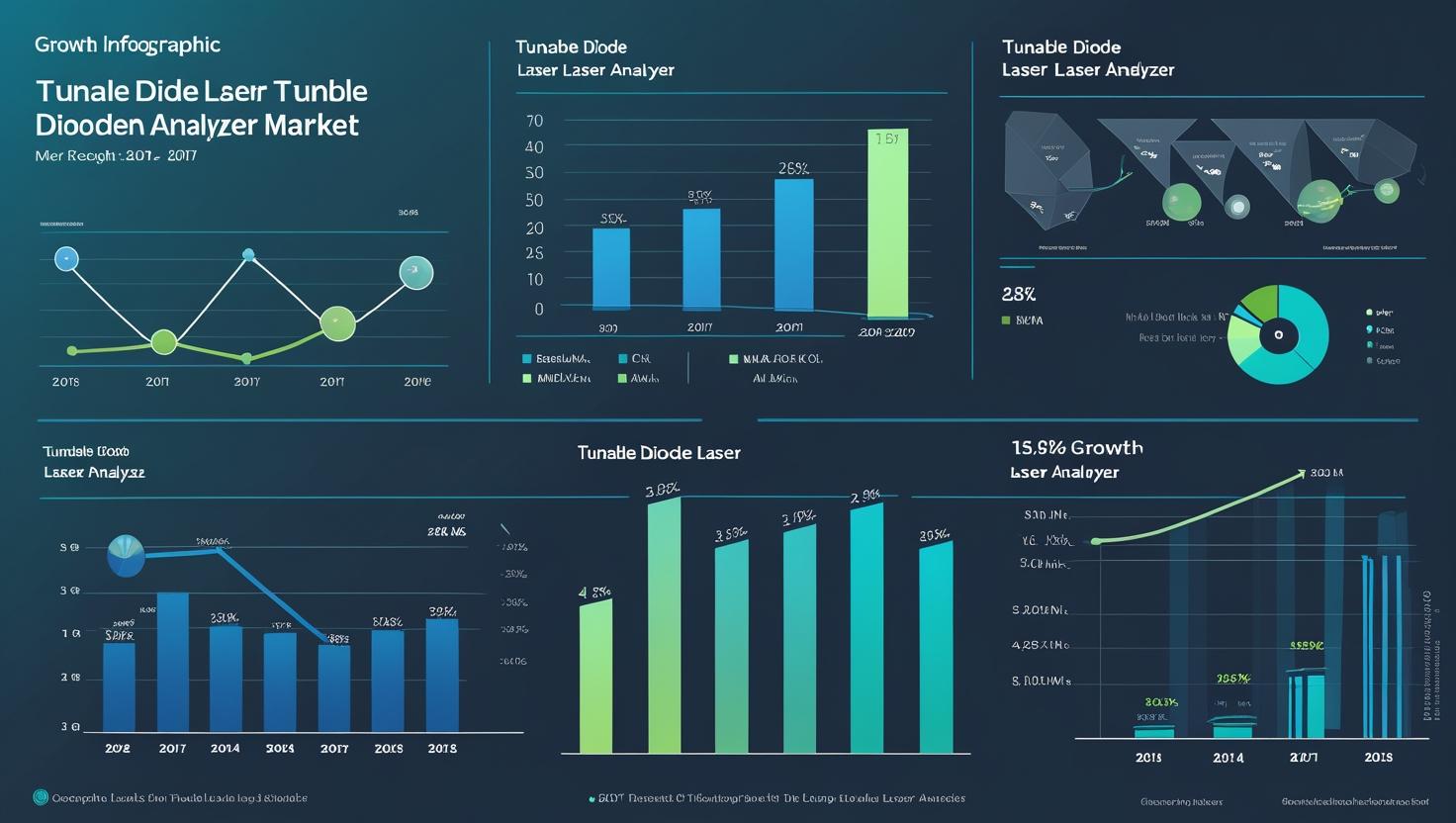
The global tunable diode laser analyzer (TDLA) market is expected to be valued at USD 546.2 million in 2024 and is projected to reach USD 884.4 million by 2031; it is expected to grow at a CAGR of 7.1% from 2024 to 2031
Why Industries Are Moving Toward TDLA Technology
Traditional gas analyzers often involve complex sampling systems that require:
- Gas extraction
- Filtration
- Cooling
- Frequent calibration
- Regular maintenance
These systems can increase operational costs while introducing delays in obtaining measurement data.
TDLAs eliminate many of these challenges by providing:
- Real-time measurements
- High selectivity
- Fast response times
- Low maintenance requirements
- Direct process monitoring
As industries seek smarter and more efficient operations, TDLA technology has become an essential component of process optimization.
Key Advantages of Tunable Diode Laser Analyzers
Exceptional Accuracy
TDLAs measure only the target gas without interference from other gases present in the process stream.
This high selectivity enables accurate monitoring even in complex industrial environments.
Real-Time Monitoring
Continuous gas analysis allows operators to respond immediately to changing process conditions.
Real-time monitoring helps improve:
- Process stability
- Product quality
- Energy efficiency
- Equipment reliability
Low Maintenance
Unlike traditional extractive analyzers, TDLAs have few moving parts and often eliminate sample conditioning systems.
This significantly reduces maintenance costs and equipment downtime.
Fast Response Time
Industrial processes frequently change within seconds.
TDLAs provide nearly instantaneous gas measurements, allowing operators to make rapid adjustments.
Improved Safety
Continuous monitoring helps detect hazardous gases before they reach dangerous concentrations.
This enhances workplace safety while protecting critical equipment.
Download PDF Brochure @ https://www.marketsandmarkets.com/pdfdownloadNew.asp?id=120588467
Industrial Applications Driving Market Growth
Oil & Gas Industry
Oil refineries and gas processing facilities rely on TDLAs for combustion optimization and process monitoring.
Applications include:
- Oxygen measurement
- Hydrogen monitoring
- Moisture detection
- Process gas analysis
- Furnace optimization
Accurate gas measurements improve fuel efficiency while reducing emissions.
Power Generation
Power plants require precise combustion control to maximize efficiency and minimize emissions.
TDLAs monitor gases such as oxygen and carbon monoxide, enabling operators to optimize boiler performance.
Benefits include:
- Reduced fuel consumption
- Lower NOx emissions
- Improved turbine efficiency
- Enhanced operational reliability
Chemical Manufacturing
Chemical plants operate highly sensitive production processes where gas composition directly affects product quality.
TDLAs help manufacturers:
- Monitor reaction gases
- Optimize production
- Improve process control
- Reduce waste
Cement Industry
Cement manufacturing requires continuous combustion monitoring within rotary kilns.
TDLAs support:
- Oxygen monitoring
- Carbon monoxide measurement
- Combustion optimization
These capabilities reduce fuel costs while improving production consistency.
Steel and Metal Processing
Steel manufacturers use TDLA technology to monitor combustion gases and furnace atmospheres.
Accurate gas measurement improves:
- Energy efficiency
- Product quality
- Process consistency
Mining Operations
Mining companies use TDLA systems to detect hazardous gases and monitor ventilation systems.
Continuous gas analysis improves worker safety while supporting environmental compliance.
Environmental Compliance
Governments worldwide are strengthening emission regulations.
Industrial facilities must continuously monitor emissions to comply with environmental standards.
TDLAs support emission monitoring by accurately measuring gases including:
- Oxygen
- Ammonia
- Hydrogen chloride
- Hydrogen fluoride
- Moisture
Continuous monitoring helps organizations reduce environmental impact while avoiding regulatory penalties.
Supporting Industrial Automation
Industry 4.0 initiatives are transforming industrial facilities into connected, intelligent production environments.
TDLAs integrate with:
- Distributed Control Systems (DCS)
- Supervisory Control and Data Acquisition (SCADA)
- Industrial IoT platforms
- Digital twin systems
These integrations enable automated decision-making based on real-time gas analysis.
AI and Predictive Maintenance
Artificial intelligence is increasingly enhancing industrial gas monitoring.
AI algorithms analyze TDLA data to:
- Predict equipment failures
- Identify abnormal process conditions
- Improve maintenance scheduling
- Optimize combustion efficiency
Predictive maintenance reduces downtime while improving plant productivity.
Role in Hydrogen Economy
Hydrogen is expected to play an important role in future clean energy systems.
TDLAs support hydrogen production, storage, and utilization by providing accurate gas measurements throughout hydrogen processes.
Applications include:
- Electrolysis plants
- Hydrogen pipelines
- Fuel production
- Industrial hydrogen applications
As hydrogen infrastructure expands, demand for advanced gas analyzers is expected to increase.
Digital Transformation of Process Industries
Manufacturers increasingly rely on digital technologies to improve operational performance.
TDLAs contribute by generating continuous process data that supports:
- Remote monitoring
- Cloud analytics
- AI optimization
- Automated reporting
- Operational intelligence
This enables organizations to make faster, data-driven decisions.
Market Trends
Several trends continue driving the Tunable Diode Laser Analyzer Market.
Increased Industrial Automation
Manufacturers seek intelligent sensors capable of supporting autonomous production systems.
Sustainability Initiatives
Industries invest in emission monitoring technologies to achieve carbon reduction goals.
Smart Manufacturing
Connected factories require highly accurate process instrumentation.
Growth of Renewable Energy
Emerging energy technologies require advanced gas monitoring systems.
Expansion of Industrial IoT
IoT-enabled analyzers provide continuous process visibility.
Market Challenges
Despite strong growth potential, several challenges remain.
High Initial Investment
Advanced laser-based analyzers generally require higher upfront investment than conventional systems.
Skilled Workforce Requirements
Installation and optimization require trained technical personnel.
Harsh Operating Conditions
Industrial environments may expose equipment to dust, vibration, and extreme temperatures.
Manufacturers continue improving analyzer durability to address these conditions.
Future Outlook
The future of the Tunable Diode Laser Analyzer Market appears highly promising.
Several technologies are expected to influence future product development:
- Artificial Intelligence
- Machine Learning
- Edge Computing
- Industrial IoT
- Cloud Connectivity
- Digital Twins
- Wireless Monitoring
- Predictive Analytics
Future analyzers are expected to become:
- Smaller
- More intelligent
- Easier to install
- More energy efficient
- More connected
As industries prioritize automation, sustainability, and operational excellence, TDLAs will continue replacing traditional gas measurement technologies across multiple sectors.
The Tunable Diode Laser Analyzer Market is transforming industrial gas analysis by delivering precise, real-time, and low-maintenance measurement solutions. Compared with conventional analyzers, TDLAs offer superior accuracy, faster response times, and seamless integration with modern industrial automation systems.
Their applications extend across oil & gas, power generation, chemicals, cement, mining, steel, pharmaceuticals, and environmental monitoring, helping organizations improve safety, reduce emissions, optimize production, and lower operating costs.
As digital transformation, Industry 4.0, and sustainability initiatives accelerate worldwide, Tunable Diode Laser Analyzers will remain at the forefront of industrial process innovation. Their ability to deliver continuous, high-precision gas analysis makes them an indispensable technology for the next generation of intelligent manufacturing and environmental compliance.
Frequently Asked Questions (FAQs)
1. What is a Tunable Diode Laser Analyzer (TDLA)?
A Tunable Diode Laser Analyzer is an advanced gas analysis instrument that uses laser absorption spectroscopy to continuously measure specific gas concentrations with high accuracy and minimal maintenance.
2. Which industries use Tunable Diode Laser Analyzers?
TDLAs are widely used in oil & gas, power generation, chemical processing, cement manufacturing, steel production, mining, pharmaceuticals, food processing, and environmental monitoring.
3. What are the key benefits of TDLA technology?
Major advantages include real-time gas monitoring, high measurement accuracy, fast response times, low maintenance requirements, improved process efficiency, and enhanced workplace safety.
4. How do Tunable Diode Laser Analyzers support environmental compliance?
TDLAs continuously monitor industrial gas emissions, enabling companies to optimize combustion processes, reduce emissions, and comply with increasingly stringent environmental regulations.
5. What trends are shaping the future of the Tunable Diode Laser Analyzer Market?
The market is being driven by Industry 4.0 adoption, Industrial IoT integration, AI-powered predictive maintenance, hydrogen economy developments, digital transformation, and growing demand for sustainable industrial operations.
