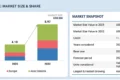
According to latest report, Induction Heating Market – Forecast to 2030, is projected to reach $879.5 million by 2030, from $616.8 million in 2025, at a CAGR of 7.4% during the forecast period.
An Induction Heating system is a core component in modern manufacturing environments, enabling controlled, efficient, and application-specific heating of metals, components, and materials across various industries. These systems convert electrical energy into thermal energy using technologies such as induction, infrared, resistance, or RF heating, delivering precise and repeatable heating cycles essential for forging, brazing, hardening, melting, shrink-fitting, and material processing. Induction Heating systems operate across different power levels and frequency ranges, allowing manufacturers to achieve the right balance of heating depth, speed, and energy efficiency needed for diverse production demands. As factories transition toward electric and automated production lines, Induction Heating technologies are becoming central to reducing carbon emissions, improving product quality, and minimizing operational costs compared to traditional fossil-fuel-based heating.
Download PDF Brochure: https://www.marketsandmarkets.com/pdfdownloadNew.asp?id=251746389
10–100 kW, by power, is expected to dominate the market during the forecast period.
Based on the power segment, the 10–100 kW segment dominates the market, as it supports a broad range of industrial applications, including automotive part hardening, forging, brazing, induction annealing, and medium-scale heat-treatment lines. This range offers the ideal balance of power, speed, and operational flexibility, making it the preferred choice for automotive, machinery, and general manufacturing units. Systems ranging from 10 kW to 100 kW are utilized for precision tasks in electronics, dental labs, tool rooms, and small-component heating, while high-power systems exceeding 100 kW serve heavy-duty applications in steel plants, foundries, large forging operations, and continuous manufacturing lines where deep and high-capacity heating is essential.

“By end user, the electronics & semiconductors segment is expected to register the highest CAGR during the forecast period.”
The induction heating market by end user highlights electronics & semiconductors as the fastest-growing segment, projected to register the highest CAGR. This strong growth is driven by the rapid global expansion of semiconductor fabrication, advanced packaging, and electronics manufacturing, all of which require highly precise, contamination-free, and energy-efficient heating processes. Applications such as wafer annealing, brazing of electronic components, bonding, solder reflow, diffusion, and thermal processing demand high-accuracy heating technologies, pushing manufacturers to adopt induction, infrared, and other advanced electric heating solutions.
Asia Pacific is expected to be the largest region during the forecast period.
Asia Pacific is expected to be the largest market for industrial heating. Countries such as China and India are rapidly expanding their manufacturing capabilities, driving demand for modern, electric, and automated heating technologies. The region’s strong metal processing sector, rising automotive production, and growing investments in electronics, semiconductors, and renewable energy component manufacturing significantly contribute to market growth. Additionally, increasing industrial automation, supportive government initiatives for clean energy transition, and the expansion of small and medium manufacturing enterprises accelerate the adoption of advanced Induction Heating systems. As APAC continues industrial modernization at a fast pace, it remains a major hub for both production and deployment of Induction Heating technologies, solidifying its position as the largest global market.
Request Sample Pages – https://www.marketsandmarkets.com/requestsampleNew.asp?id=251746389
Some of the major players in the Induction Heating market are in TEST Corporation (US), Inductotherm Group (US), ENRX (Norway), and Park-Ohio Holdings Corporation (US). The major strategies adopted by these players include acquisitions, product launches, investments, partnerships, and expansions.