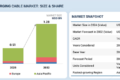
The Japan cancer biomarkers market is a sophisticated and rapidly expanding sector driven by the country’s unique demographic profile, which includes the world’s highest percentage of elderly residents and a rising prevalence of colorectal, lung, and gastric cancers. The landscape is characterized by a strong national emphasis on early detection programs and the rapid integration of advanced technologies such as liquid biopsies, next-generation sequencing, and AI-driven diagnostics into clinical practice. A significant paradigm shift toward personalized medicine is fueling demand for targeted therapies and companion diagnostics, supported by robust healthcare infrastructure and strategic domestic players like Sysmex and Olympus. While the market faces challenges related to high infrastructure costs and stringent regulatory requirements, ongoing investments in R&D and government initiatives to improve diagnostic accuracy continue to position Japan as a leading hub for oncological innovation in the Asia-Pacific region.
Key Drivers, Restraints, Opportunities, and Challenges in the Japan Cancer Biomarkers Market
The Japan cancer biomarkers market is primarily driven by a rapidly aging population, increasing cancer prevalence, and a national focus on early detection programs and precision medicine. Technological advancements, particularly the integration of artificial intelligence and next-generation sequencing, further propel growth by enhancing diagnostic accuracy and streamlining biomarker discovery. However, the market faces significant restraints, including high costs for advanced diagnostics and limited, highly regulated reimbursement pathways that often restrict testing to specific patient groups or single instances. Despite these hurdles, substantial opportunities exist in the expansion of local manufacturing incentives and the development of non-invasive testing methods like liquid biopsies, which are gaining regulatory approval. Challenges remain, such as a shortage of skilled bioinformatics and molecular pathology professionals and the operational reliance on a limited number of core clinical facilities, which can restrict broader patient access to cutting-edge genomic profiling.
Customer Segmentation, Needs, Preferences, and Buying Behavior in the Japan Cancer Biomarkers Market
The target customers for the Japan cancer biomarkers market primarily include diagnostics and research laboratories, which hold a dominant market share of over 53%, as well as hospitals, specialty clinics, and pharmaceutical and biotechnology companies. These institutional customers prioritize early and precise cancer detection to support Japan’s aging population and the rising prevalence of cancers such as breast, lung, and gastrointestinal types. Their preferences are shifting toward highly advanced, non-invasive diagnostic tools, including liquid biopsies, next-generation sequencing, and AI-assisted imaging that improve diagnostic accuracy and streamline clinical workflows. Purchasing behavior is characterized by a strong demand for kits and consumables, which account for a significant portion of market value, and a reliance on established medical networks where tertiary hospitals and cancer centers in regions like Kanto and Kansai drive high-volume procurement of molecular and biomarker-based tests. Additionally, these customers value clinical efficacy and regulatory compliance, increasingly seeking personalized medicine solutions that integrate biomarker eligibility with therapeutic decision-making.
Regulatory, Technological, and Economic Factors Impacting the Japan Cancer Biomarkers Market
The Japan cancer biomarkers market is significantly influenced by a complex interplay of regulatory, technological, and economic factors that shape its competitive landscape. Regulatory oversight in Japan provides clear guidelines for biomarker usage and is characterized by mature systems for genomic diagnostics, though the rigorous clinical validation required for new assays and a shortage of skilled molecular pathologists can pose entry hurdles. Technologically, the market is being revolutionized by the rapid adoption of next-generation sequencing (NGS)-based companion diagnostics and liquid biopsy techniques, alongside the integration of artificial intelligence for hyper-personalized treatment planning and faster biomarker validation. Economically, while the rising prevalence of cancer among a rapidly aging population sustains high demand and attracts substantial R&D investment, market profitability can be challenged by high upfront costs for advanced diagnostic platforms, limited reimbursement pathways for certain complex tests, and a heavy reliance on imported testing infrastructure.
Current and Emerging Trends in the Japan Cancer Biomarkers Market
The Japan cancer biomarkers market is undergoing a rapid evolution driven by the integration of omics technologies and the widespread adoption of non-invasive liquid biopsy techniques for early detection and monitoring. These trends are accelerating as the healthcare sector shifts toward precision oncology and personalized medicine, with the market projected to grow at a robust CAGR of 11.25% through 2034. Emerging focus areas include the use of artificial intelligence and machine learning to enhance diagnostic accuracy, alongside the expansion of next-generation sequencing and companion diagnostics. This transformation is further supported by strategic alliances between domestic and international firms aimed at commercializing novel molecular diagnostic products to address the rising cancer prevalence within Japan’s aging population.
Technological Innovations and Disruption Potential in the Japan Cancer Biomarkers Market
Technological innovations such as Next-Generation Sequencing (NGS), liquid biopsies, and multi-omics integration are gaining significant traction and are poised to disrupt the Japan cancer biomarkers market by enabling more precise, non-invasive, and early-stage detection. The widespread adoption of liquid biopsy techniques offers a patient-friendly alternative to traditional tissue biopsies, facilitating real-time longitudinal monitoring of tumor dynamics and treatment resistance. Furthermore, the integration of artificial intelligence and machine learning is transforming the industry by streamlining biomarker discovery, enhancing diagnostic accuracy through advanced pattern recognition in complex genomic and imaging data, and assisting in the development of hyper-personalized treatment plans. Additionally, advancements in omics technologies—including proteomics, metabolomics, and epigenetics—are providing a more comprehensive understanding of cancer biology, driving the shift toward precision oncology and the use of multiplex panels for simultaneous biomarker testing.
Short-Term vs. Long-Term Trends in the Japan Cancer Biomarkers Market
In the Japan cancer biomarkers market, the rapid post-pandemic surge in inbound medical tourism and the temporary spike in health checkups are viewed as short-term phenomena that have stabilized, whereas the integration of artificial intelligence and the paradigm shift toward personalized medicine represent long-term structural shifts. The move toward advanced genomic profiling and multi-omics technologies is a permanent transformation driven by the need for more precise oncology diagnostics in a super-aging society where cancer prevalence is projected to rise significantly through 2050. Similarly, the adoption of non-invasive liquid biopsies and point-of-care testing tools is an enduring shift fueled by consumer demand for earlier detection and the Japanese government’s strategic focus on internationalizing high-quality healthcare services. Other fundamental structural changes include the increasing use of biomarkers in drug discovery and the expansion of companion diagnostics, which are supported by long-term demographic realities and a robust national R&D infrastructure.