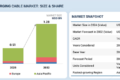
The Japan drug discovery services market is a sophisticated and steadily expanding sector driven by a robust pharmaceutical industry and a growing shift toward outsourcing to enhance research productivity. The landscape is increasingly characterized by the integration of artificial intelligence and high-throughput screening to accelerate hit-to-lead identification and optimize development timelines for both small molecules and a rising pipeline of biologics. While the market benefits from strong collaborations between academia and industry, it faces significant structural challenges such as stringent pricing policies and the “drug lag” phenomenon, which has prompted the government to initiate deregulation and funding to bolster local drug discovery capabilities. Strategic partnerships with contract research organizations are becoming a central pivot point for domestic firms seeking to manage high R&D costs and technical complexities, particularly in high-growth therapeutic areas like oncology and regenerative medicine.
Key Drivers, Restraints, Opportunities, and Challenges in the Japan Drug Discovery Services Market
The Japan drug discovery services market is primarily driven by the increasing complexity of drug research, rising R&D expenditures, and a strategic shift toward outsourcing by pharmaceutical and biotechnology companies seeking to reduce development cycles and costs. Technological advancements, particularly the integration of artificial intelligence and machine learning to accelerate target identification and lead optimization, present significant growth opportunities, alongside the expansion of biologics and personalized medicine. However, the market faces notable restraints such as stringent regulatory requirements governing drug safety and animal usage, high capital investment for advanced screening platforms, and biennial drug-price revisions that pressure pharmaceutical margins. Key challenges include a shortage of skilled professionals, persistent issues with “drug lag” and “drug loss” compared to global markets, and the need to foster a more robust startup ecosystem to link academic scientific discoveries with commercial drug development.
Customer Segmentation, Needs, Preferences, and Buying Behavior in the Japan Drug Discovery Services Market
The target customers for the Japan drug discovery services market primarily include large pharmaceutical companies, emerging biotechnology startups, and academic research institutes. These customers prioritize access to advanced technological platforms, such as AI-driven screening and genome editing, to accelerate target identification and reduce high internal R&D costs. Pharmaceutical giants increasingly prefer integrated, end-to-end service models over siloed individual services to improve the probability of clinical success, while startups and academic labs rely on external providers to access specialized expertise and flexible infrastructure without heavy capital investment. Purchasing behavior is characterized by a strategic shift toward long-term partnerships and outsourcing, with buyers selecting partners based on scientific capability, data security, reproducibility, and the ability to navigate Japan’s specific regulatory environment to mitigate “drug loss” and expedite patient access to innovative therapies.
Regulatory, Technological, and Economic Factors Impacting the Japan Drug Discovery Services Market
The Japan drug discovery services market is shaped by a complex interplay of regulatory, technological, and economic factors that influence entry and profitability. Regulatory oversight is evolving toward greater efficiency, with the PMDA implementing the world’s fastest review times and clarifying that phase 1 trials in Japanese subjects are not always required if foreign data is sufficient, though stringent rules on animal usage and data privacy under the Personal Information Protection Act remain significant hurdles. Technologically, the rapid integration of artificial intelligence, machine learning, and high-throughput screening is driving market expansion by accelerating target identification and lead optimization, but these advancements necessitate substantial up-front investments in automation and specialized digital infrastructure. Economically, while increasing R&D expenditures and government initiatives like Society 5.0 sustain demand, profitability is often challenged by high operational costs, a shortage of skilled professionals, and a pricing system that frequently reduces the price of innovative drugs over time, potentially discouraging long-term investment in the sector.
Current and Emerging Trends in the Japan Drug Discovery Services Market
The Japan drug discovery services market is undergoing a rapid transformation driven by the integration of artificial intelligence and machine learning, which are significantly reducing the time and cost associated with traditional research by streamlining target identification and lead optimization. This shift is accelerating quickly, with the AI-powered segment and drug discovery informatics projected to grow at double-digit CAGRs of approximately 11% to 13% through 2030 and 2036. Emerging trends include a growing emphasis on biologics and personalized medicine, supported by government initiatives like the 2024 Gate Opening Summit and the SAKIGAKE designation, which has reduced median approval review times from fourteen to nine months. Furthermore, the market is evolving toward a distributed, platform-based service model as pharmaceutical companies increasingly outsource early-stage investigative work and complex chemistry services to contract research organizations to manage rising internal R&D costs and enhance pipeline efficiency.
Technological Innovations and Disruption Potential in the Japan Drug Discovery Services Market
The Japan drug discovery services market is being significantly disrupted by the integration of artificial intelligence and machine learning, which are accelerating target identification, hit-to-lead processes, and the generation of novel molecular structures through platforms like NVIDIA BioNeMo. Technological innovations such as Next-Generation Sequencing, genome editing, and advanced biomanufacturing are gaining traction, enabling the expansion of diverse modalities including mRNA therapeutics, antibody-drug conjugates, and regenerative medicine. Furthermore, the adoption of proprietary drug-discovery engines like Cysteinomix and DNA-encoded library screening is streamlining R&D workflows, while the development of digital health platforms and sovereign AI capabilities is enhancing the efficiency and precision of identifying viable clinical candidates within the domestic innovation ecosystem.
Short-Term vs. Long-Term Trends in the Japan Drug Discovery Services Market
In the Japan drug discovery services market, the temporary surge in COVID-19 related research is viewed as a short-term phenomenon that has largely stabilized, while several other trends represent long-term structural shifts. The move toward externalized research and development is a permanent transformation driven by the need for pharmaceutical and biotechnology companies to manage rising costs and shorten development cycles through modular CRO partnerships. Similarly, the integration of artificial intelligence and machine learning into discovery pipelines is a fundamental shift aimed at accelerating target identification and lead optimization while reducing dependency on traditional wet-lab workflows. Other enduring structural changes include the growth of biologics, regenerative medicine, and personalized therapies, which are fueled by government initiatives like the SAKIGAKE designation and the long-term demographic realities of Japan’s rapidly aging population.