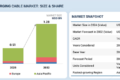
The Japan healthcare consulting services market is a dynamic and rapidly expanding sector driven by the country’s aging population, increasing prevalence of chronic diseases, and a nationwide mandate for digital transformation. The landscape is characterized by a strategic shift from traditional advisory roles toward execution-heavy partnerships that integrate advanced technologies like artificial intelligence, big data analytics, and cloud computing into hospital operations and pharmaceutical R&D. While the market features prominent global players such as Accenture, McKinsey, and Deloitte, it also includes a robust presence of specialized domestic firms like Global Health Consulting Japan and Nomura Healthcare that provide deep expertise in local regulatory compliance and the national health insurance system. Key areas of focus for these consultants include hospital management optimization, value-based care implementation, and cybersecurity for connected medical systems. Despite challenges such as high service costs and a shortage of specialized IT talent, the market is poised for sustained growth as healthcare providers and life sciences companies seek to improve operational efficiency and patient outcomes through data-driven strategies.
Key Drivers, Restraints, Opportunities, and Challenges in the Japan Healthcare Consulting Services Market
The Japan healthcare consulting services market is primarily driven by the country’s aging population and acute healthcare workforce shortages, which necessitate digital transformation (DX) and operational efficiency to maintain service delivery. Market growth is further propelled by government-mandated mandates for green transformation (GX) and the increasing adoption of advanced technologies like AI, big data analytics, and cloud computing. However, the industry faces significant restraints, including high upfront service costs that limit adoption among small and mid-sized providers, deep-seated cultural preferences for in-house management, and stringent data privacy regulations like the Act on the Protection of Personal Information (APPI). Opportunities abound in supporting the expansion of personalized medicine, telehealth, and the modernization of hospital infrastructure through public-private partnerships. Despite these prospects, the market must navigate challenges such as a shortage of skilled healthcare IT and regulatory experts, persistent cybersecurity risks, and internal resistance to organizational change within traditional healthcare institutions.
Customer Segmentation, Needs, Preferences, and Buying Behavior in the Japan Healthcare Consulting Services Market
The target customers for the Japan healthcare consulting services market primarily include large pharmaceutical companies, medical device manufacturers (MedTech), hospital chains, and government agencies, as well as an increasing number of biotechnology startups and insurance payers. These organizations prioritize strategic guidance on digital transformation (DX) and green transformation (GX), seeking to navigate a complex regulatory landscape and address the structural pressures of an aging population and acute labor shortages. Customer preferences are shifting toward integrated, technology-driven solutions—particularly in artificial intelligence, telehealth, and remote monitoring—to improve operational efficiency and patient outcomes. Purchasing behavior is characterized by a preference for long-term strategic partnerships with firms that offer deep local expertise and “real market experience,” moving away from traditional in-person sales models toward data-driven, value-based engagements that can help mitigate rising costs under Japan’s stringent reimbursement systems.
Regulatory, Technological, and Economic Factors Impacting the Japan Healthcare Consulting Services Market
The Japan healthcare consulting services market is significantly influenced by a complex interplay of regulatory, technological, and economic factors. Regulated by the Ministry of Health, Labour and Welfare, stringent pricing controls under the National Health Insurance system and complex “Marketing Authorization Holder” licensing requirements impose high compliance hurdles for new entrants. Technologically, the rapid integration of artificial intelligence, cloud-based healthcare IT, and telemedicine is driving market expansion as providers seek to improve operational efficiency, though these advancements necessitate substantial investment in cybersecurity and data privacy. Economically, while Japan’s hyper-aging population and rising chronic disease burden sustain high demand for strategic planning and cost-reduction services, profitability is often challenged by the high costs of digital transformation and the government’s aggressive efforts to contain overall healthcare spending.
Current and Emerging Trends in the Japan Healthcare Consulting Services Market
The Japan healthcare consulting services market is undergoing a rapid transformation driven by the country’s aging population and the government’s Healthcare DX Promotion Plan, which mandates a nationwide shift toward cloud-based systems and digital integration. Current trends are evolving quickly, as evidenced by a projected market CAGR of 13.1% through 2030 and the emergence of major AI-driven joint ventures, such as SB TEMPUS and TriNetX Japan, aimed at revolutionizing personalized medicine and clinical trial efficiency. Emerging trends include a surge in private equity investment and a strategic shift toward ecosystem-based healthcare models, while consulting firms are increasingly leveraged to navigate complex regulatory requirements and workforce shortages. As the market moves beyond traditional advisory roles, the adoption of advanced analytics and proprietary digital tools is accelerating, allowing consultants to provide the real-time, data-driven insights necessary for long-term operational resilience and digital transformation.
Technological Innovations and Disruption Potential in the Japan Healthcare Consulting Services Market
Technological innovations such as artificial intelligence (AI), machine learning, and big data analytics are gaining significant traction and are poised to disrupt the Japan healthcare consulting services market by enabling more precise, data-driven strategic recommendations. The integration of generative AI is transforming consulting workflows through automated medical writing and predictive modeling, while the adoption of Internet of Things (IoT) devices and cloud computing is streamlining real-time patient management and data integration. Furthermore, the rise of digital health tools, including telemedicine platforms, wearable biosensors, and Personal Health Records (PHR), is decentralizing care and creating new demand for specialized consulting expertise in digital transformation, cybersecurity, and regulatory compliance. These advancements are shifting the industry toward a more efficient, patient-centric model that addresses the complex needs of Japan’s rapidly aging population.
Short-Term vs. Long-Term Trends in the Japan Healthcare Consulting Services Market
In the Japan healthcare consulting services market, temporary surges in demand for pandemic-related crisis management and rapid telehealth setup are increasingly viewed as short-term phenomena, whereas the integration of artificial intelligence and digital transformation (DX) represents a long-term structural shift. This permanent evolution is driven by the government’s Healthcare DX Promotion Plan and the necessity to automate administrative workflows to combat acute healthcare labor shortages. Similarly, the move toward specialized consulting for pharmaceutical R&D outsourcing and the adoption of predictive analytics for chronic disease management are enduring changes fueled by the country’s aging demographic and the high burden of lifestyle-related conditions. Other long-term structural shifts include the expansion of data portability initiatives and the transition from traditional on-site consulting to hybrid, technology-driven delivery models.