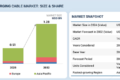
The Japan lateral flow assays market is a mature yet steadily expanding sector, valued at approximately USD 0.93 billion in 2025 and projected to reach USD 1.47 billion by 2034. The landscape is primarily shaped by the country’s rapidly aging population and a high prevalence of chronic conditions, which have intensified the demand for timely, accessible, and decentralized diagnostic solutions. While the market is a significant hub for high-quality diagnostic kit assembly and precision downstream processing, such as lamination and slitting, it remains a net importer of raw materials like membranes and conjugate reagents. The sector is characterized by a strong shift toward point-of-care testing and the integration of digital tools, including smartphone-based analysis and portable readers, to improve diagnostic accuracy. Infectious disease testing remains the dominant application, supported by government initiatives to strengthen domestic manufacturing resilience and public health surveillance. Despite technical limitations regarding sensitivity compared to laboratory standards, the market continues to evolve through the adoption of multiplex assays and quantitative platforms across diverse settings, including hospitals, clinics, and pharmacies.
Key Drivers, Restraints, Opportunities, and Challenges in the Japan Lateral Flow Assays Market
The Japan lateral flow assays market is primarily driven by an aging population and a high prevalence of chronic conditions, which necessitate timely, accessible diagnostics like point-of-care testing. The market benefits from a strong emphasis on advanced healthcare solutions and government-backed initiatives for early disease detection and preventive care. However, growth is restrained by technical limitations, such as lower analytical sensitivity and higher false-negative risks compared to laboratory-based PCR or ELISA methods, as well as a potential reluctance among healthcare professionals to shift from established conventional diagnostics. Opportunities are emerging through the integration of digital technologies for result interpretation, the expansion of multiplex detection capabilities, and the rising demand for veterinary diagnostics and food safety testing. Meanwhile, stakeholders face challenges including fragmented regulatory frameworks, volatility in the supply of critical raw materials, and the need for specialized climate-controlled logistics to maintain the integrity of sensitive assay components.
Customer Segmentation, Needs, Preferences, and Buying Behavior in the Japan Lateral Flow Assays Market
The target customers for the Japan lateral flow assays market primarily include hospitals, diagnostic laboratories, physician clinics, and an increasing segment of home-care users and pharmacies. These customers prioritize rapid, reliable, and easy-to-use diagnostic solutions to manage an aging population and the rising prevalence of chronic and infectious diseases, with a specific preference for advanced point-of-care testing and digital workflow integration that reduces dependency on centralized labs. Purchasing behavior is characterized by a high degree of buyer concentration among major Japanese diagnostic firms and institutional buyers, who value technical specification-driven procurement, lot-to-lot consistency, and long-term strategic partnerships. Furthermore, the market is influenced by government-led pandemic preparedness initiatives and a growing consumer shift toward over-the-counter self-test kits for convenience and early disease detection.
Regulatory, Technological, and Economic Factors Impacting the Japan Lateral Flow Assays Market
The Japan lateral flow assays market is significantly influenced by a complex interplay of regulatory, technological, and economic factors that shape market entry and long-term profitability. Regulatory oversight remains a primary hurdle, as stringent approval requirements for diagnostic performance and quality management standards, such as ISO 13485, can delay market entry and impose high compliance costs on new participants. Technologically, market expansion is driven by the integration of artificial intelligence and smartphone-based analysis platforms that improve diagnostic accuracy, alongside the development of multiplex assays for the simultaneous detection of multiple analytes. Economically, while Japan’s rapidly aging population and increasing prevalence of chronic diseases sustain high demand for accessible point-of-care testing, profitability can be challenged by significant volatility in raw material costs, such as gold chloride for conjugates, and a price premium for high-quality components. Furthermore, while government initiatives to strengthen domestic diagnostic manufacturing resilience provide growth opportunities, limited reimbursement for certain rapid tests and intense competition among established players may restrain overall margin potential for new entrants.
Current and Emerging Trends in the Japan Lateral Flow Assays Market
The Japan lateral flow assays market is undergoing a rapid transformation driven by the integration of digital technology and the decentralization of testing through point-of-care and home-based solutions. A prominent trend shaping the landscape is the incorporation of smartphone-based analysis platforms and portable readers, which improve result accuracy and enable quantitative analysis by minimizing the subjectivity of traditional visual interpretation. These trends are evolving quickly as Japan’s aging population and the rising prevalence of chronic conditions accelerate the shift toward routine preventative self-care and rapid, technology-driven diagnostic tools. Furthermore, the market is seeing a move toward multiplex detection assays for cardiac markers and infectious disease panels, with this segment projected to grow at a rate of 7.0%, while government initiatives to strengthen domestic diagnostic manufacturing resilience continue to reshape the industry’s long-term structure.
Technological Innovations and Disruption Potential in the Japan Lateral Flow Assays Market
Technological innovations such as the integration of artificial intelligence, smartphone-based analysis platforms, and cloud-connected digital readers are gaining significant traction and are poised to disrupt the Japan lateral flow assays market by minimizing subjectivity and enabling precise quantitative analysis. The industry is further evolving through the adoption of fluorescent immunoassay technology and sophisticated signal amplification techniques, which provide higher sensitivity than traditional tests, while the development of multiplex detection assays allows for the simultaneous identification of multiple analytes. Additionally, advanced biomanufacturing materials, including high-purity nitrocellulose membranes, noble metal salts like gold chloride, and functionalized latex particles, are enhancing assay performance to meet the rigorous quality standards of the Japanese healthcare sector. Other disruptive advancements such as next-generation microfluidic chips, DNA amplification, and CRISPR-based technologies are also emerging as key drivers that will redefine the speed and accuracy of decentralized diagnostics in Japan’s aging society.
Short-Term vs. Long-Term Trends in the Japan Lateral Flow Assays Market
In the Japan lateral flow assays market, the massive surge in COVID-19 testing volumes is increasingly viewed as a short-term phenomenon that has stabilized below its pandemic peak, whereas several other trends represent long-term structural shifts. The move toward decentralization, characterized by the rising adoption of point-of-care and home-based testing, is a permanent transformation driven by Japan’s aging population and a growing preference for convenient, rapid diagnostics for chronic and infectious diseases. Similarly, the integration of digital technology, such as smartphone-based analysis and portable readers, is a fundamental shift aimed at reducing subjectivity and improving data management. Other enduring structural changes include the expansion of multiplex assays for cardiac markers and government initiatives to strengthen domestic manufacturing resilience, which are fueled by the long-term necessity of managing a high burden of chronic conditions in a rapidly aging society.