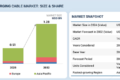
The Japan patient monitoring devices market is a technologically advanced and highly competitive landscape driven by one of the world’s most rapidly aging populations and a high prevalence of chronic conditions such as cardiovascular and respiratory diseases. The sector is undergoing a significant transformation characterized by a shift toward connected, software-enabled platforms and the increasing adoption of remote patient monitoring and wearable devices that allow for continuous, real-time health tracking outside traditional hospital settings. This evolution is supported by strong government initiatives for digital health and telemedicine, which aim to reduce the burden on healthcare infrastructure while improving patient outcomes through early disease detection. While the market is dominated by major players like Nihon Kohden, Omron, Terumo, and GE Healthcare, it remains dynamic with the integration of artificial intelligence and IoT for predictive analytics and streamlined laboratory workflows. Despite challenges such as high equipment costs, stringent regulatory requirements under the PMD Act, and data privacy concerns, the landscape is poised for steady growth as healthcare providers prioritize personalized medicine and decentralized care solutions.
Key Drivers, Restraints, Opportunities, and Challenges in the Japan Patient Monitoring Devices Market
The Japan patient monitoring devices market is primarily driven by a rapidly aging population and a high burden of chronic conditions like cardiovascular and neurological diseases, which necessitate continuous oversight and have led to a government-backed push for digital health and telemedicine. Technological advancements in wearable sensors, AI-integrated analytics, and 5G connectivity further propel growth by enabling real-time, personalized data transmission. However, the industry faces significant restraints, including high capital and maintenance costs for advanced equipment, a rigid regulatory environment under the PMD Act that can delay market entry, and resistance from some healthcare professionals toward adopting new systems. Despite these hurdles, substantial opportunities exist in the expansion of home-based care, the integration of monitoring data with electronic health records, and the modernization of hospital infrastructure to address acute nursing shortages. Key challenges remain, such as ensuring robust data privacy and cybersecurity in connected systems and the need for specialized technical expertise to interpret complex real-time health analytics.
Customer Segmentation, Needs, Preferences, and Buying Behavior in the Japan Patient Monitoring Devices Market
The target customers for the Japan patient monitoring devices market primarily include hospitals, which are projected to lead with a 35% market share, as well as ambulatory surgical centers, specialty clinics, home healthcare settings, and long-term care facilities. These institutional and individual customers prioritize technological sophistication, favoring connected, centralized, and software-enabled platforms that integrate AI and IoT for predictive health insights and real-time data collection. There is a strong preference for non-invasive, wearable, and wireless monitoring solutions, particularly among the rapidly aging population and geriatric caregivers who value independent living and the convenience of at-home chronic disease management for conditions like cardiovascular disease and hypertension. Purchasing behavior is characterized by distinct cycles, with hospital demand largely driven by the replacement and upgrading of legacy systems to advanced telemetry, while the growing home-care segment is fueled by a hybrid of conventional in-store purchasing and digital research for high-quality, medical-grade devices from trusted brands like Nihon Kohden, Omron, and Philips.
Regulatory, Technological, and Economic Factors Impacting the Japan Patient Monitoring Devices Market
The Japan patient monitoring devices market is significantly influenced by a complex interplay of regulatory, technological, and economic factors. Regulated by the PMD Act, strict clinical validation requirements and lengthy approval processes for new devices can delay market entry and increase compliance costs. Technologically, the integration of artificial intelligence, 5G connectivity, and wireless systems is driving market expansion by enabling predictive health insights and reliable real-time data transmission, though these advancements also introduce complexities regarding data privacy and integration with existing hospital IT systems. Economically, while the rising prevalence of chronic diseases among an aging population sustains high demand, tight reimbursement policies and the high capital investment required for advanced monitoring platforms can restrain profitability and limit the adoption of cutting-edge equipment in smaller clinics and facilities.
Current and Emerging Trends in the Japan Patient Monitoring Devices Market
The Japan patient monitoring devices market is undergoing a rapid evolution characterized by a significant shift toward home-based care models and the widespread adoption of remote patient monitoring solutions. These trends are moving quickly, driven by the integration of artificial intelligence and machine learning to generate predictive health insights and the rollout of 5G technology for faster real-time data transmission. There is a strong surge in the use of wireless and wearable monitoring devices, such as smart t-shirts and biosensors, which allow for continuous health tracking outside of traditional hospital settings. Furthermore, the market is experiencing a shift toward personalized, patient-centric monitoring to address the needs of an aging population and chronic staffing shortages, with segments like remote patient monitoring projected to grow at a staggering CAGR of nearly 25% through 2033.
Technological Innovations and Disruption Potential in the Japan Patient Monitoring Devices Market
Technological innovations such as artificial intelligence (AI), machine learning, and the Internet of Things (IoT) are gaining significant traction and are poised to disrupt the Japan patient monitoring devices market by enabling predictive health insights and automated early warning systems. The rapid adoption of wearable sensors and wireless monitoring platforms, including smart trackers like the MOTHER Bracelet and cable-lite systems from companies like Mindray, is decentralizing care by allowing for continuous, real-time data collection in home-based and step-down settings. Furthermore, advancements in remote patient monitoring (RPM) and the integration of 5G connectivity are facilitating faster data transmission and the expansion of telemedicine, which helps alleviate the burden on healthcare facilities while providing personalized, proactive care for Japan’s large aging population and those with chronic conditions.
Short-Term vs. Long-Term Trends in the Japan Patient Monitoring Devices Market
In the Japan patient monitoring devices market, the initial surge in demand for pulse oximeters and basic wearable trackers triggered by the COVID-19 pandemic is increasingly viewed as a short-term phenomenon that has stabilized, whereas several other trends represent long-term structural shifts. The transition toward remote patient monitoring and home-based care is a permanent transformation driven by Japan’s rapidly aging population and a strategic government push to reduce hospital congestion and healthcare costs. Similarly, the integration of artificial intelligence and machine learning into monitoring platforms is a fundamental shift aimed at addressing persistent nursing shortages through automated alerts and predictive analytics. Other enduring structural changes include the adoption of wireless and wearable technologies, such as medical-grade biosensors and smart clothing, which are fueled by the long-term necessity for continuous chronic disease management and the expansion of digital health infrastructure like 5G and cloud-integrated systems.