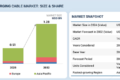
The Japan point-of-care diagnostics market is a highly advanced and rapidly expanding sector driven primarily by the country’s super-aging demographic and a strong policy focus on decentralized, preventive healthcare. The landscape is characterized by the integration of cutting-edge technologies such as microfluidics, artificial intelligence, and portable biosensors into community clinics, pharmacies, and home-care settings to manage the rising prevalence of chronic conditions like diabetes and cardiovascular diseases. While the market is dominated by infectious disease testing and blood glucose monitoring, it remains highly competitive with a mix of domestic leaders like Sekisui Medical and global giants like Roche and Abbott innovating in multiplex and connected solutions. Despite challenges posed by a stringent and complex regulatory framework overseen by the PMDA, the market is poised for significant growth as healthcare providers prioritize rapid, near-patient testing to improve clinical decision-making and reduce the burden on centralized laboratory infrastructure.
Key Drivers, Restraints, Opportunities, and Challenges in the Japan Point of Care Diagnostics Market
The Japan point-of-care diagnostics market is primarily driven by a super-aging population and the increasing prevalence of chronic diseases like diabetes and cardiovascular disorders, which necessitate rapid, decentralized testing to reduce hospital burden. Technological leadership in microfluidics, biosensors, and AI integration further propels growth by enabling more precise near-patient care. However, the industry faces significant restraints from a stringent and complex regulatory framework overseen by the PMDA and MHLW, which imposes high compliance hurdles for new entrants. Despite these challenges, substantial opportunities exist in the integration of digital health, wearable technologies, and telemedicine to extend healthy life expectancy and provide community-based integrated care. The market must also navigate challenges such as the need for better standardization with centralized laboratory methods and the high capital investment required for next-generation molecular diagnostic platforms.
Customer Segmentation, Needs, Preferences, and Buying Behavior in the Japan Point of Care Diagnostics Market
The target customers for the Japan point-of-care (POC) diagnostics market primarily include hospitals, community clinics, professional diagnostic centers, and an increasing segment of home-care users, such as the elderly and patients with chronic conditions like diabetes and cardiovascular diseases. These customers prioritize speed, accuracy, and ease of use, seeking portable and user-friendly devices that enable rapid clinical decision-making and real-time monitoring without the need for centralized laboratory infrastructure. Purchasing behavior is driven by a shift toward decentralized healthcare and value-based care, with institutional buyers focusing on operational efficiency and improved patient outcomes through AI-integrated and connected diagnostic platforms. Meanwhile, individual consumers in the home-care segment prefer accessible, over-the-counter testing solutions that empower proactive health management and reduce the necessity for frequent hospital visits.
Regulatory, Technological, and Economic Factors Impacting the Japan Point of Care Diagnostics Market
The Japan point-of-care diagnostics market is significantly influenced by a complex interplay of regulatory, technological, and economic factors. Regulatory entry is governed by the Pharmaceuticals and Medical Devices Agency (PMDA), where lengthy review cycles and stringent compliance standards for medical devices and in vitro diagnostics can delay product commercialization and increase operational costs. Technologically, market expansion is propelled by Japan’s leadership in microfluidics, biosensors, and the integration of artificial intelligence, which enhance diagnostic accuracy and enable the shift toward decentralized, home-based care. Economically, while a record super-aging population sustains high demand for chronic disease monitoring, profitability is often restrained by high capital investment requirements and the healthcare system’s exposure to currency volatility, as approximately 60% of systems are imported. These factors, combined with rising reagent costs that sometimes outpace fee-schedule revisions, create a challenging yet high-potential landscape for both domestic and global players.
Current and Emerging Trends in the Japan Point of Care Diagnostics Market
The Japan point-of-care diagnostics market is undergoing a rapid transformation driven by the decentralization of healthcare and the integration of advanced digital technologies to support an aging population. Key current trends include the widespread adoption of rapid testing for infectious diseases and the shift toward community clinics, pharmacies, and home-care settings to manage chronic conditions like diabetes and cardiovascular disorders. These trends are evolving quickly as technological innovations in microfluidics, biosensors, and miniaturization enable the development of portable, user-friendly, and multiplex-capable devices that deliver real-time results. Furthermore, the market is seeing an accelerated emergence of “smart” diagnostics, where point-of-care tools are increasingly integrated with artificial intelligence, wearable biosensors, and telemedicine platforms to facilitate remote monitoring and personalized care. Supported by government initiatives for healthcare modernization and high single-digit growth projections, these structural shifts are reshaping the industry to prioritize early disease detection and proactive health management outside traditional hospital environments.
Technological Innovations and Disruption Potential in the Japan Point of Care Diagnostics Market
Technological innovations such as microfluidics, biosensor technology, and molecular diagnostics are gaining significant traction and are poised to disrupt the Japan point-of-care diagnostics market by enabling more precise, rapid, and decentralized testing. The integration of artificial intelligence and machine learning is further transforming the industry by streamlining data analysis, enhancing diagnostic accuracy, and enabling real-time remote monitoring through connected devices. Additionally, the development of mobile POCT units, wearable biosensors, and lab-on-a-chip technologies is decentralizing healthcare by providing immediate results in community clinics and home settings, empowering patients to manage chronic conditions more effectively while reducing the burden on centralized hospital infrastructure.
Short-Term vs. Long-Term Trends in the Japan Point of Care Diagnostics Market
In the Japan point of care diagnostics market, the massive surge in COVID-19 testing volumes is viewed as a short-term phenomenon that has stabilized post-pandemic, whereas several other trends represent long-term structural shifts. The move toward decentralization, characterized by the rising adoption of near-patient and home-based testing, is a permanent transformation driven by the needs of a super-aging population and a national policy focus on community-based integrated care. Similarly, the integration of artificial intelligence, microfluidics, and biosensors into diagnostic platforms is a fundamental shift aimed at improving accuracy and enabling seamless remote data exchange within a digital health ecosystem. Other enduring structural changes include the expansion of preventative diagnostics and the integration of automation and robotics to address healthcare labor shortages and enhance healthy longevity.