The LiDAR market is entering a high-growth phase as industries increasingly adopt advanced sensing technologies for accurate 3D mapping, surveying, automation, autonomous mobility, infrastructure development, and environmental monitoring. LiDAR, or Light Detection and Ranging, uses laser pulses to measure distances and generate highly detailed three-dimensional representations of terrain, objects, and surrounding environments. Its ability to capture precise spatial information is making LiDAR an increasingly important technology across automotive, construction, mining, transportation, agriculture, defense, robotics, and smart city applications.
According to MarketsandMarkets, the global LiDAR market was valued at USD 3.27 billion in 2025 and is projected to reach USD 12.79 billion by 2030, registering a CAGR of 31.3% from 2025 to 2030. Growing adoption of autonomous vehicles, advanced driver assistance systems (ADAS), smart infrastructure, environmental mapping, and digital 3D modeling is supporting this expansion. At the same time, advances in solid-state sensing, semiconductor technologies, AI-based data processing, and lightweight scanning systems are broadening the application scope of LiDAR.
Top 10 Key Takeaways
- The global LiDAR market is projected to grow from USD 3.27 billion in 2025 to USD 12.79 billion by 2030.
- The LiDAR market is expected to register a 31.3% CAGR from 2025 to 2030.
- Advanced LiDAR sensors are expanding applications in mapping, surveying, autonomous mobility, robotics, and industrial automation.
- Solid-state LiDAR is projected to record the highest growth rate among LiDAR types during the forecast period.
- Ground-based LiDAR holds a larger market share because of its broad use in surveying, mapping, engineering, and infrastructure applications.
- Short-range LiDAR is projected to lead the market because of adoption in automobiles, security, and robotics.
- AI and LiDAR integration is improving automated perception, point-cloud analysis, object recognition, and spatial intelligence.
- Asia Pacific is projected to be the fastest-growing regional LiDAR market, supported by infrastructure development, smart cities, automotive applications, and industrial automation.
- India is emerging as a high-growth market, with its LiDAR market projected to reach USD 106.4 million by 2030.
- The integration of LiDAR with AI, robotics, drones, edge computing, and digital twins is expected to create new opportunities across transportation, construction, mining, agriculture, environmental monitoring, and smart infrastructure.
Download PDF Brochure @ https://www.marketsandmarkets.com/pdfdownloadNew.asp?id=1261
Advanced LiDAR Sensors Are Reshaping 3D Sensing
One of the most important LiDAR market trends is the evolution of sensor architectures. Traditional mechanical LiDAR systems use moving components to scan the surrounding environment, providing wide fields of view and long-range sensing capabilities. These characteristics have supported applications such as corridor mapping, military systems, volumetric mapping, engineering, and large-scale surveying.
However, the industry is increasingly moving toward solid-state LiDAR. According to MarketsandMarkets, the solid-state segment is expected to register the highest CAGR during the forecast period. Solid-state LiDAR eliminates or reduces moving components, enabling more compact designs, improved durability, and greater suitability for high-volume applications. These characteristics are particularly relevant to automotive systems, robotics, industrial automation, and other applications where size, reliability, and cost are important considerations.
Advancements in chip-based architectures, laser sources, photodetectors, signal processing, and sensor integration are also helping manufacturers improve resolution, range, reliability, and cost efficiency. As these technologies mature, LiDAR sensors can increasingly be integrated into smaller autonomous platforms, vehicles, drones, robots, and industrial systems.
LiDAR Market Growth Accelerates Through High-Precision Mapping
Mapping and surveying remain fundamental applications for LiDAR. Conventional surveying approaches can require significant time, labor, and field resources, particularly when organizations need to capture large or difficult-to-access areas. LiDAR enables rapid collection of dense spatial data that can subsequently be processed into highly detailed 3D models.
The technology is being increasingly used for topographic mapping, corridor mapping, urban planning, construction, forestry, mining, infrastructure development, and environmental monitoring. Governments and infrastructure organizations are investing in transportation networks, smart cities, utilities, and other large-scale projects that require accurate spatial information. These investments are supporting demand for LiDAR-based mapping solutions.
The growing use of LiDAR in digital twins is another important development. High-resolution point-cloud data can help organizations create digital representations of physical environments, infrastructure, and assets. These models can support planning, inspection, simulation, asset management, and maintenance activities.
Ground-Based LiDAR Expands Surveying and Infrastructure Applications
By installation, ground-based LiDAR accounted for a larger share of the market and is projected to grow faster than airborne LiDAR during the forecast period. Its comparatively lower cost and less stringent approval requirements make it attractive for surveying and mapping applications.
Ground-based systems are increasingly used in environmental monitoring, meteorology, corridor mapping, engineering, ADAS development, and autonomous vehicles. Their flexibility also makes them suitable for capturing detailed information around buildings, roads, bridges, industrial facilities, and other infrastructure.
Airborne LiDAR remains important for large-area mapping. Mounted on aircraft or unmanned aerial vehicles, airborne systems can efficiently collect elevation and terrain data across extensive geographic areas. Increasing drone adoption is creating additional opportunities for aerial LiDAR, particularly in surveying, agriculture, mining, forestry, infrastructure inspection, and environmental monitoring.
Autonomous Vehicles Create New Demand for LiDAR
The automotive sector is becoming a major growth area for the LiDAR market. Autonomous vehicles and ADAS require accurate information about the surrounding environment to identify objects, determine distances, and support navigation and decision-making.
LiDAR can complement cameras, radar, and other sensing technologies by providing detailed 3D information. Short-range LiDAR is expected to lead the market because of its increasing adoption in automobiles, security systems, and robotics.
As vehicle manufacturers and technology companies develop increasingly automated driving systems, demand is growing for sensors that combine high resolution, reliability, compact form factors, and competitive pricing. This is creating opportunities for solid-state and other advanced LiDAR architectures.
Beyond passenger vehicles, LiDAR is being integrated into autonomous shuttles, delivery systems, industrial vehicles, agricultural equipment, and mobile robots. This diversification is helping expand the addressable market for advanced 3D sensing.
AI and LiDAR Integration Improves Automation
The combination of AI and LiDAR is creating new possibilities for automated perception and spatial intelligence. LiDAR sensors generate large volumes of point-cloud data, while AI and machine learning algorithms can process these datasets to identify objects, classify environments, detect changes, and extract actionable information.
In autonomous systems, AI can analyze LiDAR data to recognize vehicles, pedestrians, road structures, obstacles, and other objects. In industrial environments, LiDAR combined with AI can support automated inspection, asset monitoring, robotic navigation, and workplace safety.
AI-enabled LiDAR processing is also becoming valuable for mapping and surveying. Automated point-cloud classification can reduce the time required to identify buildings, vegetation, roads, terrain features, and infrastructure. This can improve the efficiency of geospatial workflows and support faster decision-making.
MarketsandMarkets identifies AI integration, edge computing, robotics, cloud technologies, and digital twins among the developments contributing to the broader evolution of LiDAR technology.
Robotics and Industrial Automation Expand the Application Scope
Industrial automation represents another important opportunity for LiDAR technology. Robots require reliable perception systems to navigate dynamic environments, identify obstacles, map facilities, and interact safely with surrounding objects.
LiDAR sensors can support autonomous mobile robots, warehouse automation, industrial vehicles, drones, and inspection robots. In manufacturing facilities and warehouses, LiDAR can help robots understand spatial layouts and navigate without relying exclusively on predefined routes.
The technology is also being used in applications such as inventory management, facility mapping, construction automation, mining, and infrastructure inspection. As companies seek greater operational efficiency and reduced dependence on manual processes, LiDAR-enabled automation can become an important component of intelligent industrial systems.
Smart Cities and Digital Infrastructure Drive LiDAR Adoption
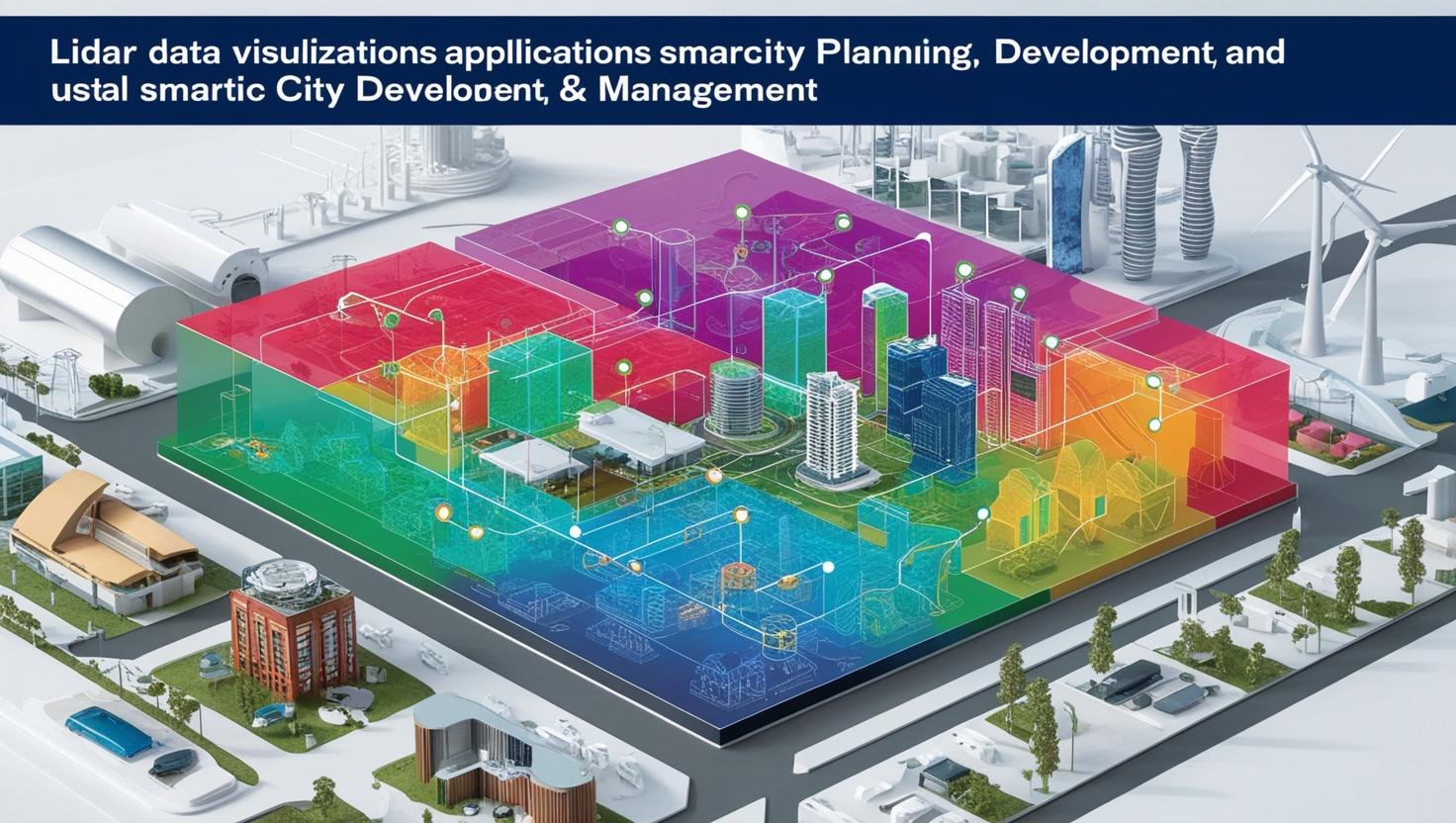
Smart city development is creating another significant opportunity for the LiDAR industry. Urban planners require accurate information about roads, buildings, utilities, transportation networks, vegetation, and public infrastructure. LiDAR can capture this information and support the creation of detailed 3D city models.
These models can be used for urban planning, transportation management, infrastructure development, disaster management, environmental monitoring, and digital twin applications. As governments increasingly invest in digital infrastructure, demand for high-resolution geospatial data is expected to increase.
LiDAR can also support infrastructure monitoring by enabling organizations to identify changes in roads, bridges, buildings, railways, and utility corridors. Combining repeated LiDAR surveys with analytics can provide insights into structural or environmental changes over time.
Environmental Monitoring and Agriculture Create New Opportunities
Environmental monitoring is becoming an increasingly important application for LiDAR. The technology can capture vegetation structure, terrain elevation, forest characteristics, and landscape changes, making it useful for forestry, ecosystem analysis, climate-related studies, and resource management.
In agriculture, LiDAR can support terrain analysis, crop monitoring, vegetation measurement, and precision farming. When combined with drones, GNSS, cameras, and AI analytics, LiDAR can provide detailed information for agricultural planning and field management.
Mining is another area where 3D sensing is valuable. LiDAR can support terrain mapping, volumetric measurement, mine planning, stockpile measurement, and site monitoring. These applications can improve operational visibility while reducing the time required for manual measurements.
Asia Pacific Emerges as a High-Growth LiDAR Market
Geographically, Asia Pacific is projected to be the fastest-growing region in the global LiDAR market during the forecast period. MarketsandMarkets projects the Asia Pacific market to increase from approximately USD 0.92 billion in 2025 to USD 4.01 billion by 2030, representing a CAGR of 34.1%. Growth is being supported by infrastructure development, surveying and mapping activities, autonomous and electric vehicles, smart city programs, industrial automation, robotics, and drone-based surveying.
China, Japan, and Southeast Asian economies are contributing to regional demand through investments in transportation infrastructure, smart mobility, industrial automation, and advanced manufacturing.
India is also emerging as a high-growth market. The India LiDAR market was valued at approximately USD 26.3 million in 2025 and is projected to reach USD 106.4 million by 2030, reflecting a CAGR of 32.3%. Government support for autonomous mobility, smart infrastructure, electronics innovation, and related technology development is supporting the country’s LiDAR ecosystem.
North America and Europe are also important markets because of their established automotive, aerospace, geospatial, robotics, and technology ecosystems. MarketsandMarkets projects the North American LiDAR market to reach USD 4.8 billion by 2030, while the European market is projected to reach USD 3.16 billion during the same period.
Key Companies Strengthen the Competitive Landscape
The competitive landscape of the LiDAR market includes established technology companies, specialized sensor manufacturers, geospatial solution providers, and emerging LiDAR innovators. Major companies identified by MarketsandMarkets include Hesai Group, RoboSense Technology, SICK AG, Ouster, Luminar Technologies, Leica Geosystems, Trimble, Teledyne Optech, FARO Technologies, RIEGL, NV5 Geospatial, Beijing SureStar, and YellowScan.
Companies are focusing on product launches, partnerships, acquisitions, sensor miniaturization, improved range and resolution, and lower production costs. The competitive environment is increasingly shaped by the ability to provide scalable sensing solutions for automotive, robotics, mapping, and industrial applications.
Challenges Facing the LiDAR Market
Despite strong growth opportunities, LiDAR adoption continues to face several challenges. Sensor cost remains important, particularly for applications requiring large-scale deployment. Manufacturers must also balance performance, range, resolution, field of view, power consumption, reliability, and physical size.
Competition from alternative sensing technologies, including cameras and radar, can also influence technology selection. In automotive and industrial applications, system developers often use sensor fusion rather than relying on one sensing technology.
Data processing is another consideration. High-resolution LiDAR systems can generate substantial volumes of point-cloud data, requiring efficient computing, storage, connectivity, and analytics infrastructure. AI and edge computing can help address these requirements, but they also introduce additional hardware and software considerations.
Future Outlook for the LiDAR Market
The future of the LiDAR market will be shaped by the convergence of advanced sensors, AI, robotics, autonomous mobility, cloud computing, edge processing, and digital twins. The market’s projected increase from USD 3.27 billion in 2025 to USD 12.79 billion by 2030 highlights the expanding role of 3D sensing across multiple industries.
Solid-state architectures are expected to gain momentum as manufacturers pursue smaller, more durable, and cost-efficient sensors. At the same time, improvements in laser technology, semiconductor manufacturing, signal processing, and machine learning are expected to support higher performance and broader commercialization.
Mapping and surveying will remain core applications, while autonomous vehicles, robotics, smart infrastructure, industrial automation, environmental monitoring, and digital twins will expand the technology’s reach. As LiDAR becomes more integrated with AI-powered analytics and connected platforms, the technology is moving from a specialized surveying tool toward a broader platform for real-time spatial intelligence.
Frequently Asked Questions
1. What is the current size of the LiDAR market?
The global LiDAR market was valued at USD 3.27 billion in 2025.
2. What will the LiDAR market be worth by 2030?
The LiDAR market is projected to reach USD 12.79 billion by 2030, growing at a CAGR of 31.3% from 2025 to 2030.
3. Which LiDAR technology segment is expected to grow fastest?
The solid-state LiDAR segment is projected to register the highest CAGR during the forecast period because of its compact design, durability, cost-efficiency, and suitability for scalable applications.
4. Which region is expected to experience the fastest LiDAR market growth?
Asia Pacific is projected to be the fastest-growing regional market, with its market expected to reach USD 4.01 billion by 2030 at a CAGR of 34.1%.
5. Who are the key companies in the LiDAR market?
Major companies include Hesai Group, RoboSense Technology, SICK AG, Ouster, Luminar Technologies, Leica Geosystems, Trimble, Teledyne Optech, FARO Technologies, and RIEGL.
About MarketsandMarkets™
MarketsandMarkets™ has been recognized as one of America’s Best Management Consulting Firms by Forbes, as per their recent report.
MarketsandMarkets™ is a blue ocean alternative in growth consulting and program management, leveraging a man-machine offering to drive supernormal growth for progressive organizations in the B2B space. With the widest lens on emerging technologies, we are proficient in co-creating supernormal growth for clients across the globe.
Today, 80% of Fortune 2000 companies rely on MarketsandMarkets, and 90 of the top 100 companies in each sector trust us to accelerate their revenue growth. With a global clientele of over 13,000 organizations, we help businesses thrive in a disruptive ecosystem.
The B2B economy is witnessing the emergence of $25 trillion in new revenue streams that are replacing existing ones within this decade. We work with clients on growth programs, helping them monetize this $25 trillion opportunity through our service lines – TAM Expansion, Go-to-Market (GTM) Strategy to Execution, Market Share Gain, Account Enablement, and Thought Leadership Marketing.
Built on the ‘GIVE Growth’ principle, we collaborate with several Forbes Global 2000 B2B companies to keep them future-ready. Our insights and strategies are powered by industry experts, cutting-edge AI, and our Market Intelligence Cloud, KnowledgeStore™, which integrates research and provides ecosystem-wide visibility into revenue shifts.
To find out more, visit www.MarketsandMarkets™.com or follow us on Twitter , LinkedIn and Facebook .
Contact:
Mr. Rohan Salgarkar
MarketsandMarkets™ INC.
1615 South Congress Ave.
Suite 103, Delray Beach, FL 33445
USA: +1-888-600-6441