The Mining Automation Market Growth is reshaping the global mining industry by integrating advanced technologies such as artificial intelligence (AI), robotics, autonomous vehicles, and real-time data analytics into traditional mining operations. As mining companies face increasing pressure to improve safety, productivity, and operational efficiency while reducing costs and environmental impact, automation has emerged as a critical enabler of transformation.
The global mining automation market is anticipated to grow from USD 3.96 billion in 2025 to USD 5.93 billion in 2030, at a compound annual growth rate (CAGR) of 8.4% . the Mining Automation Market Growth is being driven by rising demand for minerals and metals, increasing adoption of smart mining technologies, and the need to enhance worker safety in hazardous environments. The market is expected to expand significantly over the coming years as mining operations shift from manual and semi-automated systems to fully autonomous ecosystems.
1. Overview of Mining Automation Market Growth
The Mining Automation Market Growth reflects a broader shift toward digitalization in the mining sector. Automation technologies are being deployed across exploration, drilling, hauling, processing, and safety management operations to optimize efficiency and reduce human intervention.
Mining automation includes systems such as:
- Autonomous haulage systems (AHS)
- Remote-controlled drilling equipment
- Automated loading and hauling machines
- Fleet management systems
- AI-powered predictive maintenance tools
- Real-time monitoring and control systems
The adoption of these technologies is enabling mining companies to achieve higher output with fewer operational risks. As a result, the Mining Automation Market Growth is gaining strong momentum across both surface and underground mining operations.
2. Key Drivers of Mining Automation Market Growth
Several factors are contributing to the strong Mining Automation Market Growth globally.
2.1 Rising Demand for Minerals and Metals
The increasing demand for essential minerals such as copper, iron ore, lithium, and rare earth elements is driving mining activity worldwide. These materials are critical for renewable energy systems, electric vehicles (EVs), and advanced electronics. To meet this demand efficiently, companies are investing in automation technologies.
2.2 Safety and Risk Reduction
Mining is one of the most hazardous industries, with risks such as cave-ins, explosions, and exposure to toxic environments. Automation significantly reduces human exposure to dangerous conditions, improving overall workforce safety. This safety advantage is a major factor accelerating Mining Automation Market Growth.
2.3 Operational Efficiency and Cost Reduction
Automation enables continuous operations with minimal downtime. Autonomous trucks, drills, and loaders can operate 24/7 with high precision, reducing operational costs and increasing productivity. This efficiency improvement is a core driver of Mining Automation Market Growth.
2.4 Labor Shortages in Mining Regions
Many mining regions are facing skilled labor shortages. Automation helps bridge this gap by reducing dependency on manual labor and enabling remote operation of mining equipment.
2.5 Digital Transformation in Mining
The integration of IoT, AI, and cloud computing in mining operations is accelerating the adoption of automation technologies, further supporting Mining Automation Market Growth.
3. Technologies Driving Mining Automation Market Growth
The Mining Automation Market Growth is closely linked to advancements in multiple enabling technologies.
3.1 Autonomous Haulage Systems (AHS)
Autonomous haul trucks are one of the most widely adopted automation technologies in mining. These trucks operate without human drivers and are controlled through centralized systems. They improve efficiency, reduce fuel consumption, and lower operational risks.
3.2 Robotics and Remote Operation
Robotic drilling and excavation systems allow operators to control machines from safe, remote locations. This reduces exposure to hazardous environments while maintaining operational precision.
3.3 Artificial Intelligence and Machine Learning
AI plays a key role in predictive maintenance, ore grade estimation, and operational optimization. Machine learning algorithms analyze real-time data to improve decision-making and reduce equipment downtime, contributing significantly to Mining Automation Market Growth.
3.4 IoT and Sensor Networks
Sensors embedded in mining equipment collect real-time data on performance, temperature, vibration, and environmental conditions. This data is used for monitoring and optimizing operations.
3.5 Fleet Management Systems
Fleet automation systems coordinate trucks, loaders, and excavators to ensure optimal utilization and reduced idle time, further enhancing Mining Automation Market Growth.
Download PDF Brochure @ https://www.marketsandmarkets.com/pdfdownloadNew.asp?id=257609431
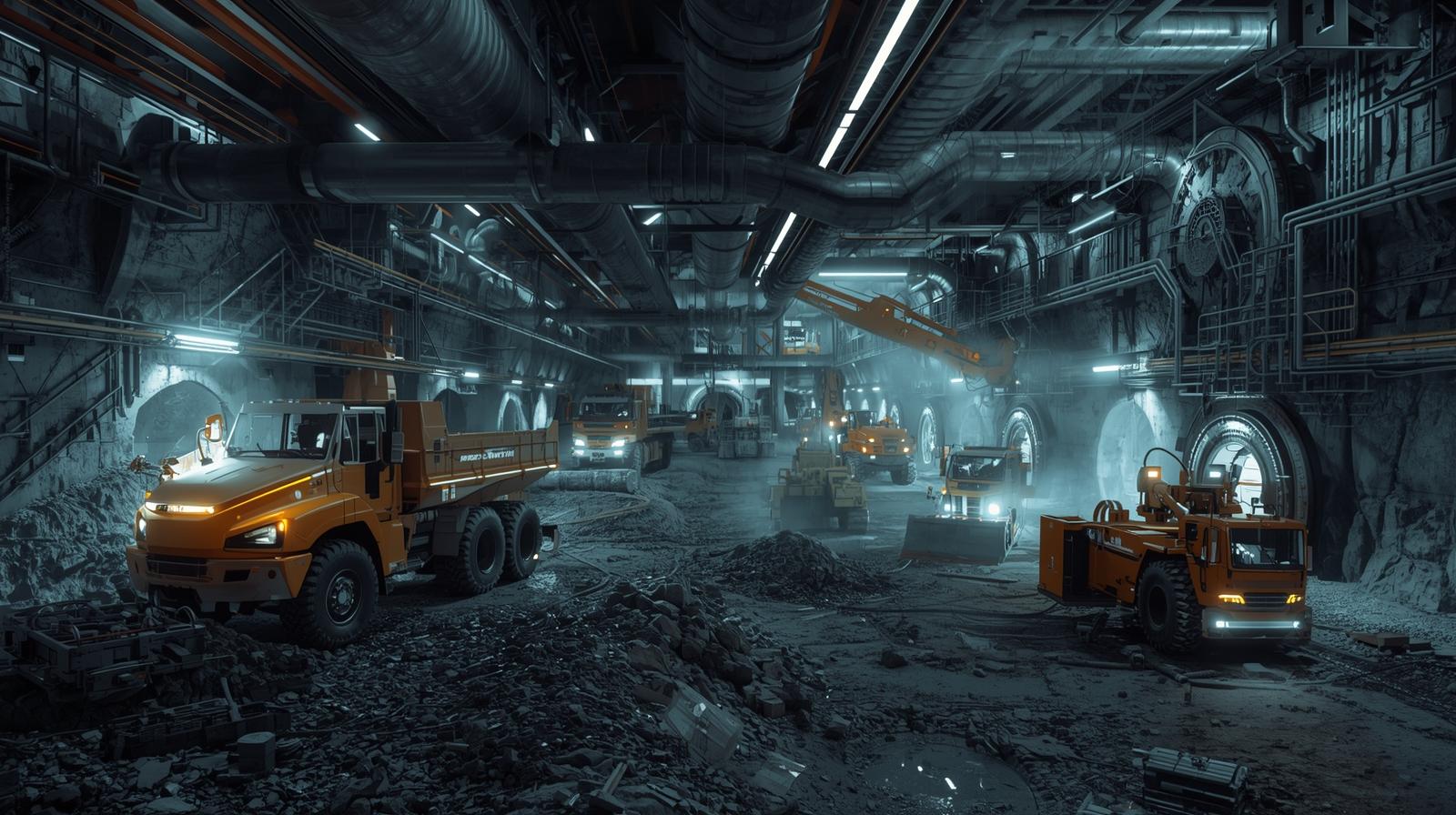
4. Market Segmentation and Industry Structure
The Mining Automation Market Growth can be analyzed across several key segments:
By Type of Automation
- Partial automation
- Full automation
Partial automation is currently more widely adopted, but full automation is expected to grow rapidly as technology matures.
By Application
- Surface mining
- Underground mining
Surface mining currently dominates due to easier implementation of autonomous systems, while underground mining is expected to grow as safety-driven automation increases.
By Component
- Hardware (sensors, control systems, autonomous vehicles)
- Software (analytics, fleet management, AI platforms)
- Services (integration, maintenance, consulting)
By Region
- North America
- South America
- Europe
- Asia-Pacific
- Middle East & Africa
Asia-Pacific is witnessing strong Mining Automation Market Growth due to rapid industrialization and increasing mining investments.
5. Challenges Impacting Mining Automation Market Growth
Despite strong growth prospects, the Mining Automation Market Growth faces several challenges:
5.1 High Initial Investment Costs
Deploying automation systems requires significant capital investment, which can be a barrier for small and mid-sized mining companies.
5.2 Integration Complexity
Integrating automation systems with existing mining infrastructure can be complex and time-consuming.
5.3 Cybersecurity Risks
As mining operations become more connected, they become vulnerable to cyber threats, requiring robust security frameworks.
5.4 Workforce Transition
Automation requires reskilling of the workforce, which can create resistance and transition challenges.
5.5 Harsh Operating Environments
Extreme conditions in mining sites can impact the reliability and performance of automated systems.
6. Opportunities in Mining Automation Market Growth
The future of the Mining Automation Market Growth presents significant opportunities:
6.1 Smart Mining Initiatives
Governments and mining companies are investing in smart mining initiatives that integrate AI, IoT, and automation technologies.
6.2 Expansion in Emerging Economies
Developing countries are increasingly adopting automation to improve mining efficiency and safety.
6.3 Sustainable Mining Practices
Automation supports energy-efficient operations and reduces environmental impact, aligning with global sustainability goals.
6.4 Data-Driven Mining Operations
Real-time analytics and AI-driven insights are enabling predictive and optimized mining operations.
6.5 Integration with Renewable Energy Mining Projects
As demand for critical minerals grows, automation is playing a key role in supporting sustainable extraction practices.
7. Competitive Landscape
The Mining Automation Market Growth is highly competitive, with major players focusing on innovation, partnerships, and acquisitions. Companies are investing heavily in autonomous technologies, AI platforms, and integrated mining solutions to strengthen their market position.
Key strategies include:
- Development of autonomous fleets
- AI-powered mining software platforms
- Strategic partnerships with mining companies
- Expansion into emerging mining regions
- Investment in R&D for next-generation automation technologies
8. Future Outlook of Mining Automation Market Growth
The future of the Mining Automation Market Growth is closely tied to the evolution of Industry 4.0 technologies. As mining operations become increasingly digitized, automation will move from optional to essential.
Key future trends include:
- Fully autonomous mining sites
- AI-driven decision-making systems
- Integration of digital twins in mining operations
- Expansion of remote-controlled mining operations
- Increased adoption of cloud-based mining platforms
Over the next decade, mining is expected to become one of the most automated heavy industries globally, with significant improvements in safety, efficiency, and sustainability.
The Mining Automation Market Growth is transforming the global mining industry by enabling safer, smarter, and more efficient operations. Driven by technological advancements in AI, robotics, IoT, and autonomous systems, mining companies are rapidly transitioning toward fully automated ecosystems.
While challenges such as high costs and integration complexity remain, the long-term benefits of automation—including improved productivity, reduced risks, and enhanced sustainability—are driving strong adoption worldwide.
As the industry continues to evolve, the Mining Automation Market Growth will play a pivotal role in shaping the future of mining operations and redefining how resources are extracted across the globe.
