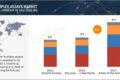
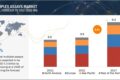
The global healthcare landscape is undergoing a significant transformation driven by the increasing need for rapid, accurate, and high-throughput diagnostic solutions. Among the technologies gaining considerable momentum are multiplex assays, which enable the simultaneous detection and analysis of multiple biomarkers from a single sample. According to recent market research, the global multiplex assays market is projected to grow from USD 7.15 billion in 2026 to USD 10.65 billion by 2031, registering a CAGR of 8.3% during the forecast period.
The market’s expansion is being fueled by rising incidences of infectious diseases, cancer, and autoimmune disorders, coupled with growing investments in precision medicine and advanced diagnostic technologies. As healthcare systems increasingly prioritize early disease detection and personalized treatment approaches, multiplex assays are emerging as indispensable tools across research and clinical settings.
Growing Burden of Chronic and Infectious Diseases Drives Market Expansion
The prevalence of complex diseases worldwide continues to rise, creating a strong demand for efficient diagnostic methods. Conditions such as cancer, respiratory infections, and autoimmune disorders often require comprehensive biomarker analysis to enable accurate diagnosis and treatment planning. Multiplex assays provide a significant advantage by allowing multiple analytes to be tested simultaneously, reducing both turnaround time and sample requirements.
The increasing focus on personalized medicine and companion diagnostics has further accelerated market growth. Healthcare providers are increasingly adopting advanced diagnostic solutions that support targeted therapies and individualized treatment strategies. In addition, ongoing advancements in multiplex PCR, immunoassays, and sequencing technologies are improving assay sensitivity, specificity, and throughput, thereby expanding their applications.
Another key growth factor is the rising number of diagnostic laboratories and research facilities worldwide. Expanding healthcare infrastructure and increasing investments in life sciences research are expected to create new opportunities for manufacturers and service providers operating in the multiplex assays industry.
Flow Cytometry Emerges as the Leading Technology Segment
Based on technology, the multiplex assays market is segmented into flow cytometry, fluorescence detection, multiplex real-time PCR, luminescence, next-generation sequencing (NGS), and other technologies. Among these, flow cytometry accounted for the largest market share in 2025.
Flow cytometry has become a preferred analytical technique due to its exceptional sensitivity and ability to perform multiparametric analysis. The technology enables researchers and clinicians to simultaneously evaluate multiple characteristics of individual cells, making it highly valuable in immunology, oncology, and cellular research applications.
Technological advancements in automation, data analysis, and instrument performance are enhancing the efficiency and reliability of flow cytometry-based assays. Moreover, the growing adoption of molecular diagnostics and the increasing number of diagnostic centers are expected to sustain the dominance of this segment throughout the forecast period.
Clinical Diagnostics Segment Leads Applications Market
By application, the multiplex assays market is broadly divided into research and development and clinical diagnostics. The clinical diagnostics segment captured the largest share in 2025, reflecting the growing importance of rapid and accurate disease identification in healthcare settings.
The demand for multi-target diagnostic testing has increased significantly due to the rising incidence of infectious diseases and cancer. Syndromic testing panels, which enable the simultaneous detection of multiple pathogens or biomarkers, are becoming increasingly popular among healthcare providers because they improve diagnostic accuracy while reducing testing time.
Furthermore, advancements in diagnostic infrastructure and growing awareness regarding early disease detection are driving the adoption of multiplex assays in clinical laboratories. Personalized treatment strategies also require precise biomarker analysis, further supporting the expansion of this segment.
Meanwhile, research and development applications continue to witness strong growth. Rising investments in biomarker discovery, drug development, and translational research are creating sustained demand for multiplex technologies across pharmaceutical and academic institutions.
Pharmaceutical and Biotechnology Companies Represent the Largest End User Segment
Based on end users, the market is segmented into pharmaceutical and biotechnology companies, hospitals and diagnostic laboratories, academic and research institutes, contract research organizations, and other users. Among these, pharmaceutical and biotechnology companies accounted for the largest market share in 2025.
The increasing need for multiplexed analysis in drug discovery and development processes has significantly contributed to the growth of this segment. Pharmaceutical companies are leveraging multiplex assays to identify biomarkers, evaluate drug efficacy, and streamline clinical research activities.
Automation in diagnostic and analytical workflows is another factor supporting increased adoption. Additionally, the growing prevalence of infectious diseases and cancer has resulted in higher testing volumes, prompting pharmaceutical and biotech companies to invest in advanced assay technologies.
As the life sciences industry continues to emphasize precision medicine and targeted therapeutics, demand from pharmaceutical and biotechnology organizations is expected to remain robust over the coming years.
North America Maintains Market Leadership
Geographically, the multiplex assays market is categorized into North America, Europe, Asia Pacific, Latin America, and the Middle East & Africa. North America held the largest share of the global market in 2026, supported by its advanced healthcare infrastructure and strong presence of biotechnology and diagnostics companies.
The region benefits from extensive investments in healthcare innovation, research institutions, and sophisticated diagnostic laboratories. The presence of leading market players and rapid adoption of cutting-edge technologies have further strengthened North America’s position.
Additionally, the increasing burden of cancer and infectious diseases across the United States and Canada continues to drive demand for advanced diagnostic solutions. Favorable regulatory frameworks and rising healthcare expenditures are expected to support continued market growth in the region.
Meanwhile, Asia Pacific is anticipated to offer significant growth opportunities due to improving healthcare infrastructure, rising healthcare awareness, and increasing investments in biotechnology and life sciences research.
Competitive Landscape
The multiplex assays market is highly competitive, with several established players focusing on technological innovation, product development, and strategic collaborations to strengthen their market positions.
Some of the leading companies operating in the market include:
- Thermo Fisher Scientific, Inc. (US)
- Illumina, Inc. (US)
- Bio-Rad Laboratories, Inc. (US)
- Merck KGaA (Germany)
- DiaSorin S.p.A. (Italy)
- Revvity, Inc. (US)
- bioMérieux (France)
These companies are actively investing in advanced technologies and expanding their product portfolios to address the growing demand for high-performance multiplex diagnostic solutions.
Future Outlook
The future of the multiplex assays market appears highly promising as healthcare systems worldwide increasingly adopt precision medicine and advanced molecular diagnostics. Growing disease prevalence, expanding research activities, and continuous technological innovations are expected to create substantial growth opportunities through 2031.
As laboratories seek faster, more accurate, and cost-effective testing solutions, multiplex assays are poised to play an increasingly critical role in disease diagnosis, biomarker discovery, and personalized healthcare, making them one of the most dynamic segments within the global diagnostics industry.