As vehicles evolve into intelligent, connected systems,Near Field Communication in Automotive is emerging as a transformative force in the industry. This short-range wireless technology—best known for powering contactless payments—is now being integrated into modern vehicles to enable keyless entry, driver authentication, in-car payments, and personalized experiences. By allowing secure, touchless interactions between smartphones and vehicles, Near Field Communication in Automotive is redefining how drivers access, control, and interact with their cars, signaling a major leap toward seamless and secure mobility.
The automotive industry is undergoing a digital revolution, with connectivity, convenience, and security at the forefront of innovation. One of the fastest-growing technologies making its way into modern vehicles is Near Field Communication (NFC) — a short-range wireless communication technology that enables data exchange between devices when they are brought within a few centimeters of each other.
While NFC is widely known for powering mobile payments and smart access systems, its integration into automotive ecosystems is opening up new possibilities for keyless entry, driver personalization, and contactless in-car payments. As vehicles become smarter and more connected, NFC is emerging as a foundational technology for the next generation of in-vehicle experiences.
From Keys to Smartphones: NFC Enables Seamless Vehicle Access
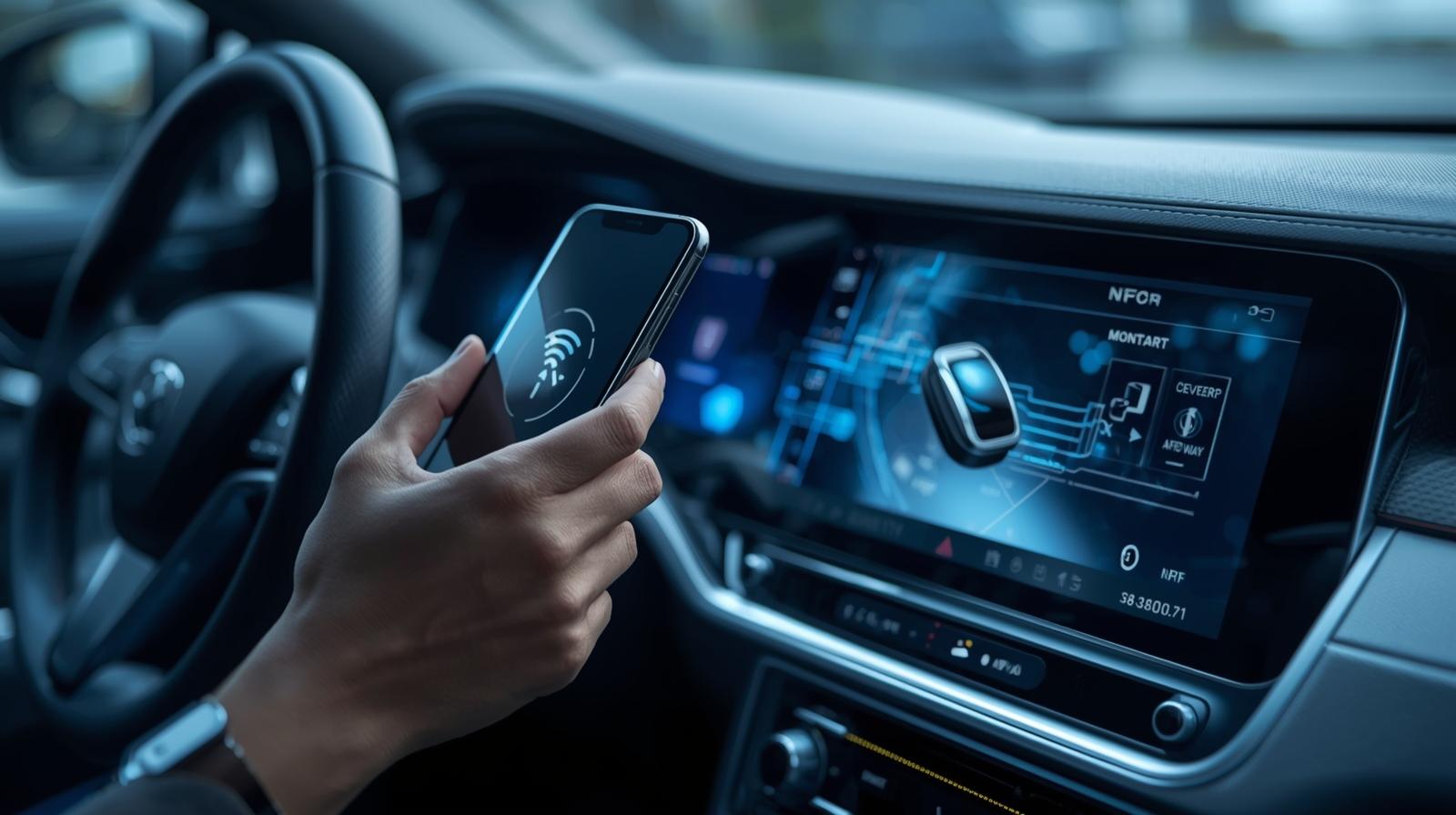
Traditional car keys are rapidly being replaced by digital keys embedded in smartphones or NFC-enabled cards. With NFC, drivers can unlock, start, and even share access to their vehicles with a simple tap of their phone — no physical key required.
This shift isn’t just about convenience. NFC-based keyless systems offer enhanced security, with encrypted authentication protocols that prevent relay attacks — a common vulnerability in some passive keyless entry systems. Car owners can also remotely revoke or share access via mobile apps, creating new opportunities for car-sharing models, rental fleets, and family vehicle management.
Major automakers like BMW, Hyundai, Mercedes-Benz, and Tesla have already integrated or announced NFC-based digital key support, and the trend is accelerating. In 2023, the Car Connectivity Consortium (CCC) released the Digital Key 3.0 specification, which supports both NFC and ultra-wideband (UWB), further cementing NFC’s role in secure, touchless vehicle access.
Contactless Payments Behind the Wheel
Beyond access control, NFC is also revolutionizing how drivers pay for services from inside the vehicle. Whether it’s paying for fuel, tolls, parking, or drive-thru orders, NFC enables fast, secure, and contactless transactions — transforming the dashboard into a mobile wallet.
With the rise of in-car infotainment systems integrated with digital assistants and payment APIs, NFC makes these transactions frictionless. Instead of tapping a card at a kiosk or terminal, drivers can approve a payment with their phone or via the vehicle’s interface, using stored credentials authenticated through NFC.
This integration is especially valuable in a post-pandemic world, where contactless interactions are not just preferred, but expected. As consumer behavior continues shifting toward digital-first experiences, automakers and payment providers are teaming up to bring retail, fuel, and tolling payments into the vehicle environment.
Companies like Visa, Mastercard, and Shell are already working with OEMs to develop embedded payment systems, and NFC is playing a key role in enabling these real-time, secure exchanges.
Download PDF Brochure @ https://www.marketsandmarkets.com/pdfdownloadNew.asp?id=520
Personalization and User Profiles
Another area where NFC is gaining traction in automotive design is driver profile management. With a simple tap of an NFC-enabled device, the vehicle can automatically recognize the user and adjust settings like:
- Seat and mirror position
- Climate control preferences
- Favorite navigation routes
- Audio settings and app profiles
This type of personalization is especially useful in shared vehicles or fleet management, where multiple users interact with the same car. NFC streamlines the transition between drivers and creates a more comfortable, personalized driving experience without the need to log into separate accounts or reconfigure settings manually.
Growth Outlook and Industry Momentum
According to industry analysts, the The global NFC industry will USD 30.55 billion by 2029 from USD 21.69 billion by 2024, at a CAGR of 7.1% during the forecast period, driven by increasing demand for connected car technologies, smart mobility, and secure access systems. With the number of NFC-enabled vehicles rising each year, this market is becoming a lucrative segment within the broader automotive electronics and IoT ecosystem.
Tier 1 suppliers like Continental, Denso, Valeo, and Harman are investing heavily in NFC integration, alongside tech giants like Apple, Samsung, and Google, who are embedding digital car key functionalities into their operating systems and mobile wallets.
Challenges and Considerations
While NFC adoption is accelerating, there are challenges to address. Standardization across OEMs and mobile platforms remains a hurdle. The technology also relies on user education and smartphone compatibility, as not all devices or operating systems support NFC-based vehicle access today.
Cybersecurity is another critical consideration. Automakers must implement strong encryption, authentication protocols, and secure element storage to protect user data and prevent unauthorized access.
Nonetheless, these are surmountable issues, and ongoing collaboration between automakers, tech firms, and standards organizations is already leading to better interoperability and user-friendly solutions.
Conclusion: A Tap Toward the Future
The integration of Near Field Communication in automotive applications represents a leap forward in how drivers interact with their vehicles. Whether it’s unlocking your car with your phone, automatically customizing your driving environment, or making secure, contactless payments on the go, NFC is at the heart of a more intelligent and seamless automotive experience.
As demand for connected and autonomous vehicles grows, and as consumer expectations around convenience and security continue to evolve, NFC will play a pivotal role in shaping the future of mobility. For automakers, tech innovators, and investors alike, this is an emerging opportunity worth tapping into—literally and strategically.
About MarketsandMarkets™
MarketsandMarkets™ is a blue ocean alternative in growth consulting and program management, leveraging a man-machine offering to drive supernormal growth for progressive organizations in the B2B space. We have the widest lens on emerging technologies, making us proficient in co-creating supernormal growth for clients.
The B2B economy is witnessing the emergence of $25 trillion of new revenue streams that are substituting existing revenue streams in this decade alone. We work with clients on growth programs, helping them monetize this $25 trillion opportunity through our service lines – TAM Expansion, Go-to-Market (GTM) Strategy to Execution, Market Share Gain, Account Enablement, and Thought Leadership Marketing.
Built on the ’GIVE Growth’ principle, we work with several Forbes Global 2000 B2B companies – helping them stay relevant in a disruptive ecosystem. Our insights and strategies are molded by our industry experts, cutting-edge AI-powered Market Intelligence Cloud, and years of research. The KnowledgeStore™ (our Market Intelligence Cloud) integrates our research, facilitates an analysis of interconnections through a set of applications, helping clients look at the entire ecosystem and understand the revenue shifts happening in their industry.
To find out more, visit www.MarketsandMarkets™.com or follow us on Twitter, LinkedIn and Facebook.
Contact:
Mr. Rohan Salgarkar
MarketsandMarkets™ INC.
1615 South Congress Ave.
Suite 103
Delray Beach, FL 33445
USA : 1-888-600-6441
