The rapid evolution of display technologies is significantly accelerating Microdisplays Market Growth, with OLED (Organic Light Emitting Diode) and MicroLED emerging as the two most transformative innovations. As demand for immersive visual experiences continues to rise across augmented reality (AR), virtual reality (VR), wearable devices, automotive head-up displays (HUDs), and defense applications, microdisplay technologies are becoming a core enabler of next-generation digital systems.
Microdisplays are ultra-compact, high-resolution display modules designed for close-to-eye or projection-based applications. Their ability to deliver high pixel density, low power consumption, and superior image quality makes them essential for compact and immersive devices. The ongoing advancements in OLED and MicroLED technologies are reshaping performance benchmarks and unlocking new commercial opportunities, driving strong Microdisplays Market Growth globally. The global microdisplay market is expected to grow from USD 1.65 billion in 2025 to USD 5.33 billion by 2030, growing at a CAGR of 26.4%
Rising Demand for Immersive Technologies Fueling Market Expansion
One of the primary drivers of Microdisplays Market Growth is the increasing adoption of immersive technologies such as AR and VR. These technologies rely heavily on high-performance microdisplays to deliver realistic and seamless visual experiences.
In AR/VR headsets, microdisplays must provide:
- Extremely high pixel density to avoid screen-door effects
- Low latency for real-time interaction
- Lightweight and compact design for user comfort
- High brightness and contrast for outdoor usability
OLED and MicroLED technologies are increasingly meeting these requirements, making them central to next-generation immersive devices.
The growing use of AR in enterprise training, medical visualization, remote collaboration, and gaming is significantly boosting demand for advanced microdisplay solutions.
OLED Technology: Flexibility and High Contrast Driving Adoption
OLED technology has been a foundational innovation in the display industry and continues to play a key role in Microdisplays Market Growth. OLED microdisplays are known for their self-emissive properties, which eliminate the need for backlighting and enable thinner, lighter designs.
Key Advantages of OLED Microdisplays:
- High contrast ratios with deep blacks
- Fast response times suitable for dynamic visuals
- Flexible form factors for wearable devices
- Lower power consumption compared to LCDs
OLED microdisplays are widely used in:
- AR/VR headsets
- Wearable smart glasses
- Military night vision systems
- Industrial inspection devices
Despite these advantages, OLED technology faces challenges such as limited brightness levels and shorter lifespan under high-intensity usage. However, continuous material innovation is improving durability and efficiency, further supporting Microdisplays Market Growth.
Download PDF Brochure @ https://www.marketsandmarkets.com/pdfdownloadNew.asp?id=430
MicroLED Technology: The Future of High-Performance Displays
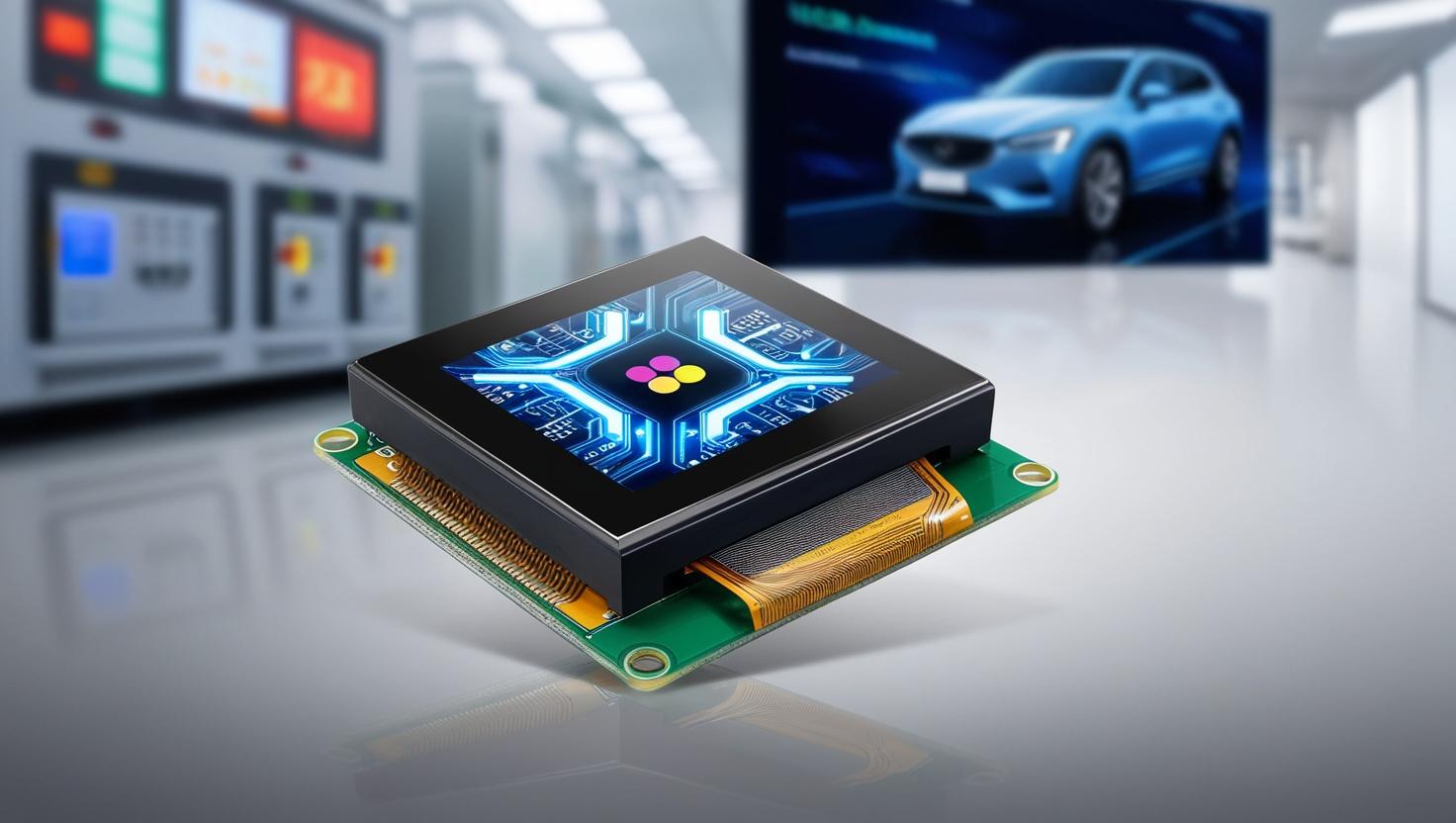
MicroLED is emerging as a next-generation display technology that is expected to significantly transform Microdisplays Market Growth. Unlike OLED, MicroLED uses microscopic inorganic LEDs, offering superior brightness, efficiency, and longevity.
Key Advantages of MicroLED Microdisplays:
- Extremely high brightness suitable for outdoor AR applications
- Longer lifespan with reduced burn-in risk
- Lower power consumption in high-brightness conditions
- Superior color accuracy and resolution
- Faster switching speeds
MicroLED is particularly attractive for applications requiring high durability and performance, such as defense systems, aviation displays, and automotive HUDs.
While manufacturing complexity and cost remain challenges, ongoing advancements in semiconductor fabrication and mass transfer techniques are rapidly improving production scalability.
AR/VR Ecosystem Driving Massive Demand
The AR/VR ecosystem is one of the most influential forces behind Microdisplays Market Growth. Companies developing immersive headsets and smart glasses require compact, high-performance displays capable of delivering lifelike visuals.
Microdisplays based on OLED and MicroLED technologies are essential for:
- Virtual training simulations
- Gaming and entertainment systems
- Remote collaboration tools
- Industrial design visualization
- Healthcare and surgical guidance systems
As consumer and enterprise adoption of AR/VR accelerates, demand for advanced microdisplay technologies is expected to surge significantly.
Automotive Head-Up Displays Expanding Market Applications
The automotive industry is another major contributor to Microdisplays Market Growth, particularly through the adoption of head-up display (HUD) systems.
Modern vehicles increasingly use microdisplays to project critical information such as:
- Speed and navigation data
- Driver assistance alerts
- Safety warnings
- Augmented reality driving guidance
OLED and MicroLED technologies are enabling brighter, more energy-efficient HUD systems that remain visible under varying lighting conditions. The rise of electric vehicles and autonomous driving technologies is further expanding demand for advanced microdisplay solutions in automotive applications.
Defense and Aerospace Applications Driving High-End Adoption
Defense and aerospace sectors are early adopters of advanced microdisplay technologies due to their need for high reliability, durability, and performance in extreme environments.
Microdisplays are used in:
- Helmet-mounted displays
- Night vision systems
- Pilot head-up displays
- Tactical situational awareness systems
MicroLED, in particular, is gaining traction in defense applications due to its high brightness, shock resistance, and long operational life. These characteristics make it ideal for mission-critical environments, reinforcing long-term Microdisplays Market Growth.
Wearable Devices and Smart Glasses Boosting Demand
Wearable technology is another key driver of Microdisplays Market Growth. Smart glasses and wearable AR devices require ultra-compact displays that deliver high-quality visuals without adding bulk or power consumption.
OLED microdisplays are currently widely used in early-generation smart glasses due to their flexibility and efficiency. However, MicroLED is expected to dominate future wearable applications due to its superior brightness and energy efficiency.
Applications include:
- Fitness and health monitoring
- Industrial workforce assistance
- Navigation and real-time information overlays
- Remote communication and collaboration
As wearable ecosystems expand, microdisplays will become increasingly central to user experience design.
Technological Advancements and Manufacturing Innovation
Continuous innovation in display fabrication is accelerating Microdisplays Market Growth. Key advancements include:
- Wafer-level manufacturing improvements
- Quantum dot enhancement layers
- Hybrid OLED-MicroLED architectures
- Advanced pixel scaling techniques
- Improved thermal management systems
These innovations are helping overcome existing limitations such as cost, scalability, and energy efficiency.
Additionally, increased investment from semiconductor and display manufacturers is driving faster commercialization of MicroLED technologies.
Asia-Pacific Leading Global Market Expansion
Asia-Pacific dominates Microdisplays Market Growth due to its strong electronics manufacturing ecosystem, advanced semiconductor capabilities, and rapid adoption of consumer electronics.
Countries such as China, Japan, South Korea, and Taiwan play a critical role in:
OLED panel manufacturing
MicroLED research and development
AR/VR hardware production
Consumer electronics innovation
North America remains a key innovation hub, particularly in AR/VR, defense technologies, and semiconductor design. Europe is also witnessing steady growth driven by automotive and industrial applications.
Future Outlook of the Microdisplays Market
The future of Microdisplays Market Growth is highly promising as OLED and MicroLED technologies continue to evolve. The convergence of AI, AR/VR, and spatial computing will further accelerate demand for ultra-high-resolution microdisplays.
Key future trends include:
Mass adoption of AR smart glasses
Widespread use of MicroLED in consumer electronics
Integration with AI-powered vision systems
Growth of holographic and mixed reality displays
Expansion into medical and industrial visualization tools
As production costs decline and performance improves, microdisplays are expected to become a standard component in next-generation digital devices.
Top 10 Key Takeaways
- OLED and MicroLED advancements are key drivers of Microdisplays Market Growth.
- AR/VR applications are the largest demand generators for microdisplays.
- OLED offers flexibility and high contrast, while MicroLED provides superior brightness and durability.
- Automotive HUD systems are significantly expanding microdisplay applications.
- Defense and aerospace sectors rely heavily on high-performance microdisplays.
- Wearable devices and smart glasses are accelerating adoption of compact displays.
- MicroLED is expected to dominate future high-end display applications.
- Asia-Pacific leads global manufacturing and innovation in microdisplay technologies.
- Continuous technological innovation is reducing production challenges and costs.
- Integration of AI and immersive computing will further boost Microdisplays Market Growth.
Frequently Asked Questions (FAQs)
1. What are microdisplays?
Microdisplays are ultra-small, high-resolution display modules used in AR/VR devices, smart glasses, HUDs, and other near-eye or projection-based applications.
2. How do OLED and MicroLED differ in microdisplays?
OLED uses organic materials and offers flexibility and high contrast, while MicroLED uses inorganic LEDs, providing higher brightness, longer lifespan, and better efficiency.
3. What is driving Microdisplays Market Growth?
Key drivers include AR/VR adoption, automotive HUD systems, defense applications, wearable devices, and advancements in OLED and MicroLED technologies.
4. Which industries use microdisplays the most?
Major industries include consumer electronics, automotive, defense, aerospace, healthcare, and industrial manufacturing.
5. Why is MicroLED considered the future of microdisplays?
MicroLED offers superior brightness, durability, energy efficiency, and scalability, making it ideal for next-generation AR/VR and high-performance display applications.
About MarketsandMarkets™
MarketsandMarkets™ has been recognized as one of America’s Best Management Consulting Firms by Forbes, as per their recent report.
MarketsandMarkets™ is a blue ocean alternative in growth consulting and program management, leveraging a man-machine offering to drive supernormal growth for progressive organizations in the B2B space. With the widest lens on emerging technologies, we are proficient in co-creating supernormal growth for clients across the globe.
Today, 80% of Fortune 2000 companies rely on MarketsandMarkets, and 90 of the top 100 companies in each sector trust us to accelerate their revenue growth. With a global clientele of over 13,000 organizations, we help businesses thrive in a disruptive ecosystem.
The B2B economy is witnessing the emergence of $25 trillion in new revenue streams that are replacing existing ones within this decade. We work with clients on growth programs, helping them monetize this $25 trillion opportunity through our service lines – TAM Expansion, Go-to-Market (GTM) Strategy to Execution, Market Share Gain, Account Enablement, and Thought Leadership Marketing.
Built on the ‘GIVE Growth’ principle, we collaborate with several Forbes Global 2000 B2B companies to keep them future-ready. Our insights and strategies are powered by industry experts, cutting-edge AI, and our Market Intelligence Cloud, KnowledgeStore™, which integrates research and provides ecosystem-wide visibility into revenue shifts.
To find out more, visit www.MarketsandMarkets™.com or follow us on Twitter , LinkedIn and Facebook .
Contact:
Mr. Rohan Salgarkar
MarketsandMarkets™ INC.
1615 South Congress Ave.
Suite 103, Delray Beach, FL 33445
USA: +1-888-600-6441
