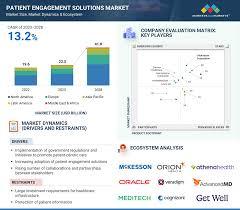
The global patient engagement solutions market is witnessing strong momentum as healthcare systems worldwide increasingly prioritize patient-centric care models and digital health transformation. Valued at US$19.6 billion in 2022, the market expanded to US$22.5 billion in 2023 and is projected to grow at a resilient compound annual growth rate (CAGR) of 13.2% from 2023 to 2028, reaching a forecasted valuation of US$41.8 billion by the end of the period.
Patient engagement solutions—ranging from patient portals and mobile health (mHealth) applications to wearable devices and cloud-based communication platforms—are transforming how patients interact with healthcare providers. These technologies empower patients to actively participate in their care journeys, improve clinical outcomes, enhance care coordination, and reduce overall healthcare costs.
Download PDF Brochure: https://www.marketsandmarkets.com/pdfdownloadNew.asp?id=105975994
Market Growth Drivers: Government Regulations and Patient-Centric Care Initiatives
One of the most influential drivers of the patient engagement solutions market is the implementation of government regulations and initiatives aimed at promoting patient-centric care. Governments across regions have recognized that informed and engaged patients are essential for improving healthcare quality, outcomes, and system efficiency.
In the United States, the Centers for Medicare & Medicaid Services (CMS) has actively promoted digital health adoption through initiatives such as the Promoting Interoperability Program, which incentivizes healthcare providers to implement electronic health records (EHRs) that enhance patient access and engagement. Complementing this, regulatory frameworks like the Health Insurance Portability and Accountability Act (HIPAA) continue to emphasize data privacy and security, building trust in digital patient engagement platforms.
Similarly, in Europe, the European Commission’s Digital Single Market strategy is driving cross-border digital healthcare interoperability and seamless patient experiences. These regulatory efforts are accelerating the adoption of secure, interoperable, and patient-focused digital health solutions globally.
Rising Demand for Mobile Health Apps and Wearable Technologies
The increasing use of mobile health applications, wearable health technologies, and remote monitoring solutions is another major growth catalyst. Patients increasingly rely on smartphones and connected devices to track vital signs, manage chronic conditions, schedule appointments, receive medication reminders, and communicate with healthcare providers in real time.
Wearable health technology, in particular, is opening new avenues for continuous patient monitoring, preventive care, and personalized treatment plans. Combined with cloud computing solutions, these tools enable real-time data access and analytics, enhancing clinical decision-making and patient satisfaction.
North America Dominates the Global Market
North America currently dominates the global patient engagement solutions market, driven by advanced healthcare infrastructure, favorable reimbursement policies, strong digital health adoption, and the presence of leading market players.
The North American market is projected to reach USD 23.4 billion by 2028, growing at a CAGR of 12.4% during the forecast period. Market growth in the region is further supported by strategic collaborations and partnerships among healthcare providers, technology vendors, and life sciences companies, aimed at delivering integrated patient engagement platforms.
Asia Pacific to Register the Fastest Growth
While North America leads in market share, the Asia Pacific (APAC) region is expected to register the highest growth rate over the forecast period. Factors such as a rapidly aging population, rising prevalence of chronic diseases, increasing healthcare expenditure, and strong government initiatives to digitize healthcare systems are fueling demand.
Emerging economies such as India and China are witnessing accelerated adoption of healthcare information technology (HCIT) solutions. Government investments, improving digital infrastructure, and the availability of skilled IT professionals are transforming healthcare delivery models across the region, creating substantial growth opportunities for patient engagement solution providers.
Market Restraints: Interoperability Challenges
Despite strong growth prospects, the market faces notable challenges, particularly inadequate interoperability across healthcare providers. Fragmented healthcare systems often rely on multiple interfaces to exchange data among EHRs, laboratories, medical devices, and external providers.
These interfaces are capital-intensive, complex to maintain, and require highly skilled IT personnel, increasing operational costs for hospitals and health systems. Health Information Exchanges (HIEs), while addressing some interoperability issues, also present technical and financial challenges that can limit scalability and efficiency.
Key Opportunities in Emerging Markets and Cloud-Based Solutions
Significant growth opportunities lie in emerging markets, where governments are actively promoting digital health adoption. Increasing public healthcare spending, expanding access to smartphones, and advancements in cloud computing are enabling cost-effective deployment of patient engagement platforms.
Cloud-based patient engagement solutions offer scalability, lower upfront costs, and easier integration, making them attractive for healthcare providers of all sizes. These solutions are expected to play a pivotal role in overcoming infrastructure limitations and expanding market penetration globally.
Challenges: High Deployment Costs of Healthcare IT Systems
The high deployment cost of healthcare IT systems remains a critical challenge. Investments in software, hardware, infrastructure, system integration, staff training, and ongoing maintenance can be prohibitive—particularly for small and mid-sized healthcare organizations.
Addressing this challenge will require innovative financing models, public–private partnerships, and scalable cloud-based solutions to ensure broader adoption and long-term sustainability.
Outlook
With strong regulatory support, rapid technological advancements, and growing emphasis on patient-centered healthcare, the global patient engagement solutions market is set for sustained growth through 2028. Market players focusing on interoperability, affordability, and emerging market expansion are well-positioned to capitalize on the evolving digital healthcare landscape.
Request Sample Pages: https://www.marketsandmarkets.com/requestsampleNew.asp?id=105975994