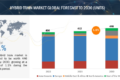
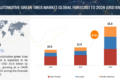
The self-driving cars market size is projected to grow from 37,090 thousand units in 2024 to 76,217 thousand units by 2035, registering a CAGR of 6.8% during the forecast period. Rising consumer demand for safer vehicles, continuous advancements in AI-powered driving systems, and supportive government initiatives are expected to drive sustained market growth.
The global self-driving cars market is entering a transformative phase as artificial intelligence, advanced driver assistance systems (ADAS), LiDAR, radar, high-performance computing, and connected vehicle technologies redefine personal mobility. Automakers are accelerating the commercialization of Level 2, Level 3, and future Level 4 autonomous vehicles to improve road safety, enhance driving comfort, and deliver intelligent mobility experiences. Growing investments in autonomous driving software, smart transportation infrastructure, and electric vehicles are further strengthening the outlook for the self-driving cars industry.
Self-Driving Cars Industry Overview
Self-driving cars use a combination of artificial intelligence, machine learning, cameras, LiDAR, radar, ultrasonic sensors, GPS, and high-definition maps to perceive their surroundings and perform driving tasks with minimal or no human intervention. Depending on the level of autonomy, these vehicles can assist drivers with lane centering, adaptive cruise control, automated parking, traffic jam assistance, and highway driving.
Automotive manufacturers are increasingly integrating autonomous capabilities into passenger vehicles while improving functional safety, cybersecurity, and software reliability. Continuous innovation in AI algorithms and sensor fusion technologies is accelerating the transition toward higher levels of vehicle autonomy.
AI and ADAS Driving Self-Driving Cars Market Growth
Artificial intelligence and advanced driver assistance systems remain the primary drivers of the self-driving cars market. Modern vehicles increasingly incorporate features such as adaptive cruise control, lane keeping assistance, automatic emergency braking, driver monitoring systems, and intelligent parking assistance.
These technologies improve road safety while familiarizing consumers with automated driving capabilities. As OEMs continue investing in AI-powered perception, planning, and decision-making systems, autonomous driving functionality is expected to become standard across multiple vehicle segments.
Growing investments in automotive software and intelligent mobility platforms will continue supporting long-term market expansion.
Level 2 and Level 3 Autonomous Vehicles Leading Market Adoption
Level 2 and Level 3 autonomous vehicles are expected to account for the largest share of the self-driving cars market over the forecast period. Automakers are rapidly introducing vehicles equipped with hands-free highway driving, intelligent lane changes, automated overtaking, and traffic jam pilot capabilities.
The increasing availability of Level 2+ and Level 3 systems allows consumers to experience higher levels of driving automation while regulatory frameworks gradually evolve to support broader deployment of autonomous technologies.
Growing commercialization of these autonomous systems is expected to remain a key growth driver for the market.
Download PDF Brochure @ https://www.marketsandmarkets.com/pdfdownloadNew.asp?id=1220
Robotaxis and Mobility-as-a-Service Creating New Opportunities
Robotaxis and Mobility-as-a-Service (MaaS) are emerging as major growth opportunities within the self-driving cars market. Autonomous ride-hailing services have the potential to reduce transportation costs, improve urban mobility, and increase vehicle utilization while reducing congestion.
Technology companies and automotive OEMs continue investing in autonomous taxi fleets and shared mobility platforms to accelerate commercialization. As urban populations continue growing, autonomous mobility services are expected to become an increasingly important component of future transportation ecosystems.
AI, LiDAR and V2X Communication Accelerating Autonomous Driving
The integration of artificial intelligence, LiDAR, radar, cameras, high-definition mapping, and Vehicle-to-Everything (V2X) communication is significantly improving autonomous driving capabilities. These technologies enable vehicles to detect obstacles, interpret traffic conditions, communicate with surrounding infrastructure, and make real-time driving decisions.
Cloud computing, over-the-air software updates, and digital twin technologies are further enhancing autonomous vehicle performance by continuously improving AI models throughout the vehicle lifecycle.
These innovations are expected to remain among the most influential trends shaping the future of the self-driving cars market.
Personal Mobility Driving Market Demand
Personal mobility is expected to hold the largest self-driving cars market share, driven by rising consumer demand for convenience, safety, and intelligent driving experiences. Buyers increasingly prefer vehicles equipped with advanced autonomous features that reduce driver fatigue and improve everyday commuting.
Automakers are expanding their autonomous vehicle portfolios across sedan, SUV, and premium passenger vehicle segments while integrating connected services and electric propulsion technologies to enhance overall user experience.
North America Leading the Self-Driving Cars Market Share
North America is expected to witness significant growth in the self-driving cars market, supported by strong investments in AI, autonomous driving software, smart transportation infrastructure, and advanced automotive technologies. The region benefits from the presence of leading automotive manufacturers, technology companies, and autonomous mobility developers actively commercializing next-generation self-driving solutions.
Supportive regulations, increasing deployment of autonomous testing programs, and growing consumer acceptance of advanced driver assistance technologies continue strengthening North America’s leadership position.
Future Outlook for the Self-Driving Cars Market
The future of the self-driving cars market will be driven by artificial intelligence, autonomous driving software, connected vehicle technologies, electrification, V2X communication, and intelligent mobility ecosystems. As regulatory frameworks mature and autonomous technologies continue advancing, self-driving vehicles will play an increasingly important role in improving road safety, reducing traffic congestion, and transforming personal transportation.
Growing investments in autonomous software platforms, AI-powered perception systems, LiDAR, high-performance computing, robotaxi services, and smart city infrastructure will continue creating significant opportunities for automotive OEMs, technology companies, semiconductor manufacturers, and mobility providers. As a result, the self-driving cars market is expected to witness sustained innovation, expanding market share, and strong global growth through 2035.
Request Free Sample Report @ https://www.marketsandmarkets.com/requestsampleNew.asp?id=1220