Smart Home Market Growth
The global Smart Home Market Growth is accelerating as households increasingly adopt connected technologies that enhance convenience, energy efficiency, and security. Smart homes, once considered a luxury concept, are now becoming mainstream due to rapid technological advancements, growing internet penetration, and the integration of artificial intelligence (AI) into everyday home devices.
Modern consumers are seeking solutions that simplify their daily routines while offering intelligent automation. From voice-controlled lighting systems to AI-powered home security solutions, smart home technologies are transforming how people interact with their living spaces. As a result, Smart Home Market Growth is gaining momentum worldwide, supported by innovation in connected devices and smart ecosystems.
Evolution of Smart Home Technologies
The concept of a connected home has evolved significantly over the past decade. Early smart home solutions were limited to basic automation features such as remote-controlled lighting and programmable thermostats. However, advancements in IoT, cloud computing, and AI have expanded the capabilities of these systems.
Today’s smart homes integrate multiple devices that communicate with each other through centralized platforms. These systems can analyze user behavior, learn patterns, and automatically adjust settings to create a more comfortable and efficient living environment. This technological evolution is a key factor contributing to the rapid Smart Home Market Growth across both developed and emerging markets.
Smart speakers, connected appliances, automated security systems, and intelligent climate control are now core components of modern homes. These innovations are transforming houses into adaptive environments that respond to user needs in real time.
Role of Proactive Automation in Market Expansion
One of the most important drivers of Smart Home Market Growth is the emergence of proactive automation. Unlike traditional automation systems that require manual commands, proactive systems anticipate user needs based on historical data and behavioral patterns.
For example, smart lighting systems can automatically adjust brightness levels based on the time of day or occupancy in a room. Similarly, intelligent HVAC systems can optimize temperature settings according to weather conditions and user preferences. These proactive capabilities significantly enhance convenience and energy efficiency, making smart home solutions more attractive to consumers.
Proactive automation also improves home security. AI-enabled surveillance cameras and motion sensors can detect unusual activity and immediately alert homeowners through mobile applications. This ability to respond instantly to potential threats is encouraging more households to invest in smart security systems, further supporting Smart Home Market Growth.
Download PDF Brochure @ https://www.marketsandmarkets.com/pdfdownloadNew.asp?id=121
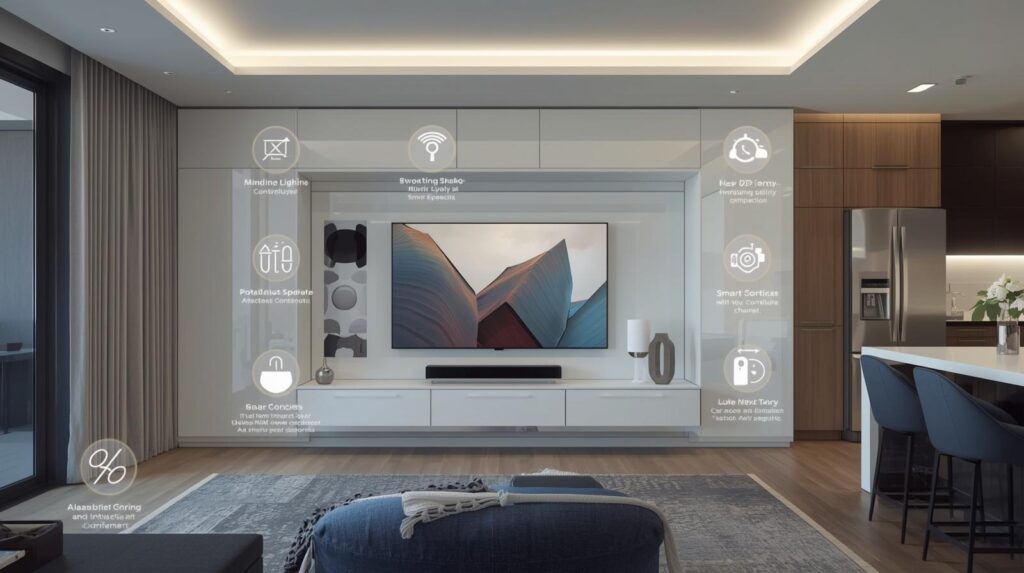
AI-Driven Home Intelligence
Artificial intelligence is transforming smart homes into intelligent ecosystems capable of learning, adapting, and improving over time. AI-powered devices analyze large volumes of data generated by household activities to deliver personalized experiences.
For instance, AI-enabled voice assistants can recognize individual voices, understand contextual commands, and control multiple devices simultaneously. These assistants can manage tasks such as adjusting lighting, controlling entertainment systems, setting reminders, and managing home appliances.
AI-driven home intelligence also contributes to energy efficiency. Smart systems can analyze electricity usage patterns and recommend ways to reduce energy consumption. This feature is particularly important as governments and consumers prioritize sustainability and environmental responsibility.
The integration of AI into smart home devices is therefore a critical factor accelerating Smart Home Market Growth, as it enhances functionality and creates a seamless connected experience for users.
Key Product Segments Driving Smart Home Market Growth
Several product categories are playing a major role in the expansion of the smart home industry.
Lighting Control
Smart lighting systems are among the most widely adopted smart home technologies. These systems allow users to control lighting remotely through mobile applications or voice commands. Advanced lighting solutions can also adjust brightness and color temperature automatically, improving comfort and energy efficiency.
Smart Speakers
Smart speakers serve as central hubs for connected homes. Equipped with voice assistants, these devices allow users to control multiple smart home systems through simple voice commands. Their growing popularity is a major contributor to Smart Home Market Growth.
HVAC Control
Smart thermostats and climate control systems help homeowners manage heating and cooling more efficiently. These devices can automatically adjust temperature settings based on occupancy, weather conditions, and user preferences.
Security and Access Control
Home security solutions such as smart cameras, video doorbells, and biometric access systems are increasingly popular among homeowners. These technologies provide real-time monitoring and instant alerts, significantly improving home safety.
Smart Kitchen and Home Appliances
Connected kitchen appliances, including smart refrigerators, ovens, and dishwashers, are simplifying household tasks. These appliances can be controlled remotely and offer intelligent features such as automatic cooking programs and maintenance alerts.
Together, these product innovations are significantly accelerating Smart Home Market Growth by expanding the range of applications available to consumers.
Consumer Demand and Lifestyle Changes
Changing lifestyles and increasing digital adoption are key factors supporting Smart Home Market Growth. Modern consumers value convenience, efficiency, and connectivity in their daily lives. Smart home technologies address these needs by automating routine tasks and providing centralized control over multiple household systems.
Urbanization is also influencing the adoption of smart home solutions. As cities become more densely populated, homeowners and apartment residents are looking for technologies that enhance comfort and optimize space utilization.
Additionally, remote work trends have increased the amount of time people spend at home. This shift has encouraged investments in home automation, entertainment systems, and energy management solutions.
Integration with Smart Ecosystems
Another factor contributing to Smart Home Market Growth is the increasing integration of devices into unified smart ecosystems. Many technology companies are developing platforms that allow multiple devices from different manufacturers to work together seamlessly.
These ecosystems provide centralized control through mobile applications or voice assistants, enabling users to manage lighting, appliances, security systems, and entertainment devices from a single interface. The interoperability of smart home devices improves user experience and encourages wider adoption.
As interoperability standards continue to improve, the smart home industry is expected to witness further expansion.
Challenges in the Smart Home Market
Despite the strong Smart Home Market Growth, the industry still faces several challenges. One of the primary concerns among consumers is data privacy and cybersecurity. Smart home devices collect and transmit large amounts of personal data, making them potential targets for cyber threats.
Another challenge is the high initial cost associated with advanced smart home systems. Although prices have decreased over time, the cost of installing comprehensive automation systems may still be a barrier for some households.
Compatibility issues between devices from different manufacturers can also create difficulties for users. However, industry efforts to establish universal connectivity standards are gradually addressing this problem.
Future Trends in Smart Home Market Growth
The future of Smart Home Market Growth will be shaped by several emerging trends. One of the most important developments is the integration of advanced AI and machine learning algorithms into home automation systems. These technologies will enable smarter decision-making and more personalized user experiences.
Another significant trend is the expansion of smart home healthcare solutions. Devices capable of monitoring health conditions, detecting falls, and providing remote medical alerts will become increasingly common, particularly among aging populations.
The adoption of renewable energy technologies, such as solar panels and energy storage systems, will also drive Smart Home Market Growth. Smart energy management systems can optimize the use of renewable energy sources, reducing electricity costs and environmental impact.
Additionally, the emergence of 5G connectivity will improve communication between smart devices, enabling faster data transmission and more reliable performance.
Regional Outlook
Different regions are experiencing varying levels of Smart Home Market Growth. North America currently leads the market due to high consumer awareness, advanced infrastructure, and the presence of major technology companies.
Europe is also witnessing strong adoption of smart home solutions, particularly in energy-efficient housing and home security applications. Government initiatives promoting smart energy management are supporting market expansion.
Meanwhile, the Asia-Pacific region is expected to experience the fastest growth in the coming years. Rapid urbanization, rising disposable incomes, and increasing internet penetration are creating significant opportunities for smart home technology providers.
Top 10 Key Takeaways – Smart Home Market Growth
- Smart Home Market Growth is accelerating due to increasing adoption of connected devices and intelligent home automation technologies.
- Proactive automation systems that anticipate user needs are becoming a major driver of Smart Home Market Growth.
- Artificial intelligence is enabling homes to become smarter by learning user behavior and optimizing device performance.
- Smart speakers are emerging as central control hubs for managing multiple connected devices within smart homes.
- Security and access control solutions such as smart cameras, video doorbells, and biometric locks are boosting Smart Home Market Growth.
- Energy-efficient solutions like smart lighting and HVAC control systems are encouraging consumers to adopt smart home technologies.
- Integration of multiple devices into unified smart ecosystems is improving user experience and driving market expansion.
- Increasing urbanization and changing lifestyles are supporting the rapid adoption of smart home solutions globally.
- Advancements in IoT, cloud computing, and 5G connectivity are expected to further accelerate Smart Home Market Growth.
- The future of smart homes will include AI-driven automation, smart healthcare monitoring, and intelligent energy management systems.
Frequently Asked Questions (FAQs)
1. What is driving Smart Home Market Growth?
Smart Home Market Growth is primarily driven by increasing demand for home automation, AI-powered devices, improved security systems, and energy-efficient technologies.
2. What are the main components of a smart home system?
A smart home system typically includes smart lighting, HVAC control, security and surveillance systems, smart speakers, connected appliances, and home automation platforms.
3. How does AI contribute to smart home technologies?
Artificial intelligence enables smart home devices to analyze user behavior, automate daily tasks, optimize energy consumption, and enhance security through predictive monitoring.
4. Which product segment is leading Smart Home Market Growth?
Smart speakers, lighting control systems, and home security solutions are among the most widely adopted product categories driving Smart Home Market Growth.
5. What is the future outlook for the smart home market?
The future of Smart Home Market Growth is expected to be shaped by advancements in AI, IoT, 5G connectivity, smart healthcare solutions, and integrated home ecosystems.
The global Smart Home Market Growth is being fueled by proactive automation, AI-driven intelligence, and increasing consumer demand for connected living environments. Smart home technologies are transforming traditional houses into intelligent ecosystems capable of learning and adapting to user needs.
From advanced lighting systems and smart speakers to intelligent security solutions and connected appliances, smart home devices are becoming an integral part of modern lifestyles. As technology continues to evolve, the capabilities of these systems will expand even further.
Despite challenges such as cybersecurity concerns and compatibility issues, ongoing innovation and industry collaboration are expected to overcome these obstacles. With the continued integration of AI, IoT, and advanced connectivity technologies, the future of Smart Home Market Growth appears highly promising.
About MarketsandMarkets™
MarketsandMarkets™ is a blue ocean alternative in growth consulting and program management, leveraging a man-machine offering to drive supernormal growth for progressive organizations in the B2B space. We have the widest lens on emerging technologies, making us proficient in co-creating supernormal growth for clients.
The B2B economy is witnessing the emergence of $25 trillion of new revenue streams that are substituting existing revenue streams in this decade alone. We work with clients on growth programs, helping them monetize this $25 trillion opportunity through our service lines – TAM Expansion, Go-to-Market (GTM) Strategy to Execution, Market Share Gain, Account Enablement, and Thought Leadership Marketing.
Built on the ’GIVE Growth’ principle, we work with several Forbes Global 2000 B2B companies – helping them stay relevant in a disruptive ecosystem. Our insights and strategies are molded by our industry experts, cutting-edge AI-powered Market Intelligence Cloud, and years of research. The KnowledgeStore™ (our Market Intelligence Cloud) integrates our research, facilitates an analysis of interconnections through a set of applications, helping clients look at the entire ecosystem and understand the revenue shifts happening in their industry.
To find out more, visit www.MarketsandMarkets™.com or follow us on Twitter, LinkedIn and Facebook.
Contact:
Mr. Rohan Salgarkar
MarketsandMarkets™ INC.
630 Dundee Road
Suite 430
Northbrook, IL 60062
USA : 1-888-600-6441
