The modern battlefield is becoming increasingly complex as military forces operate across dispersed, contested, and multi-domain environments. From autonomous drones and robotic ground vehicles to advanced command-and-control networks and distributed combat formations, future defense operations depend on the rapid movement of supplies, equipment, fuel, and critical resources. In response, defense organizations worldwide are investing heavily in smart military supply chains that leverage artificial intelligence, automation, predictive analytics, and connected logistics ecosystems to ensure operational readiness under dynamic battlefield conditions.
As military modernization initiatives accelerate across major defense powers, smart supply chain technologies are emerging as a critical enabler of autonomous defense operations. These next-generation logistics networks are transforming traditional sustainment models by delivering greater visibility, agility, resilience, and decision-making speed across the entire military logistics ecosystem.
Download PDF Brochure : https://www.marketsandmarkets.com/pdfdownloadNew.asp?id=155479010
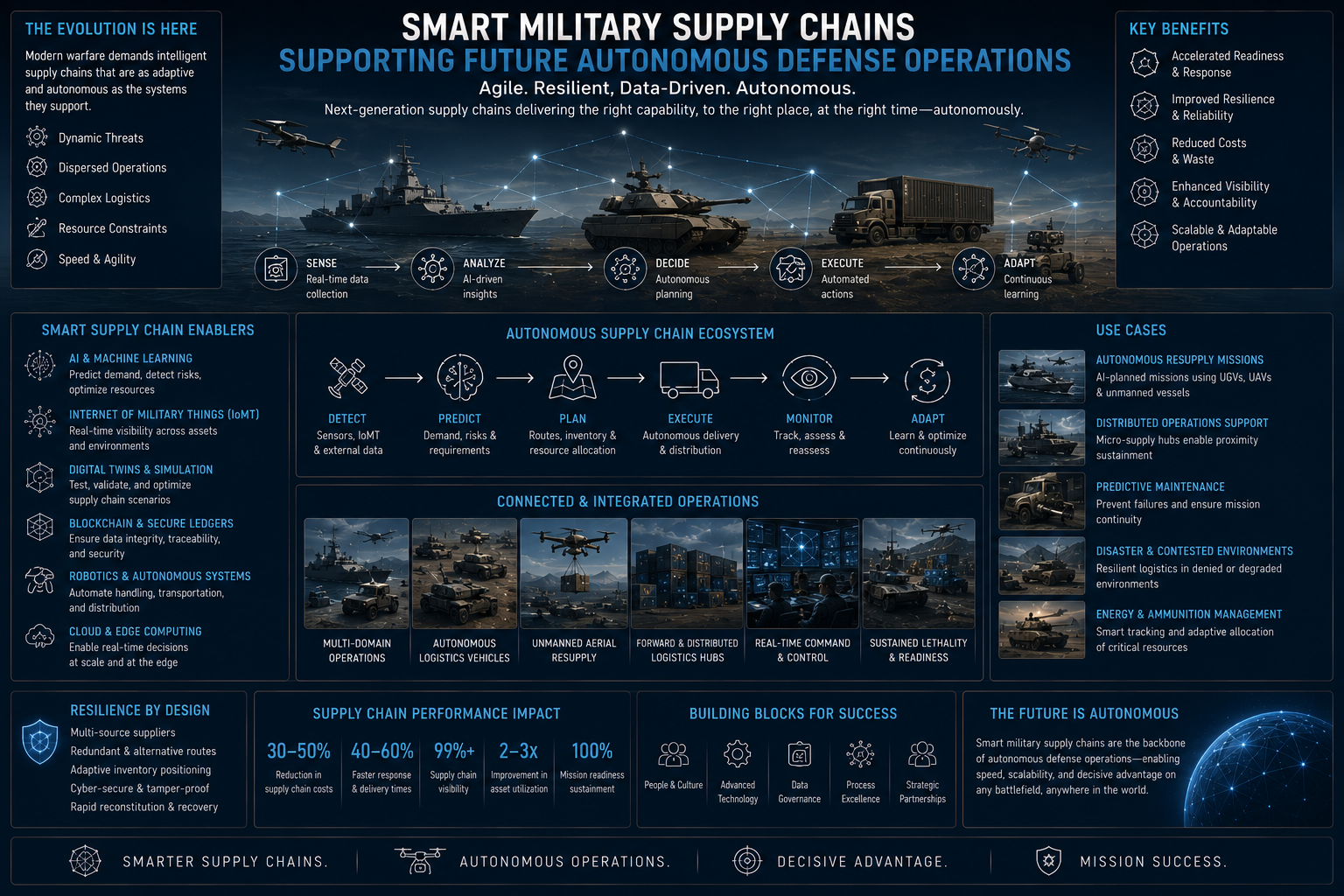
Evolving Threat Environments Driving Supply Chain Transformation
Modern military planners face unprecedented logistical challenges as operational environments become more contested and unpredictable.
Traditional supply chains designed for linear battlefield operations must now support:
- Distributed force structures
- Autonomous combat systems
- Multi-domain operations
- High-tempo deployment cycles
- Contested logistics corridors
- Cyber and electronic warfare threats
- Expeditionary operations in remote regions
These challenges are forcing defense organizations to modernize logistics networks and adopt intelligent supply chain architectures capable of supporting highly mobile and autonomous military forces.
The transition toward smart military supply chains reflects a broader shift from reactive logistics management to proactive and data-driven sustainment strategies.
Digitalization Reshaping Defense Logistics Networks
The emergence of digital technologies is fundamentally transforming military logistics operations.
Modern smart supply chains increasingly integrate:
- Artificial intelligence
- Internet of Military Things (IoMT)
- Cloud computing
- Digital twins
- Blockchain platforms
- Autonomous logistics systems
- Advanced data analytics
These technologies create highly connected logistics ecosystems capable of collecting, processing, and distributing operational information in real time.
By improving visibility across supply networks, military commanders gain a clearer understanding of inventory levels, transportation status, maintenance requirements, and mission-critical resource availability.
Autonomous Defense Operations Increasing Logistics Demands
Future military operations will rely heavily on autonomous systems operating across air, land, maritime, and cyber domains.
Examples include:
- Autonomous drones
- Unmanned ground vehicles
- Robotic combat systems
- Autonomous maritime vessels
- AI-enabled command platforms
Supporting these systems requires highly responsive logistics networks capable of delivering spare parts, fuel, software updates, batteries, and mission-specific equipment at unprecedented speed.
Smart military supply chains are designed to provide:
- Real-time logistics coordination
- Automated inventory management
- Predictive resource allocation
- Dynamic route optimization
- Autonomous resupply operations
As autonomous platforms become increasingly prevalent, intelligent logistics systems will play a central role in sustaining operational effectiveness.
decision-making assets.
Predictive Analytics Improving Mission Readiness
Predictive analytics is becoming a cornerstone of next-generation military supply chains.
Traditional logistics systems often rely on historical consumption patterns and manual forecasting methods. Smart supply chains use real-time operational data and advanced analytics to anticipate future requirements more accurately.
Applications include:
- Spare parts forecasting
- Fuel demand prediction
- Equipment failure analysis
- Maintenance scheduling
- Deployment planning
Predictive logistics helps military organizations maintain higher levels of readiness while minimizing excess inventory and reducing operational risk.
As defense forces increasingly prioritize readiness and rapid response capability, predictive sustainment technologies are becoming essential components of modern logistics strategies.
Autonomous Logistics Systems Expanding Operational Flexibility
One of the most transformative developments in military logistics is the growing adoption of autonomous resupply systems.
Emerging technologies include:
Autonomous Ground Vehicles
Unmanned vehicles capable of transporting supplies through contested environments.
Logistics Drones
Autonomous aerial platforms delivering critical resources directly to forward-deployed units.
Autonomous Maritime Resupply Systems
Uncrewed vessels supporting naval and expeditionary logistics missions.
Robotic Warehouse Automation
Automated systems managing inventory storage, sorting, and distribution.
These technologies improve supply chain responsiveness while reducing risks to logistics personnel operating in hostile environments.
Multi-Domain Operations Driving Supply Chain Integration
Modern military doctrine increasingly emphasizes Multi-Domain Operations (MDO), which require synchronized action across:
- Land
- Air
- Sea
- Space
- Cyber
- Electromagnetic spectrum
Supporting these operations demands highly integrated logistics architectures capable of coordinating resources across multiple operational domains simultaneously.
Smart supply chains facilitate:
- Cross-domain visibility
- Joint force sustainment
- Dynamic resource allocation
- Real-time operational support
- Distributed logistics management
This level of integration enables military organizations to sustain combat power even in highly complex operational environments.
Cybersecurity Becoming a Critical Logistics Requirement
As military supply chains become more digitalized and interconnected, cybersecurity has emerged as a major priority.
Modern logistics networks face threats such as:
- Cyber intrusions
- Data manipulation
- Supply chain attacks
- Electronic warfare disruption
- Communication network interference
To address these risks, defense organizations are investing in:
- Zero-trust architectures
- AI-driven threat detection
- Blockchain-enabled data integrity
- Secure cloud infrastructure
- Advanced encryption technologies
Protecting logistics networks is increasingly viewed as essential to maintaining operational continuity and battlefield effectiveness.
Supply Chain Resilience Supporting Future Force Readiness
Global disruptions and geopolitical instability have highlighted the importance of resilient defense supply chains.
Military organizations are prioritizing:
- Supplier diversification
- Strategic stockpiles
- Regional manufacturing capabilities
- Distributed logistics hubs
- Adaptive procurement strategies
Smart supply chains improve resilience by providing real-time visibility into vulnerabilities and enabling rapid adjustments to changing operational conditions.
Resilient logistics ecosystems are becoming a critical factor in maintaining military readiness during prolonged conflicts and crisis situations.
Expanding Defense Investments Accelerating Market Growth
Governments worldwide are increasing investments in defense logistics modernization as part of broader military transformation programs.
Key investment areas include:
- AI-powered logistics platforms
- Autonomous transportation systems
- Predictive maintenance solutions
- Digital sustainment networks
- Connected battlefield logistics
- Smart inventory management systems
These investments are creating significant growth opportunities across the military logistics and defense sustainment market.
As armed forces continue adopting autonomous technologies and network-centric operational concepts, demand for intelligent supply chain solutions is expected to increase substantially.
Challenges Facing Smart Military Supply Chains
Despite rapid technological advancement, several challenges remain.
Data Integration Complexity
Military organizations must connect diverse legacy and modern logistics systems.
Cybersecurity Risks
Digital supply chains create expanded attack surfaces for adversaries.
Interoperability Requirements
Coalition operations require seamless information sharing across allied forces.
Infrastructure Modernization Costs
Implementing advanced logistics technologies requires significant investment.
Workforce Development
Personnel must acquire new skills related to AI, data analytics, and autonomous systems.
Addressing these challenges will be essential to achieving fully integrated and resilient defense logistics ecosystems.
Discover Growth Opportunities & Trends @ https://www.marketsandmarkets.com/Market-Reports/military-vehicle-sustainment-market-155479010.html
Future Outlook
The emergence of smart military supply chains reflects a fundamental transformation in how defense organizations sustain combat operations and support future autonomous warfare capabilities. As artificial intelligence, automation, digital connectivity, and predictive analytics continue advancing, military logistics networks will become increasingly intelligent, adaptive, and autonomous.
Several trends are expected to define the next phase of market growth:
- AI-driven logistics command centers
- Fully autonomous resupply networks
- Predictive sustainment ecosystems
- Digital twin-enabled logistics planning
- Blockchain-secured defense supply chains
- Multi-domain logistics integration
- Autonomous battlefield distribution systems
Smart military supply chains are rapidly becoming the backbone of future autonomous defense operations. As nations continue investing in next-generation sustainment capabilities, intelligent logistics networks will play a decisive role in enhancing operational readiness, improving force survivability, and ensuring mission success across increasingly complex and contested battlefields.
