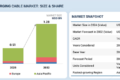
The Switzerland autoinjectors market is a highly sophisticated and globally influential landscape, serving as a primary hub for the development and manufacturing of advanced drug delivery systems. The sector is defined by the presence of major world-leading manufacturers such as SHL Medical and Ypsomed, which provide critical infrastructure for the self-administration of biologics and biosimilars. This market is undergoing a rapid transformation driven by the integration of digital connectivity and smart-sensor technology, exemplified by recent innovations like digital add-ons for real-time injection data capture. Strategic growth in the region is further propelled by a shift toward home-based care and the rising global demand for treatments targeting chronic conditions such as diabetes, multiple sclerosis, and rheumatoid arthritis. As healthcare systems prioritize patient independence and treatment adherence, Switzerland remains at the forefront of the industry through continuous investment in R&D, automated manufacturing, and high-precision engineering for both disposable and reusable device platforms.
Key Drivers, Restraints, Opportunities, and Challenges in the Switzerland Autoinjectors Market
The Switzerland autoinjectors market is primarily driven by the rising prevalence of chronic and autoimmune diseases such as diabetes, multiple sclerosis, and rheumatoid arthritis, alongside a growing patient preference for self-administered, home-based therapies that improve compliance. Technological advancements, including the integration of digital connectivity for dose tracking and ergonomic designs for ease of use, further propel market growth, while the increasing adoption of biologics and biosimilars necessitates these advanced delivery systems. However, the market faces significant restraints from high production costs leading to elevated prices and the persistence of needle phobia among patients, which drives interest in needle-free alternatives. Opportunities are emerging through the development of platform device technologies that lower costs and the launch of smart autoinjectors that leverage Switzerland’s robust technological infrastructure and innovation intensity. Despite these prospects, the market must navigate challenges such as stringent regulatory approval processes, potential product recalls due to manufacturing defects, and increasing political pressure on cost-efficiency that could delay timely patient access to new, innovative therapies.
Customer Segmentation, Needs, Preferences, and Buying Behavior in the Switzerland Autoinjectors Market
The target customers for the Switzerland autoinjectors market primarily include patients managing chronic conditions such as diabetes, rheumatoid arthritis, and multiple sclerosis, as well as those requiring emergency intervention for anaphylaxis. These customers, along with healthcare providers in home-care settings, hospitals, and clinics, prioritize device accuracy, ease of use, and features that enhance treatment adherence, such as ergonomic designs and audible or visual feedback. Patient preferences are increasingly shifting toward self-administration and home-based care to reduce hospital visits and increase independence, driving a strong demand for disposable, pre-filled devices. Purchasing behavior is largely influenced by healthcare professionals’ recommendations and the availability of insurance reimbursement from national health organizations, with a growing interest in sustainable, reusable platforms and smart autoinjectors that offer dose tracking and remote monitoring capabilities.
Regulatory, Technological, and Economic Factors Impacting the Switzerland Autoinjectors Market
The Switzerland autoinjectors market is significantly influenced by a complex interplay of regulatory, technological, and economic factors. Regulated by Swissmedic, the market is shaped by a stringent framework including the Therapeutic Products Act and alignment with EU-MDR and EU-IVDR, which ensures high safety standards but imposes substantial compliance costs for market entry. Technologically, the integration of smart features like dose tracking, connectivity, and ergonomic designs is driving expansion by improving patient adherence and outcomes, though these advancements necessitate significant R&D investment. Economically, while Switzerland’s position as a global life sciences hub and its high healthcare expenditure sustain robust demand for advanced delivery systems, profitability is challenged by the high capital investment required for specialized manufacturing and the complexities of navigating diverse reimbursement policies managed by the Federal Office of Public Health.
Current and Emerging Trends in the Switzerland Autoinjectors Market
The Switzerland autoinjectors market is undergoing a rapid transformation driven by the integration of digital connectivity and a significant shift toward home-based self-administration for chronic conditions like diabetes, obesity, and multiple sclerosis. These trends are evolving quickly, as evidenced by the Swiss-based Ypsomed’s FDA clearance for the SmartPilot, a Bluetooth-enabled add-on that captures injection data to improve patient adherence, and the launch of platforms like the YpsoMate 5.5 for larger-volume medications. The market is also accelerating through the adoption of biosimilars combined with user-friendly devices, such as the 2025 development of the SteQeyma autoinjector. These advancements, along with a focus on ergonomic, patient-centric designs such as hidden needles and audible feedback, are reshaping the industry to meet the needs of an aging population and the increasing demand for decentralized healthcare solutions.
Technological Innovations and Disruption Potential in the Switzerland Autoinjectors Market
The Switzerland autoinjectors market is being disrupted by the integration of digital health technologies, specifically smart, Bluetooth-enabled devices that facilitate real-time adherence monitoring, dose tracking, and patient engagement through mobile applications. Significant traction is also seen in the development of reusable and modular platform technologies, such as those from Ypsomed and SHL Medical, which enhance sustainability and cost-effectiveness while allowing for the delivery of high-volume and high-viscosity biologics. Furthermore, innovations in connectivity, such as SHL’s Molly Connected Cap and electronic syringes like Juvapen Expert, are streamlining data sharing with healthcare providers and improving precision in both therapeutic and aesthetic applications. These advancements, along with the emergence of needle-free delivery systems and AI-powered dose management, are transforming the industry into a more patient-centric and data-driven ecosystem.
Short-Term vs. Long-Term Trends in the Switzerland Autoinjectors Market
In the Switzerland autoinjectors market, short-term fluctuations such as temporary supply chain constraints for specific device components or the initial surge in demand following new product launches are viewed as transitory, whereas several other trends represent long-term structural shifts. The move toward home-based care and the decentralization of healthcare is a permanent transformation, driven by an aging population and a strong consumer preference for the convenience and cost-effectiveness of self-administration. Similarly, the integration of digital health technologies—such as Bluetooth-connected “smart” autoinjectors that track dose adherence—represents a fundamental shift aimed at improving patient outcomes and integrating drug delivery with telehealth platforms. Other enduring structural changes include the rapid expansion of the biologics and biosimilars segments and the ongoing collaboration between pharmaceutical and medical device companies to create platform-based technologies that enhance product differentiation and manage the rising prevalence of chronic conditions like diabetes and rheumatoid arthritis.