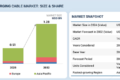
The Switzerland biosimilars market is a rapidly maturing sector of the Swiss life sciences industry, characterized by a significant shift toward cost-effective alternatives to high-priced reference biologics. Driven by a robust regulatory framework overseen by Swissmedic and the recent expiration of several major biologic patents, the market saw a substantial 25.8% sales increase in 2023, reaching approximately 174 million Swiss francs. A major transformation occurred in early 2024 with legislative revisions allowing pharmacists to substitute biologics with biosimilars under specific conditions, a move supported by new distribution margin models and differentiated deductibles designed to incentivize uptake. While Switzerland has historically favored innovative brand-name products, mounting economic pressure on the healthcare system and the presence of global leaders like Sandoz have accelerated the transition, particularly in the hospital and oncology sectors. Despite these advancements, the market remains competitive and complex, with authorities continuing to address pricing disparities compared to other European nations and the ongoing preference for original biologics in certain chronic therapy areas.
Key Drivers, Restraints, Opportunities, and Challenges in the Switzerland Biosimilars Market
The Switzerland biosimilars market is primarily driven by the patent expiration of blockbuster biologics and a significant political shift toward cost-efficiency to manage rising healthcare expenditures. Significant growth opportunities exist in the increasing acceptance of biosimilars for oncology and immunology, alongside the potential for improved market access as the government prioritizes cheaper alternatives to innovative medicines. However, the market faces restraints such as high manufacturing complexities, the substantial capital required for development, and a “negative trend” in timely access to new therapies compared to other high-performance markets. Challenges remain, including the complexity of the Swiss-EU bilateral relationship, physician and patient reluctance to switch from trusted reference products, and the need to navigate a regulatory environment where automatic substitution policies vary, potentially slowing the erosion of original brand market shares.
Customer Segmentation, Needs, Preferences, and Buying Behavior in the Switzerland Biosimilars Market
The target customers for the Switzerland biosimilars market primarily consist of physicians, hospitals, and specialty pharmacies, alongside healthcare payers and the Swiss government, which is increasingly intervening to manage high drug costs. These customers prioritize therapeutic equivalence, safety, and significant cost savings, with physicians showing a growing commitment to prescribing biosimilars as a matter of social responsibility and public interest. Purchasing behavior is influenced by a high-performance healthcare system that values early access to innovative treatments and efficient regulatory pathways, though it is currently challenged by high price levels compared to other European countries. Consequently, stakeholders are increasingly favoring strategic shifts toward more affordable alternatives to expensive reference biologics, supported by updated Swissmedic guidelines that facilitate faster market entry by accepting non-local comparator data in clinical trials.
Regulatory, Technological, and Economic Factors Impacting the Switzerland Biosimilars Market
The Switzerland biosimilars market is significantly influenced by a complex interplay of regulatory, technological, and economic factors. Regulated by Swissmedic under the Therapeutic Products Act, the market is shaped by a rigorous approval process that has recently aligned with EU-MDR and EU-IVDR standards, ensuring high safety levels while increasing compliance costs for new entrants. Technologically, advancements in biomanufacturing, DNA recombinant technology, and high-resolution analytical methods are driving market expansion by improving production efficiency and enabling the demonstration of biosimilarity with greater precision. Economically, the market is propelled by the potential for substantial healthcare savings as blockbuster biologics lose patent protection, though profitability can be restrained by high development costs—often exceeding CHF 100 million—and a domestic pricing environment where biosimilars are typically priced 10% to 30% below originators. Furthermore, while the rising prevalence of chronic diseases sustains demand, the Swiss market faces challenges such as a historical preference for originator brands and evolving reference pricing models that can impact long-term commercial viability.
Current and Emerging Trends in the Switzerland Biosimilars Market
The Switzerland biosimilars market is undergoing a rapid evolution driven by legislative reforms and a strategic push to curb rising healthcare costs, which reached a record 679 million CHF in savings in 2023. A pivotal trend is the 2024 revision of the Health Insurance Act, which now empowers pharmacists to substitute original biologics with biosimilars and introduces differentiated deductibles to incentivize patient uptake. These shifts are accelerating quickly, as evidenced by Swissmedic’s alignment with EU-IVDR standards and the 2023 amendment to the Biosimilar Guidance supporting interchangeability. While the market share for biosimilars reached approximately 56% by volume in 2023, authorities are intensifying efforts to address a 90 million CHF missed savings opportunity by streamlining approval processes and revising distribution margins. This transformation is further supported by the emergence of biobetters and advanced technology platforms like xRNA and radioligand therapy, signaling a long-term structural shift toward a more sustainable, biosimilar-heavy healthcare landscape.
Technological Innovations and Disruption Potential in the Switzerland Biosimilars Market
Technological innovations in biomanufacturing and analytical characterization are significantly disrupting the Switzerland biosimilars market by reducing production costs and accelerating development timelines. The adoption of advanced analytical tools, such as mass spectroscopy and high-performance chromatography, allows for precise molecular mapping, which is driving a regulatory shift toward reducing the need for expensive Phase III clinical trials. Furthermore, digital innovations including Quality-by-Design, Process-Analytical-Technology, and AI-based in silico simulations are transforming formulation design and bioprocess optimization to enhance bioequivalence. The industry is also seeing a growing trend toward innovative formulation strategies, such as buffer-free, high-concentration systems that leverage protein self-buffering to improve patient comfort and product stability. These advancements, combined with the integration of automated laboratory workflows and more efficient manufacturing processes, are enabling developers to overcome traditional bottlenecks and more effectively challenge the market dominance of original biologics.
Short-Term vs. Long-Term Trends in the Switzerland Biosimilars Market
In the Switzerland biosimilars market, the initial slow adoption and physician-only substitution model are viewed as short-term hurdles that are giving way to long-term structural shifts driven by legislative and regulatory reform. A fundamental transformation is occurring through the 2024 revision of the Health Insurance Act, which empowers pharmacists to substitute biologics with biosimilars and implements differentiated deductibles to financially incentivize patient choice. Similarly, the movement toward aligning Swiss regulations with EU standards and Swissmedic’s formal support of interchangeability represents an enduring shift that enhances market penetration and competitive pricing. Other permanent structural changes include the expansion of biosimilars into diverse therapeutic areas such as ophthalmology, gastroenterology, and oncology, alongside the integration of digital monitoring tools to track the substantial cost savings essential for the long-term sustainability of the Swiss healthcare system.