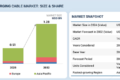
The Switzerland home healthcare market is a highly developed and decentralized sector characterized by a robust universal coverage model that blends private competition with stringent government regulation. Driven by a rapidly aging population and a high prevalence of chronic conditions, the market is shifting toward a “hospital-at-home” approach to improve quality of life and manage the rising costs of long-term care. While the landscape is dominated by established professional organizations like Spitex, it is also being transformed by the integration of digital health tools, including telehealth and AI-powered remote monitoring, which enhance operational efficiency and predictive risk assessment. Despite challenges such as chronic nursing shortages and high out-of-pocket costs for residents, the market is poised for significant growth as healthcare providers and policymakers prioritize decentralized, patient-centered care models to ensure long-term system sustainability.
Key Drivers, Restraints, Opportunities, and Challenges in the Switzerland Home Healthcare Market
The Switzerland home healthcare market is primarily driven by a rapidly aging demographic and a strong public preference for personalized, non-institutionalized care, alongside an increasing prevalence of chronic conditions that necessitate long-term monitoring. However, growth is restrained by high operational costs resulting from stringent labor laws and a critical shortage of specialized nursing staff and qualified home care workers. Significant opportunities exist in the integration of advanced digital health solutions, such as telehealth and remote patient monitoring, which can enhance service efficiency and improve patient outcomes. Despite these prospects, the market faces challenges including operational complexities, the need for robust digital infrastructure, and the ongoing struggle to attract and retain healthcare professionals due to low compensation and high turnover rates.
Customer Segmentation, Needs, Preferences, and Buying Behavior in the Switzerland Home Healthcare Market
The target customers for the Switzerland home healthcare market primarily include an expanding elderly population, particularly those over 65 and 80, and individuals suffering from chronic conditions such as cancer, diabetes, and cardiovascular diseases. These customers prioritize high-quality, accessible, and comprehensive long-term care that allows them to remain in their home environment while managing disabilities or complex health needs. Their preferences are increasingly leaning toward decentralized “Hospital at Home” models and professional home care services like Spitex, as well as digital solutions like telemedicine and remote monitoring. Purchasing behavior in Switzerland is heavily influenced by a mandatory health insurance system (OKP) where individuals select plans based on cost-sharing levels and provider choice, complemented by a significant segment of the population that purchases supplementary private insurance to cover non-essential services. Despite having high disposable income, Swiss consumers exhibit cautious purchasing behavior and face the highest out-of-pocket healthcare expenditures in Europe, which drives a demand for cost-effective, value-based care solutions that reduce expensive hospital stays.
Regulatory, Technological, and Economic Factors Impacting the Switzerland Home Healthcare Market
The Switzerland home healthcare market is significantly influenced by a complex interplay of regulatory, technological, and economic factors. Regulated at both federal and cantonal levels, the market faces evolving compliance standards and a fragmented reimbursement system where changes in Health Technology Assessment (HTA) processes and mandatory health insurance (SHI) rules can create hurdles for new entrants and influence the adoption of services. Technologically, the integration of digital health solutions, such as artificial intelligence, remote monitoring, and electronic health records, is driving operational efficiency and expanding reach, yet Switzerland currently lags behind other high-income nations in digital transformation, necessitating substantial investment in interoperable infrastructure and cybersecurity. Economically, while an aging population and high healthcare spending—reaching nearly 12% of GDP—sustain robust demand, profitability is often restrained by escalating treatment costs, a severe shortage of skilled caregivers, and the high capital investment required for specialized medical technologies. These pressures, combined with the small size of the Swiss market and the shift toward value-based, “hospital-at-home” models, dictate the strategic positioning and long-term viability of providers in the sector.
Current and Emerging Trends in the Switzerland Home Healthcare Market
The Switzerland home healthcare market is undergoing a rapid evolution driven by the integration of artificial intelligence for predictive risk assessment and the widespread adoption of telehealth solutions, which are enhancing accessibility and streamlining nurse scheduling. These trends are accelerating quickly, with the market projected to grow at a compound annual growth rate of 10.6% through 2030, supported by the emergence of “Hospital at Home” models that shift acute care into the domestic setting. Furthermore, a significant structural shift toward personalized, technology-driven care is being fueled by an aging population and the rising prevalence of chronic diseases, necessitating continuous remote monitoring and real-time data analysis. While traditional home care services provided by organizations like Spitex remain foundational, the industry is transitioning toward high-tech, decentralized solutions to improve patient outcomes and address chronic labor shortages in the nursing workforce.
Technological Innovations and Disruption Potential in the Switzerland Home Healthcare Market
Technological innovations such as the medical Internet of Things (IoT), remote patient monitoring, and artificial intelligence are gaining significant traction and are poised to disrupt the Switzerland home healthcare market by shifting care from hospitals to the home. The emergence of portable diagnostic technologies, including mobile radiology, ultrasound, and biological analysis tools, is enabling immediate, hospital-level testing in a home setting, often providing results in less than an hour. Digital platforms and communication apps like those developed by Swiss start-ups Domo.health and Clever.care are streamlining care coordination and real-time monitoring, while smart sensors and wearable emergency response systems enhance patient safety. Furthermore, the integration of teleconsultation and digital therapeutics is expected to modernize chronic disease management, potentially saving the Swiss healthcare system billions of francs by improving efficiency and reducing hospital readmissions.
Short-Term vs. Long-Term Trends in the Switzerland Home Healthcare Market
In the Switzerland home healthcare market, the temporary stagnation in retail sales observed in 2025 is increasingly viewed as a short-term phenomenon resulting from post-pandemic market maturity and cautious consumer sentiment, whereas the shift toward decentralized care represents a permanent structural transformation. The integration of artificial intelligence for predictive risk assessment and the optimization of nurse scheduling is a fundamental shift aimed at addressing chronic staffing shortages and improving clinical outcomes. Similarly, the movement toward Hospital at Home models and the expansion of professional Spitex services are enduring transformations driven by the long-term demographic reality of an aging population and the rising prevalence of chronic diseases. Other permanent structural changes include the adoption of telehealth and remote monitoring technologies, which are fueled by supportive national health strategies like Health2030 and a growing consumer preference for cost-effective, home-based treatments.