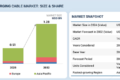
The Switzerland lateral flow assays market is a sophisticated and highly competitive sector, characterized by a strong emphasis on high-quality standards and precision diagnostics. As a key part of the broader European market, which is expected to reach a value of USD 4.6 billion by 2032, Switzerland benefits from a robust healthcare infrastructure where over 25% of laboratory tests are already performed in point-of-care settings. The landscape is increasingly defined by the transition toward decentralized testing and the adoption of digital technologies, including smartphone-based analysis and AI-integrated readers that enhance accuracy. Swiss manufacturers and service providers leverage the region’s excellent reputation for quality to position their products in higher price segments, focusing on critical areas such as infectious disease testing, cardiac markers, and home-based monitoring. Despite facing rising compliance costs due to the implementation of the EU In Vitro Diagnostic Regulation, the market remains a hub for innovation, driven by a growing geriatric population and a strategic shift toward personalized, rapid diagnostic solutions.
Key Drivers, Restraints, Opportunities, and Challenges in the Switzerland Lateral Flow Assays Market
The Switzerland lateral flow assays market is primarily driven by an aging population and the increasing prevalence of chronic and infectious diseases, which necessitate rapid, cost-effective, and frequent diagnostic screening. Growth is further propelled by technological advancements such as the integration of artificial intelligence and smartphone-connected readers that improve assay sensitivity and data management. However, the market faces significant restraints from stringent regulatory requirements, specifically the transition to the EU’s In Vitro Diagnostic Regulation (IVDR), which imposes high compliance costs and legal uncertainties that challenge smaller firms. Opportunities abound in the expansion of home-based self-testing kits and the development of multiplex assays capable of detecting multiple biomarkers simultaneously. Despite these prospects, the industry must navigate challenges including the lower analytical sensitivity of lateral flow tests compared to molecular methods like PCR, as well as operational hurdles related to specialized storage and the shortage of notified bodies for product certification.
Customer Segmentation, Needs, Preferences, and Buying Behavior in the Switzerland Lateral Flow Assays Market
The target customers for the Switzerland lateral flow assays market primarily include hospitals, clinics, diagnostic laboratories, and an increasing number of home-care users. These customers prioritize rapid, accurate, and easy-to-use diagnostic solutions that enable timely decision-making, especially for infectious diseases, cardiac markers, and pregnancy testing. There is a strong preference for point-of-care (POC) testing and self-monitoring tools that offer convenience and reduce the burden on centralized laboratory infrastructure. Purchasing behavior is characterized by a shift toward decentralized testing, with institutional buyers seeking cost-effective, high-quality kits that comply with stringent European regulatory standards, while home users are driven by the rising trend of consumer activism and the need for private, accessible health screening.
Regulatory, Technological, and Economic Factors Impacting the Switzerland Lateral Flow Assays Market
The Switzerland lateral flow assays market is significantly influenced by a complex interplay of regulatory, technological, and economic factors. Regulatory entry is governed by stringent standards, such as the transition to the In Vitro Diagnostic Regulation (IVDR) in Europe, which imposes rigorous clinical evidence requirements and pre-market notifications that can increase compliance costs for new entrants. Technologically, the integration of artificial intelligence for automated result interpretation, smartphone-based digital analysis platforms, and the development of multiplex detection assays are driving market expansion by enhancing diagnostic accuracy and decentralizing testing to home-care settings. Economically, while the high prevalence of chronic and infectious diseases among an aging population sustains robust demand, profitability can be challenged by the high capital investment required for advanced reader technologies and inconsistent reimbursement policies that may limit the adoption of newer diagnostic tests.
Current and Emerging Trends in the Switzerland Lateral Flow Assays Market
The Switzerland lateral flow assays market is undergoing a rapid transformation driven by the integration of digital technology and the expansion of multiplex detection capabilities, which allow for the simultaneous identification of multiple biomarkers within a single test. These trends are evolving quickly as the industry shifts toward decentralized, smartphone-based analysis platforms that enhance result accuracy and streamline data management for both clinical and home-care settings. Furthermore, the market is seeing an accelerated move beyond infectious disease testing into chronic condition monitoring, such as cardiac markers and nutritional deficiencies, to meet the needs of an aging population. This evolution is supported by a steady growth trajectory, with the broader European market projected to reach over USD 4.8 billion by 2030 at a CAGR of 8.2%, reflecting a long-term structural shift toward accessible, technology-driven diagnostic solutions.
Technological Innovations and Disruption Potential in the Switzerland Lateral Flow Assays Market
Technological innovations such as nanotechnology, artificial intelligence, and digital integration are gaining significant traction and are poised to disrupt the Switzerland lateral flow assays market by enhancing diagnostic precision and accessibility. The integration of AI and machine learning algorithms is transforming the industry by reducing interpretation errors and streamlining laboratory workflows, while the use of gold nanoshells and other advanced nanoparticles is drastically improving sensitivity, achieving limits of detection up to 100-fold lower than conventional methods. Furthermore, the development of connected diagnostic platforms, such as smartphone-based readers and Bluetooth-enabled devices, is decentralizing healthcare by providing real-time, quantitative results in point-of-care and home-based settings. Swiss-led advancements, including evanescence biosensor technology, are further accelerating this shift by combining the reliability of traditional lab-based ELISA tests with the speed and simplicity of rapid assays.
Short-Term vs. Long-Term Trends in the Switzerland Lateral Flow Assays Market
In the Switzerland lateral flow assays market, the massive surge in COVID-19 testing volumes is increasingly viewed as a short-term phenomenon that has stabilized, whereas several other trends represent long-term structural shifts. The move toward decentralization, characterized by the rising adoption of point-of-care and home-based testing, is a permanent transformation driven by consumer demand for convenience and the need for rapid diagnostic results. Similarly, the integration of digital workflows and smartphone-based analysis platforms is a fundamental shift aimed at reducing human error and improving data management. Other enduring structural changes include the growth of multiplex detection assays and the expansion of applications into chronic disease monitoring, which are fueled by the long-term demographic realities of an aging population and the increasing prevalence of infectious and lifestyle-related conditions.