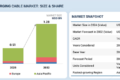
The Switzerland medical aesthetics market is a high-growth sector characterized by a strong preference for non-invasive and minimally invasive procedures, such as aesthetic laser devices, injectables, and biostimulators. Driven by an aging population, increasing cultural acceptance, and a focus on natural-looking results, the market is projected to grow significantly, with its value estimated to reach over USD 1 billion by 2032. The landscape is defined by a commitment to high-quality medical oversight, with a shift toward evidence-based practices and the integration of advanced technologies like 3D skin analysis and ultrasound-guided injections to enhance patient safety. While the market is competitive and features major global players like Galderma, Allergan, and Merz, it is also shaped by Switzerland’s reputation as a premium medical tourism destination, attracting international patients seeking specialized aesthetic treatments in luxury clinical settings. Despite challenges such as high equipment costs and stringent quality standards, the industry continues to evolve through technological innovations in regenerative aesthetics and a growing demand for body contouring and anti-aging solutions.
Key Drivers, Restraints, Opportunities, and Challenges in the Switzerland Medical Aesthetics Market
The Switzerland medical aesthetics market is primarily driven by an aging population seeking anti-aging solutions, a strong consumer shift toward non-invasive and minimally invasive procedures like Botox and dermal fillers, and the country’s reputation for high-quality healthcare and patient safety. Technological advancements, including the integration of AI-powered diagnostics and ultrasound-guided procedures, further propel growth by improving treatment precision and reducing complications. However, the market faces significant restraints such as the high costs of medical care and advanced equipment, along with a lack of favorable reimbursement scenarios. Growth opportunities abound in the expansion of personalized and combination treatments, the rise of regenerative aesthetics using biostimulators and exosomes, and the increasing demand from male and younger “pre-juvenation” demographic segments. Challenges remain, including the risk of complications from procedures performed abroad through medical tourism, potential supply chain disruptions, and the constant need to maintain stringent medical oversight in a competitive landscape.
Customer Segmentation, Needs, Preferences, and Buying Behavior in the Switzerland Medical Aesthetics Market
The target customers for the Switzerland medical aesthetics market include a high-income domestic population and a significant influx of approximately 70,000 annual medical tourists from Europe, the Middle East, Russia, and Asia. These consumers primarily seek anti-aging and rejuvenation treatments, such as Botox, dermal fillers, and laser procedures, to address skin conditions, obesity, and age-related appearance changes. Customers prioritize high-quality healthcare services, patient safety, and advanced medical technology, often preferring non-invasive or minimally invasive procedures due to shorter recovery times and fewer side effects. Their purchasing behavior is characterized by a strong preference for specialized private clinics and world-class public hospitals in major cities like Zurich and Geneva, where they value personalized care, privacy, and shorter waiting times. Additionally, there is a growing trend toward preventative care among younger demographics and an increasing acceptance of aesthetic treatments among male consumers, further diversifying the market’s customer base.
Regulatory, Technological, and Economic Factors Impacting the Switzerland Medical Aesthetics Market
The Switzerland medical aesthetics market is shaped by a complex interplay of regulatory, technological, and economic factors that influence entry and profitability. Regulatory oversight is a primary hurdle, as compliance with the EU Medical Device Regulation (MDR) and Swiss-specific licensing requirements necessitates substantial time and financial investment, potentially delaying product launches. Technologically, the market is being revolutionized by the integration of artificial intelligence for personalized treatment planning, 3D skin analysis, and real-time ultrasound guidance, which enhance diagnostic accuracy and safety but require significant capital for specialized infrastructure. Economically, while high disposable income and a robust medical tourism sector sustain strong demand for premium services, profitability can be challenged by high operational costs, a lack of favorable reimbursement scenarios, and supply chain vulnerabilities for specialized electronic and optical components. Additionally, favorable corporate tax rates and government-funded innovation programs provide a supportive environment for established firms and new entrants focused on high-margin, technology-driven aesthetic solutions.
Current and Emerging Trends in the Switzerland Medical Aesthetics Market
The Switzerland medical aesthetics market is undergoing a rapid evolution characterized by a strong shift toward minimally invasive and non-invasive procedures, such as botulinum toxin and hyaluronic acid fillers, which are growing at approximately 12% annually. These trends are accelerating quickly as the patient base diversifies to include a surge in younger “pre-juvenation” seekers and a 116% increase in male consumers. The market is also being disrupted by the integration of advanced technologies, including AI-driven 3D skin analysis and real-time ultrasound-guided injections to enhance safety and precision. Furthermore, the rise of regenerative aesthetics—utilizing exosomes and biostimulators like Profhilo to trigger natural collagen production—and the emergence of the “GLP-1 effect” are creating new, high-growth patient segments that prioritize holistic wellness and natural-looking results.
Technological Innovations and Disruption Potential in the Switzerland Medical Aesthetics Market
The Switzerland medical aesthetics market is being significantly disrupted by the integration of advanced imaging and diagnostic technologies, such as 3D skin analysis systems and real-time ultrasound guidance, which enhance patient safety by allowing practitioners to visualize vascular structures during injectable treatments. Technological innovations like high-intensity focused ultrasound (HIFU), radiofrequency devices, and advanced medical lasers are gaining substantial traction, offering more precise and less invasive alternatives to traditional surgery. Furthermore, the development of biostimulators that trigger natural collagen production and the emergence of exosome therapy represent a shift toward regenerative aesthetics. Digital transformation, including AI-guided treatment planning, telemedicine for virtual consultations, and digital mapping of facial anatomy, is also streamlining patient-practitioner interactions and setting new standards for evidence-based care and hyper-personalized outcomes.
Short-Term vs. Long-Term Trends in the Switzerland Medical Aesthetics Market
In the Switzerland medical aesthetics market, the temporary surge in procedures following the lifting of pandemic lockdowns is viewed as a short-term phenomenon, whereas several other trends represent long-term structural shifts. The move toward minimally invasive and non-invasive treatments, such as botulinum toxin and dermal fillers, is a permanent transformation driven by consumer demand for reduced downtime, lower risks, and natural-looking results. Similarly, the integration of advanced technologies like 3D skin analysis, ultrasound-guided injections, and AI-driven personalization represents a fundamental shift toward enhancing patient safety and treatment precision. Other enduring structural changes include the rise of “pre-juvenation” among younger demographics, the expansion of the male aesthetics segment, and the growing preference for regenerative therapies like biostimulators and exosomes that focus on long-term skin health.