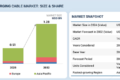
The Switzerland medical robots market is a highly innovative and specialized sector that leverages the country’s deep-rooted expertise in precision engineering, microelectronics, and world-class academic research. While the domestic market is smaller in volume compared to major industrial powers, Switzerland serves as a global hub for pioneering medical robotics companies like Distalmotion, which developed the Dexter hybrid surgical system, and Advanced Osteotomy Tools, known for its laser bone-cutting technology. The landscape is characterized by a strong focus on niche excellence in surgical robotics for spine, neurosurgery, and visceral procedures, as well as assistive and rehabilitation robots for elderly care and physical therapy. This ecosystem is supported by a robust regulatory environment governed by Swissmedic and a steady flow of spin-offs from institutions like ETH Zurich and EPFL, making it an attractive center for high-tech medical device investment and collaborative innovation.
Key Drivers, Restraints, Opportunities, and Challenges in the Switzerland Medical Robots Market
The Switzerland medical robots market is primarily driven by a robust innovation ecosystem fueled by world-leading research institutions like ETH Zurich and EPFL, a high prevalence of chronic diseases among an aging population, and a strong shift toward minimally invasive surgeries that offer greater precision and faster recovery. Significant growth opportunities exist in the integration of artificial intelligence for surgical planning, the expansion of telerehabilitation, and the development of niche specialized platforms such as robotic laser osteotomes and hybrid surgical systems. However, the market faces restraints including the substantial capital investment and high annual maintenance costs required for advanced robotic platforms, which can limit adoption in smaller facilities. Key challenges remain, such as the acute shortage of specialized professionals trained to operate complex systems, stringent regulatory requirements overseen by Swissmedic, and the need to overcome patient and provider hesitancy regarding the safety and efficacy of autonomous medical technologies.
Customer Segmentation, Needs, Preferences, and Buying Behavior in the Switzerland Medical Robots Market
The target customers for the Switzerland medical robots market primarily include public and private hospitals, such as those within the Swiss Medical Network (e.g., Clinique de Genolier, Privatklinik Bethanien), as well as specialty clinics, rehabilitation centers, and research institutes. These customers prioritize high precision, patient safety, and improved clinical outcomes, specifically seeking innovative robotic systems for surgical assistance (e.g., ROSA, Mako, Dexter), elder care (e.g., P-Care), and healthcare logistics to address labor shortages and enhance efficiency. Their preferences are shifting toward collaborative robots (cobots) that are easy to use without extensive programming knowledge, alongside digitalized solutions that support remote monitoring and predictive maintenance. Purchasing behavior is characterized by a demand for cutting-edge, high-quality infrastructure that complies with stringent standards, with an increasing interest in more flexible and affordable hybrid systems that challenge traditional, high-cost surgical platforms.
Regulatory, Technological, and Economic Factors Impacting the Switzerland Medical Robots Market
The Switzerland medical robots market is shaped by a complex interplay of regulatory, technological, and economic factors that influence entry and profitability. Regulatory compliance is a primary hurdle, as manufacturers must navigate stringent European and Swiss standards to ensure patient safety and data security, with approvals such as those from the FDA or EMA strengthening clinical confidence. Technologically, the integration of artificial intelligence, machine learning, and advanced navigation systems is driving market expansion by enhancing surgical precision and enabling autonomous mobile robots to operate in complex hospital environments, though these innovations necessitate significant R&D investment and high-tech infrastructure. Economically, while the rising geriatric population and a strong focus on high-quality healthcare sustain demand for innovative solutions, the substantial capital investment required for robotic systems and the high costs of maintenance and specialized training can restrain profitability and limit adoption to larger, well-funded medical networks and research institutes.
Current and Emerging Trends in the Switzerland Medical Robots Market
The Switzerland medical robots market is undergoing a rapid evolution driven by the integration of artificial intelligence and a significant shift toward hybrid and niche robotic solutions. Emerging trends are moving quickly, as evidenced by the development of systems like Distalmotion’s Dexter, which offers a hybrid approach to minimally invasive surgery by allowing surgeons to switch between robotic and manual tools. The industry is also seeing a surge in specialized applications, including robotic navigation for liver and neurosurgery, and the expansion of assistive robotics like F&P Robotics’ P-Care for elderly care. These advancements are accelerating to meet the demands of an aging population and the increasing need for high-precision, cost-effective healthcare automation, positioning Switzerland as a global hub for innovation in surgical and rehabilitation robotics.
Technological Innovations and Disruption Potential in the Switzerland Medical Robots Market
Technological innovations such as artificial intelligence, machine learning, and soft robotics are gaining significant traction and are poised to disrupt the Switzerland medical robots market by enhancing diagnostic accuracy and enabling more personalized, minimally invasive treatments. The integration of AI into robotic systems, such as aiEndoscopic’s emergency airway management tool and b rayZ’s mammography platform, is streamlining clinical workflows and providing real-time guidance during critical procedures. Furthermore, advancements in specialized surgical robotics, including AOT’s laser osteotomy for bone surgery and hybrid systems like Distalmotion’s Dexter, are decentralizing complex care and making robotic-assisted surgery more accessible and precise. The emergence of collaborative and assistive robots, such as F&P Robotics’ P-Care for elderly support, and the development of soft, bio-inspired machines are also redefining patient-provider interactions and expanding the role of robotics from industrial automation to human-centric healthcare applications.
Short-Term vs. Long-Term Trends in the Switzerland Medical Robots Market
In the Switzerland medical robots market, the temporary volatility in supply chains and the immediate post-pandemic surge in elective procedure volumes are increasingly viewed as short-term phenomena, whereas several other trends represent long-term structural shifts. The move toward minimally invasive surgery, supported by Switzerland’s high rates of robotic-assisted hip and knee replacements and the development of hybrid systems like Distalmotion’s Dexter, is a permanent transformation driven by the clinical need for faster recovery and better patient outcomes. Similarly, the integration of artificial intelligence and machine learning into surgical navigation and autonomous tasks is a fundamental shift aimed at enhancing precision and reducing human error. Other enduring structural changes include the expansion of assistive robotics for elderly care and the decentralization of healthcare through drone delivery systems, which are fueled by the long-term demographic realities of an aging population and Switzerland’s robust innovation ecosystem in precision engineering and high-tech niche markets.