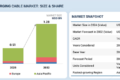
The Switzerland nuclear medicine market is a highly advanced sector characterized by a strong emphasis on innovation and the integration of radioligand therapy into oncology. As a leader in the European landscape, the market is driven by a robust healthcare infrastructure and a high incidence of cancer cases, with approximately 48,000 new diagnoses annually. The strategic focus is currently shifting toward recognizing nuclear medicine as a vital sector, with a recent white paper advocating for strengthened supply chains and modernized funding mechanisms to move beyond flat-rate systems. Despite its advanced status, the market faces challenges related to planning security and the need for updated guidelines that better reflect the specific characteristics of radiopharmaceuticals. Future growth is poised to rely on increased investment in isotope production technologies, specialized training, and the consolidation of industry stakeholders through initiatives like the Swiss Nuclear Forum to ensure long-term market leadership and patient care.
Key Drivers, Restraints, Opportunities, and Challenges in the Switzerland Nuclear Medicine Market
The Switzerland nuclear medicine market is primarily driven by the increasing prevalence of cancer and cardiovascular diseases, the country’s leadership in nuclear innovation, and the rising adoption of theranostics. Growth is further supported by a well-established healthcare infrastructure and a strong emphasis on personalized medicine. However, the market is restrained by the high production and handling costs of radiopharmaceuticals, the short half-life of medical isotopes which complicates logistics, and a flat-rate funding mechanism that may not fully cover the rapid use of innovative agents. Significant opportunities lie in the potential recognition of nuclear medicine as a strategic sector, the modernization of reimbursement models to ensure planning security, and the integration of artificial intelligence to streamline drug discovery and clinical delivery. Challenges include an acute shortage of specialized nuclear medicine professionals, an aging workforce, and the need to strengthen supply chains to reduce dependencies on foreign isotope production and ensure long-term resiliency.
Customer Segmentation, Needs, Preferences, and Buying Behavior in the Switzerland Nuclear Medicine Market
The target customers for the Switzerland nuclear medicine market primarily include hospitals, specialized clinics, and diagnostic imaging centers, as well as academic and research institutes. These institutional customers prioritize diagnostic accuracy, early disease detection, and the integration of advanced PET and SPECT imaging to manage high patient volumes in oncology, cardiology, and neurology. Their preferences are increasingly leaning toward theranostics—the combination of diagnostic and therapeutic radiopharmaceuticals—and the adoption of AI-integrated systems to improve clinical workflows. Purchasing behavior is characterized by significant capital investment in sophisticated imaging infrastructure followed by a recurring demand for high-quality radioisotopes and radiopharmaceuticals. Customers in this market value reliable supply chains, stable isotope availability, and strategic partnerships with manufacturers like Novartis that can support Switzerland’s position as a hub for nuclear medicine innovation.
Regulatory, Technological, and Economic Factors Impacting the Switzerland Nuclear Medicine Market
The Switzerland nuclear medicine market is significantly influenced by a complex interplay of regulatory, technological, and economic factors that shape its entry and profitability landscape. Regulatory compliance is a primary hurdle, as Switzerland’s alignment with EU-MDR and EU-IVDR, alongside oversight from Swissmedic and the Federal Office of Public Health, mandates rigorous standards for the authorization of radiopharmaceuticals and medical devices. Technologically, the integration of artificial intelligence for image analysis, the adoption of advanced hybrid systems like PET/MRI, and the rise of theranostics are driving market expansion by improving diagnostic precision and treatment outcomes. Economically, while high per capita healthcare spending and a growing geriatric population sustain demand, profitability is often challenged by the substantial capital investment required for dedicated infrastructure and the high costs of radiopharmaceutical production. Furthermore, current flat-rate reimbursement systems often fail to reflect the actual costs of advanced tracers, potentially restraining wider clinical adoption and limiting market penetration for new entrants.
Current and Emerging Trends in the Switzerland Nuclear Medicine Market
The Switzerland nuclear medicine market is undergoing a rapid evolution driven by the adoption of theranostics, which integrates diagnostic imaging with targeted radioligand therapy to provide personalized care for oncology patients. This trend is accelerating as the country seeks to recognize nuclear medicine as a strategic sector, with the Swiss Alliance for Innovation in Nuclear Medicine calling for strengthened supply chains and modernized funding mechanisms to maintain its European leadership. Emerging trends include the integration of artificial intelligence to streamline radiopharmaceutical development and the transition toward hybrid imaging systems and automated radiopharmacy workflows to enhance precision. These shifts are moving quickly, supported by strategic initiatives like the establishment of a dedicated nuclear medicine section within the Swiss Nuclear Forum in 2026 to implement recommendations for infrastructure investment and regulatory updates that better reflect the specific characteristics of radiopharmaceuticals.
Technological Innovations and Disruption Potential in the Switzerland Nuclear Medicine Market
Technological innovations in the Switzerland nuclear medicine market are centered on the integration of artificial intelligence and the expansion of theranostics to enhance diagnostic precision and therapeutic efficacy. AI and machine learning are gaining significant traction by streamlining laboratory workflows, automating structured reporting, and enabling advanced quantitative imaging, which reduces turnaround times and improves lesion detectability. The emergence of long-axial field-of-view PET technologies, such as the Biograph Vision Quadra, is revolutionizing oncologic imaging, while advancements in radioligand therapies (RLT) and PSMA-targeted treatments are shifting the industry toward a personalized, precision oncology model. Furthermore, the development of digital twins and secure data infrastructures like the Swiss Personalized Health Network is facilitating the use of patient-specific computational models to predict treatment outcomes, positioning Switzerland as a leader in data-driven nuclear medicine.
Short-Term vs. Long-Term Trends in the Switzerland Nuclear Medicine Market
In the Switzerland nuclear medicine market, the current push for full automation in complex diagnostic imaging is often viewed as short-term hype due to radiologist resistance and the need for targeted rather than blanket relief, whereas the integration of artificial intelligence for workflow efficiency and turnaround time reduction represents a long-term structural shift. The move toward theranostics—integrating diagnostic imaging with targeted radionuclide therapy—is a fundamental transformation driven by the rising incidence of cancer and the clinical success of radioligand therapies like Pluvicto. Similarly, the strategic effort to strengthen domestic supply chains and modernize funding mechanisms beyond flat-rate systems constitutes an enduring shift aimed at retaining Switzerland’s market leadership and ensuring planning security for radiopharmaceuticals. Other permanent structural changes include the adoption of personalized medicine and the expansion of secure data infrastructures like BioMedIT, which are fueled by the country’s robust R&D investment and a regulatory environment that favors sector-specific governance.