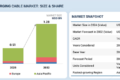
The Switzerland patient monitoring devices market is a robust and sophisticated sector within the European medtech landscape, characterized by a high concentration of small and midsize enterprises and a strong emphasis on digital health innovation. The market is increasingly driven by the rising prevalence of chronic conditions, such as diabetes and heart disease, affecting approximately 2 million residents, which has fueled the demand for remote patient monitoring and portable diagnostic tools. Key trends include the rapid integration of the Internet of Medical Things (IoMT) and artificial intelligence to support real-time vital sign tracking and early clinical intervention. While the industry faces significant regulatory hurdles following the breakdown of mutual recognition agreements with the EU, the Swiss government is actively pursuing strategic shifts like the DigiSante national digital health strategy and exploring the recognition of FDA-approved devices to ensure market resilience. This evolving landscape is further defined by a transition toward decentralized care, where wearable devices and telemonitoring solutions empower patients to manage their health from home, aligning with national goals for a more interoperable and patient-centered healthcare system.
Key Drivers, Restraints, Opportunities, and Challenges in the Switzerland Patient Monitoring Devices Market
The Switzerland patient monitoring devices market is primarily driven by an aging population, a rising prevalence of chronic conditions like hypertension and diabetes affecting approximately 2 million residents, and a strong push toward digital transformation and value-based care. Technological advancements, particularly in wireless and wearable devices like the Swiss-designed QluPod, further propel growth by enabling continuous, non-invasive health tracking. However, the market faces significant restraints, including high implementation costs, a current shortage of healthcare resources, and a historical lag in integrating digital health solutions into daily medical practice compared to peer nations. Despite these hurdles, substantial opportunities exist in the expansion of telemedicine for rural and alpine care, the integration of AI for predictive analytics, and the national DigiSante strategy aimed at improving data interoperability and Electronic Patient Record adoption. Challenges remain, particularly regarding stringent data privacy and security concerns, the need for enhanced digital literacy among healthcare professionals, and the requirement for more robust reimbursement policies to support widespread adoption.
Customer Segmentation, Needs, Preferences, and Buying Behavior in the Switzerland Patient Monitoring Devices Market
The target customers for the Switzerland patient monitoring devices market include hospitals, ambulatory surgical centers, and a rapidly expanding segment of home-care users, particularly those managing chronic conditions like hypertension and diabetes. Institutional customers such as hospitals prioritize high-acuity monitors and integrated operating room systems that offer accuracy and reliability, while home-care users increasingly prefer portable, user-friendly devices like wearable ECG monitors and pulse oximeters that enable continuous tracking and peace of mind. Swiss consumers exhibit a strong preference for physical interaction during therapy, yet they are increasingly open to digital prevention and remote monitoring tools that provide actionable health data to their physicians. Purchasing behavior is characterized by a high trust in general practitioners and pharmacies as initial points of contact, alongside a growing willingness to pay for digital services that offer convenience and early detection, even as the market faces high implementation costs for advanced remote systems.
Regulatory, Technological, and Economic Factors Impacting the Switzerland Patient Monitoring Devices Market
The Switzerland patient monitoring devices market is significantly influenced by a complex interplay of regulatory, technological, and economic factors. Regulated by Swissmedic, the market requires strict compliance with safety and efficacy standards, including mandatory electronic patient records for hospitals and evolving surveillance through focus campaigns that can impose high entry barriers for new participants. Technologically, the integration of artificial intelligence, machine learning, and the Internet of Medical Things (IoMT) is driving market expansion by enabling real-time data analysis, predictive healthcare, and the adoption of portable devices like QluPod for continuous remote monitoring. Economically, while the high costs of sophisticated systems and the need for substantial capital investment in infrastructure can restrain profitability, the rising incidence of chronic diseases among an aging population sustains high demand. Furthermore, the push for cost-effective home healthcare and national digital strategies like DigiSante provide significant opportunities for growth, despite the financial pressures from potential healthcare budget cuts and the high maintenance costs associated with advanced monitoring technologies.
Current and Emerging Trends in the Switzerland Patient Monitoring Devices Market
The Switzerland patient monitoring devices market is undergoing a rapid digital transformation characterized by the widespread integration of artificial intelligence, telemedicine, and the Internet of Medical Things (IoMT) to address the needs of an aging population and rising chronic disease prevalence. Current trends include a significant shift toward decentralization through portable and wearable devices, such as the QluPod, which enable continuous, real-time monitoring of vital signs like ECG, blood pressure, and oxygen saturation outside traditional clinical settings. These trends are evolving quickly, supported by the national DigiSante strategy launched in 2025 to improve data interoperability and a telemedicine market projected to grow at a CAGR of approximately 17.5% through 2030. Furthermore, specialized segments like wearable medical devices are experiencing explosive growth with a projected CAGR of 32.71% through 2032, reflecting an accelerated transition toward a more proactive, personalized, and technology-driven healthcare ecosystem.
Technological Innovations and Disruption Potential in the Switzerland Patient Monitoring Devices Market
Technological innovations such as artificial intelligence and machine learning are fundamentally disrupting the Switzerland patient monitoring devices market by enabling predictive analytics, real-time vital sign analysis, and automated risk detection for issues like falls or neurological conditions. The integration of the Internet of Medical Things (IoMT) through wearable biosensors, smart medical devices, and radar-based sensors is gaining significant traction, allowing for continuous, non-invasive monitoring in both clinical settings and “hospital-at-home” models. Additionally, advancements in mobile brain imaging and portable diagnostic tools like QluPod are decentralizing healthcare, empowering patients with chronic conditions to manage their health remotely while providing clinicians with data-driven insights to improve diagnostic accuracy and early intervention.
Short-Term vs. Long-Term Trends in the Switzerland Patient Monitoring Devices Market
In the Switzerland patient monitoring devices market, the temporary surge in device demand driven solely by emergency COVID-19 pandemic protocols is transitioning into more stable, long-term structural shifts. While initial rapid telehealth deployments have leveled off, the move toward value-based care and the “hospital-at-home” model represents a permanent change in healthcare delivery. Long-term structural transformations are being driven by the integration of artificial intelligence for predictive analytics and the widespread adoption of wearable health technologies, such as smartwatches and biosensors, to manage an aging population and the increasing prevalence of chronic diseases like diabetes and hypertension. Furthermore, the national DigiSante strategy and the expansion of Electronic Patient Records underscore a fundamental shift toward an interoperable, digital health ecosystem that empowers patients through continuous, data-driven monitoring.