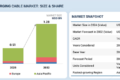
The Switzerland remote patient monitoring market is a burgeoning sector within one of the world’s most advanced healthcare systems, currently defined by a transition from localized pilot programs to a more structured national digital health infrastructure. While the market is considered mature in terms of its favorable regulatory environment and high digital literacy, actual adoption is in its early stages as the country works to overcome challenges like fragmented electronic health record implementation and a lack of structural encouragement for remote care. Driven by the urgent need to manage rising healthcare costs and the increasing burden of chronic diseases among an aging population, the landscape is shifting toward the integration of artificial intelligence and portable Internet of Medical Things devices. Recent initiatives like the DigiSante national strategy and the expansion of telemedicine services are accelerating this transformation, aiming to bridge the gap between urban specialists and patients in rural or alpine regions while improving long-term clinical outcomes through continuous, data-driven monitoring.
Key Drivers, Restraints, Opportunities, and Challenges in the Switzerland Remote Patient Monitoring Market
The Switzerland remote patient monitoring market is primarily driven by an aging population and an increasing incidence of chronic diseases that necessitate a shift from acute care to long-term digital management and self-care tools. Significant growth opportunities exist in the integration of artificial intelligence for predictive analytics and the expansion of telemedicine to improve healthcare access in rural and alpine regions. However, the market faces restraints such as stringent regulatory frameworks for medical device approval and the high implementation costs associated with advanced monitoring systems. Major challenges include a critical shortage of skilled IT professionals and clinicians to interpret complex data, a general reluctance among healthcare providers to adopt home monitoring, and the lack of a unified national electronic health record system.
Customer Segmentation, Needs, Preferences, and Buying Behavior in the Switzerland Remote Patient Monitoring Market
The target customers for the Switzerland remote patient monitoring market primarily include healthcare providers such as hospitals and clinics, home healthcare agencies, and a growing segment of individual patients, particularly the geriatric population and approximately 2 million residents living with chronic conditions like diabetes and heart disease. These customers prioritize high-quality care access, especially in rural and alpine regions, and seek reliable digital tools that offer early detection of complications and continuous tracking of vital signs to reduce hospitalizations. Swiss patients increasingly prefer the convenience and empowerment of home-based monitoring, with their purchasing behavior influenced by the country’s high digital literacy and the expansion of the national electronic patient record system. Institutional buyers, such as hospitals, focus on integrating connected medical devices and IoMT solutions to enhance operational efficiency and AI-based data analysis while navigating a landscape where healthcare spending is projected to exceed CHF 103 billion by 2025.
Regulatory, Technological, and Economic Factors Impacting the Switzerland Remote Patient Monitoring Market
The Switzerland remote patient monitoring market is influenced by a favorable regulatory environment where telemedicine laws align with face-to-face consultations, though the implementation of the national DigiSanté digital health strategy and the expansion of Electronic Patient Records remain critical for long-term data interoperability. Technologically, market expansion is driven by the widespread adoption of AI-powered analytics, the integration of the Internet of Medical Things (IoMT), and high-quality 5G connectivity that supports real-time monitoring even in remote alpine regions. Economically, while Switzerland’s high healthcare expenditure—forecast to exceed CHF 103 billion by 2025—and a large privately insured population sustain high demand, profitability is often challenged by the high initial costs of deploying secure IT infrastructure and a shortage of skilled professionals to interpret complex patient data. These factors collectively shape a mature but competitive landscape where strategic partnerships and secure, user-friendly portable devices are essential for navigating market entry and achieving scalability.
Current and Emerging Trends in the Switzerland Remote Patient Monitoring Market
The Switzerland remote patient monitoring market is undergoing a rapid digital transformation, projected to reach USD 8.85 billion by 2030 with a CAGR of approximately 17.5%. Current trends are dominated by the increasing adoption of telemedicine and portable health monitoring devices like QluPod, which enable real-time tracking of vital signs such as ECG, blood pressure, and oxygen saturation. Emerging trends include the integration of artificial intelligence for predictive diagnostics, the shift toward an opt-out Electronic Patient Record system to enhance data interoperability, and the launch of the national DigiSante strategy in 2025 to modernize healthcare infrastructure. These developments are evolving quickly as the industry moves from emergency pandemic-driven usage toward a proactive, patient-centered model focused on managing an aging population and high healthcare expenditures.
Technological Innovations and Disruption Potential in the Switzerland Remote Patient Monitoring Market
Technological innovations such as artificial intelligence, machine learning, and the Internet of Medical Things (IoMT) are gaining significant traction and are poised to disrupt the Switzerland remote patient monitoring market by enabling real-time vital sign tracking and predictive data analysis. The integration of advanced wearables and portable devices, like pocket-sized ECG and multi-parameter monitors, is decentralizing care by allowing patients to manage chronic conditions like hypertension and diabetes from home. Furthermore, the adoption of 5G technology, interoperable data layers, and blockchain is enhancing the speed and security of health data transmission, while advancements in biosensors and cuffless monitoring systems are improving patient comfort and adherence. These innovations, supported by national digital strategies like DigiSante, are transforming the industry from a reactive model to a proactive, data-driven ecosystem.
Short-Term vs. Long-Term Trends in the Switzerland Remote Patient Monitoring Market
In the Switzerland remote patient monitoring market, the rapid surge in demand triggered by emergency COVID-19 pandemic protocols is increasingly viewed as a short-term phenomenon, whereas several other trends represent long-term structural shifts. While initial reliance on temporary telehealth setups for basic care has stabilized, the move toward integrating digital health solutions like the Electronic Patient Record and national strategies such as DigiSante represent a permanent transformation in the Swiss healthcare landscape. Similarly, the shift from acute-care focus to continuous, home-based monitoring for chronic conditions like diabetes and heart failure is a fundamental change driven by the demographic reality of an aging population and the need for cost-efficient care. Other enduring structural shifts include the adoption of the Internet of Medical Things and AI-driven predictive analytics, which are transitioning from research initiatives into essential components of a modernized, patient-centric healthcare system.