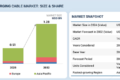
The Switzerland single-use assemblies market is a vital component of the country’s robust biopharmaceutical sector, characterized by a high adoption rate of disposable technologies to meet stringent manufacturing standards and ensure process integrity. As a global hub for pharmaceutical innovation, Switzerland hosts major industry players and contract manufacturing organizations like Lonza that increasingly utilize these assemblies to enhance operational flexibility and reduce contamination risks. The landscape is defined by a shift toward modular production facilities and the integration of advanced materials in components like filtration and bag assemblies to support the production of complex biologics and personalized medicines. Despite facing challenges such as high capital costs for specialized equipment and complex regulatory requirements, the market continues to evolve through investments in research and development and a growing emphasis on streamlining bioprocessing workflows.
Key Drivers, Restraints, Opportunities, and Challenges in the Switzerland Single Use Assemblies Market
The Switzerland single-use assemblies market is primarily driven by the country’s robust biopharmaceutical manufacturing sector and the increasing adoption of these technologies by major contract development and manufacturing organizations (CDMOs) to enhance operational efficiency and minimize cross-contamination risks. Significant growth opportunities exist in the expansion of personalized medicine, cell and gene therapies, and the integration of automated and digital manufacturing platforms. However, the market faces restraints such as high initial investment costs for transitioning from traditional stainless-steel systems and stringent regulatory requirements regarding extractables, leachables, and sterility validation. Key challenges include a lack of industry-wide standardization for assembly designs, which can lead to supplier lock-in, and growing concerns regarding plastic waste and the environmental impact of disposable components.
Customer Segmentation, Needs, Preferences, and Buying Behavior in the Switzerland Single Use Assemblies Market
The target customers for the Switzerland single-use assemblies market primarily include biopharmaceutical and pharmaceutical companies, contract research organizations (CROs), contract manufacturing organizations (CMOs), and academic or research institutes. These customers prioritize speed, operational flexibility, and the reduction of contamination risks to maintain stringent sterility and process integrity required for biologics, vaccines, and cell and gene therapies. Their preferences are increasingly shifting toward customized, ready-to-implement solutions and integrated digital manufacturing platforms that streamline workflows and reduce capital expenditure on traditional stainless-steel infrastructure. Purchasing behavior is characterized by a high demand for standard and bespoke assemblies from reliable partners who can ensure compliance with GMP standards and navigate a complex regulatory landscape involving extractables and leachables validation. Large-scale manufacturers and emerging biotech innovators in Switzerland’s robust life sciences sector value long-term strategic partnerships that offer technical expertise in specialized areas like sterile filtration, cell culture, and fill-finish applications to accelerate time-to-market for novel therapies.
Regulatory, Technological, and Economic Factors Impacting the Switzerland Single Use Assemblies Market
The Switzerland single-use assemblies market is significantly influenced by a complex interplay of regulatory, technological, and economic factors. Regulated by the Swiss Agency for Therapeutic Products (Swissmedic) and aligned with EMA and cGMP guidelines, stringent requirements for sterility assurance, extractables, and leachables validation impose high compliance costs that can challenge new entrants. Technologically, market expansion is driven by the integration of artificial intelligence, automated filtration, and sensors for real-time monitoring, which enhance process efficiency and precision but necessitate substantial up-front investment in digital infrastructure. Economically, while Switzerland’s leading position in biopharmaceutical R&D and high investments in GMP-compliant manufacturing sustain robust demand, profitability is often challenged by high initial capital requirements for specialized systems and rising costs for imported polymer materials and precision components due to global supply chain pressures. Additionally, increasing pressure to minimize environmental footprints through sustainable bioprocessing solutions is reshaping the competitive landscape for established and emerging players alike.
Current and Emerging Trends in the Switzerland Single Use Assemblies Market
The Switzerland single-use assemblies market is undergoing a rapid transformation driven by the integration of artificial intelligence and automation into biomanufacturing processes to enhance efficiency and real-time monitoring. These trends are evolving quickly as the industry shifts toward personalized medicine and the production of complex biologics, such as cell and gene therapies, which require the high level of flexibility and sterility that disposable systems provide. Furthermore, there is an accelerating focus on sustainability and the adoption of eco-friendly materials to reduce the environmental footprint of plastic waste, alongside a move toward hybrid manufacturing models that combine single-use technology with traditional stainless-steel systems. This evolution is supported by Switzerland’s robust pharmaceutical R&D infrastructure and a growing number of contract manufacturing organizations, such as Lonza, which are increasingly deploying these advanced, modular solutions to meet stringent GMP-compliant manufacturing standards.
Technological Innovations and Disruption Potential in the Switzerland Single Use Assemblies Market
Technological innovations such as advanced sensors for real-time monitoring, automation, and integrated digital solutions are gaining significant traction and are poised to disrupt the Switzerland single-use assemblies market by enhancing process precision and efficiency. The integration of artificial intelligence and machine learning is further transforming biomanufacturing by enabling predictive maintenance and optimizing complex workflows. Additionally, advancements in material science, such as the development of robust polymers and recyclable materials, along with the adoption of modular and customizable systems, are streamlining production and empowering manufacturers to meet the specialized needs of cell and gene therapies and personalized medicine.
Short-Term vs. Long-Term Trends in the Switzerland Single Use Assemblies Market
In the Switzerland single-use assemblies market, the extreme production surge for COVID-19 mRNA vaccines is increasingly viewed as a short-term phenomenon that has stabilized, while the transition toward flexible, modular biomanufacturing represents a long-term structural shift. This permanent transformation is driven by Switzerland’s status as a global biomanufacturing hub and the strategic adoption of technologies like Lonza’s IBEX platform to support diverse product pipelines. Similarly, the integration of automation, artificial intelligence for real-time monitoring, and the shift toward personalized medicine and cell and gene therapies are enduring changes fueled by the need for process consistency and rapid scale-up. Other long-term structural trends include the move toward sustainable, eco-friendly materials and the increasing reliance on contract development and manufacturing organizations (CDMOs) to manage the rising complexity and stringent regulatory requirements of biologics production.