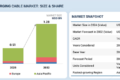
The Switzerland surgical robots market is a highly innovative and influential sector that leverages the country’s deep-rooted expertise in precision engineering and medtech research to punch far above its weight. Characterized by a robust ecosystem of world-class universities and pioneering startups, the landscape is defined by a shift toward specialized, niche excellence rather than mass-market industrial volume. Key domestic players such as Distalmotion, with its hybrid Dexter system, and LEM Surgical, focusing on next-generation spine surgery, are positioning Switzerland as a significant challenger to established global giants. The market is supported by a sophisticated healthcare infrastructure, stringent regulatory standards overseen by Swissmedic, and a strong foundation in orthopedic and visceral robotic-assisted surgery. As the sector continues to integrate artificial intelligence and modular architectures, it remains a global hub for surgical navigation and minimally invasive innovation, driven by an aging demographic and a high adoption rate of digital health solutions.
Key Drivers, Restraints, Opportunities, and Challenges in the Switzerland Surgical Robots Market
The Switzerland surgical robots market is primarily driven by a strong innovation ecosystem and a high volume of complex surgeries, such as hip and knee replacements, which are among the highest rates globally. The market benefits from a rising preference for minimally invasive procedures that offer enhanced precision, reduced recovery times, and lower complication rates. Significant growth opportunities exist in the integration of artificial intelligence, digital surgery, and real-time feedback, as well as the expansion of robotic applications into diverse specialties like urology and orthopedics. However, the industry faces substantial restraints from high capital acquisition costs—often ranging between USD 1.5 million and USD 3 million—and ongoing maintenance expenses. Key challenges include rigorous regulatory compliance under European standards, lengthy sales cycles driven by complex hospital decision-making processes, and the intensive specialized training required for surgeons to achieve proficiency.
Customer Segmentation, Needs, Preferences, and Buying Behavior in the Switzerland Surgical Robots Market
The target customers for the Switzerland surgical robots market primarily include high-volume hospitals, specialized surgical centers, and ambulatory care facilities that prioritize precision and patient safety. These institutional buyers seek advanced robotic platforms to manage complex procedures in specialties such as urology, gynecology, and orthopedics, specifically valuing systems that offer high-definition 3D visualization, improved dexterity, and tremor filtration to enhance clinical outcomes. Customer preferences are increasingly shifting toward platforms that integrate artificial intelligence and machine learning for intraoperative decision support and those that facilitate minimally invasive surgeries to reduce hospital stays and recovery times. Purchasing behavior is characterized by significant capital investment in initial robotic systems followed by recurring demand for specialized instruments and accessories, with a growing emphasis on selecting strategic partners that provide robust technical support and integrated digital surgery solutions.
Regulatory, Technological, and Economic Factors Impacting the Switzerland Surgical Robots Market
The Switzerland surgical robots market is shaped by a complex interplay of regulatory, technological, and economic factors that influence entry and profitability. Regulatory entry is increasingly defined by the European Medical Device Regulation (MDR), which imposes stricter clinical evidence requirements and higher compliance costs that can create barriers for smaller manufacturers while favoring consolidated, well-resourced players. Technologically, market expansion is driven by the integration of artificial intelligence for real-time intraoperative analytics, high-definition 3D visualization, and the rise of modular, portable architectures that allow hospitals to share robotic arms across different surgical suites to maximize utilization. Economically, while high demand is sustained by a wealthy aging demographic and some of the world’s highest rates of hip and knee replacements, profitability is often challenged by prohibitive upfront capital costs ranging from $1.5 million to $3 million and significant recurring expenses for disposable instruments and maintenance. Consequently, market success in Switzerland depends on navigating these high financial hurdles through established reimbursement pathways and strategic partnerships with leading healthcare institutions.
Current and Emerging Trends in the Switzerland Surgical Robots Market
The Switzerland surgical robots market is undergoing a rapid evolution characterized by a strategic shift toward hybrid and specialized platforms that prioritize flexibility and affordability. These trends are moving quickly, as evidenced by the domestic rise of innovators like Distalmotion, whose Dexter system allows surgeons to switch between robotic and manual laparoscopy, and CAScination’s advancements in robotic navigation for neurosurgery. Furthermore, the market is being shaped by the integration of artificial intelligence for intraoperative decision support and a transition toward modular robotic architectures that maximize hospital utilization. While traditional urological and gynecological applications remain core, the shift toward precision-driven soft-tissue and orthopedic procedures is accelerating to leverage Switzerland’s world-class expertise in precision engineering and life sciences.
Technological Innovations and Disruption Potential in the Switzerland Surgical Robots Market
Technological innovations such as the integration of artificial intelligence (AI) and machine learning are fundamentally disrupting the Switzerland surgical robots market by enhancing procedural precision, streamlining surgical workflows, and enabling predictive analytics for better patient outcomes. Advanced robotic platforms, including the Dexter hybrid system and next-generation spine surgery robots, are gaining significant traction by offering surgeons greater flexibility and smaller footprints compared to traditional systems. Furthermore, the adoption of robotic laser osteotomes for precise bone surgery and the emergence of robotic catheter navigation for cardiology are decentralizing complex interventions and reducing radiation exposure for clinical staff. The development of digital twin simulations for pre-operative planning and autonomous suturing capabilities are also poised to reshape the industry by reducing operative times and variability across various surgical specialties.
Short-Term vs. Long-Term Trends in the Switzerland Surgical Robots Market
In the Switzerland surgical robots market, the initial high-capital barrier for robotic adoption is increasingly viewed as a short-term hurdle being addressed by emerging hybrid and modular systems, whereas the shift toward specialized, multi-specialty platforms represents a long-term structural transformation. The move toward decentralization, characterized by the rising adoption of compact and cost-effective robots in specialty surgical centers and clinics, is a permanent shift driven by the need for greater procedural flexibility and improved hospital resource utilization. Similarly, the integration of artificial intelligence for intraoperative decision support and the expansion of robotic applications into general surgery and orthopedics are fundamental changes fueled by Switzerland’s deep expertise in precision engineering and life sciences. Other enduring structural trends include the growth of remote-enabled surgical robotics and the development of sustainable, re-processable instruments, which are supported by the long-term demographic reality of an aging population and stringent European environmental regulations.